Imagine a massive distribution center where every conveyor belt and robotic arm is state-of-the-art, yet the entire operation grinds to a halt because a single proprietary sensor fails. The facility manager calls the vendor, only to find that the replacement part is backordered or the technician is unavailable, leaving millions of dollars in inventory stranded. This is the precarious reality of modern logistics, where the pursuit of high-spec automation often leads to a dangerous dependency on a single provider. The industry is currently trapped in a cycle of buying the most powerful hardware without a sustainable plan for when that hardware inevitably breaks.
The Architecture of the Vault Ecosystem
Colosseum is stepping into this gap with the official launch of Vault, a comprehensive logistics automation platform designed for the era of Physical AI. The company is unveiling the platform at the Colosseum Vault Ground 2026 event, held on July 9, 2026, at Hall A on the 31st floor of the Lotte World Tower in Seoul. Vault is not a piece of hardware but an integrated management layer built upon seven years of operational experience in the logistics field. It transforms the chaotic process of automation into a standardized, linear pipeline.
The operational flow of Vault begins with a rigorous site diagnosis based on ten critical questions. This initial phase analyzes the specific operating type, the nature of the goods being handled, the form of outbound shipping, existing process bottlenecks, and the current level of system integration. Once this data is captured, Vault moves the client through a structured progression: a tailored design proposal, an on-site visit, a Proof of Concept (PoC), 3D simulation, actual equipment installation, and ongoing maintenance.
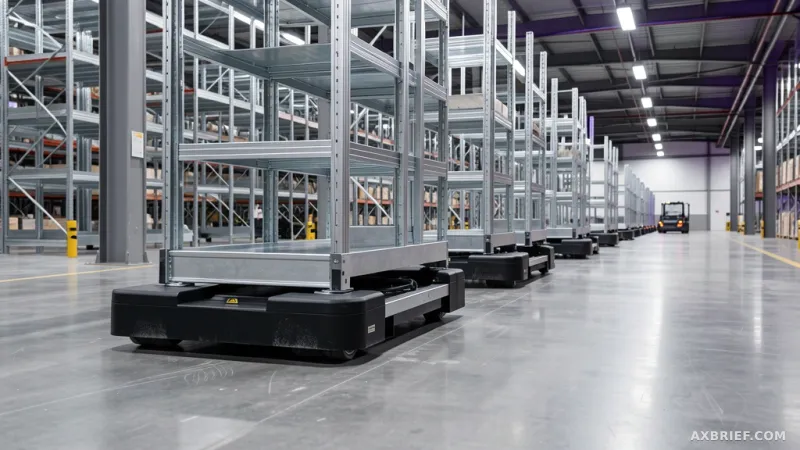
To ensure this pipeline is supported by world-class hardware, Colosseum has established an alliance of 18 domestic and international partners. This network includes global giants such as Honeywell, Dematic, and Keyence. The domestic partner ecosystem is equally robust, featuring Acetech, Bluebird, AdenTro Robot, Daim Research, Cimeros Robotics, Gaon Robotics, QAid, Moa Systems, Near Solution, and A-Plus Logis. These partners do not compete for the entire project but instead divide roles based on specialization, covering palette shuttles, full-scale automation, packaging automation, and after-service operational support. Vault acts as the intelligent connector, matching the specific needs of a warehouse to the right partner in the alliance.
Breaking the Cycle of Vendor Lock-in
The demand for automation is skyrocketing, with Gartner predicting that 80% of warehouses and logistics centers worldwide will adopt automation solutions by 2028. However, a stark contradiction exists between the desire for automation and the success of its implementation. Data from 2024 reveals that 76% of logistics innovation projects failed to meet their budgets, schedules, or key performance indicators (KPIs). This failure rate is not a result of poor technology, but of a flawed procurement philosophy.
Most companies select automation based on technical specifications and hardware benchmarks. They chase the fastest robot or the highest-capacity shuttle, often falling into the trap of vendor lock-in. When a company becomes dependent on a single vendor's proprietary ecosystem, objective comparison becomes impossible, and the risk of operational paralysis increases. Internal teams spend months comparing specs, yet a single wrong choice can lead to losses totaling billions of won because the system cannot be easily modified or repaired by third parties.
Vault introduces a vendor-neutral design structure to dismantle this risk. Instead of starting with what a specific vendor can provide, Vault starts with the operational environment. By positioning itself as a neutral architect, Colosseum ensures that the hardware is subservient to the workflow, not the other way around. This neutrality is augmented by Colo AI, a data-driven operational software that manages efficiency and monitors performance across the diverse hardware stack.
The fundamental shift here is the realization that the success of logistics automation is not determined by the peak performance numbers on a brochure, but by the continuity of maintenance. A vendor-neutral approach reduces the constraints associated with equipment replacement and repairs, ensuring that the business remains operational regardless of a single supplier's stability. The focus shifts from hardware specifications to the actual requirements of the site, establishing a new standard for reducing implementation risk.
The industry is moving away from the era of the monolithic vendor and toward a modular, orchestrated ecosystem where operational continuity is the primary metric of success.