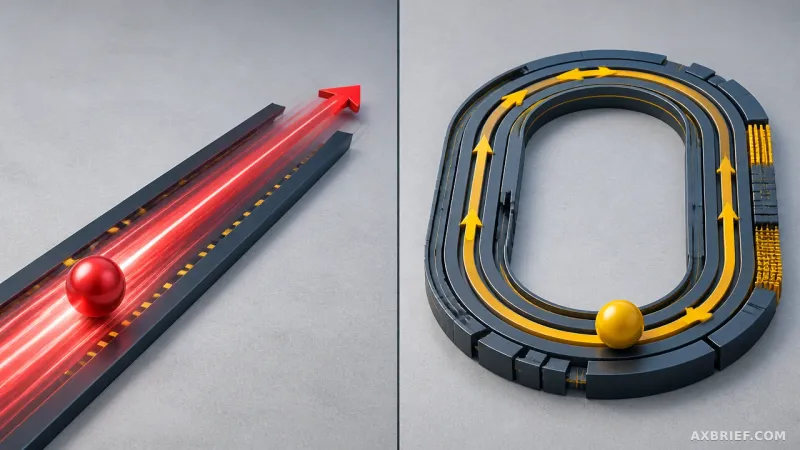
Imagine a factory floor where a single misplaced bolt halts a million-dollar production line. For decades, industrial automation has relied on the blind repetition of pre-programmed paths. If a component shifts by a fraction of a millimeter or an unexpected obstacle appears, the robot does not perceive the error; it simply continues its trajectory, often resulting in damaged parts or total system failure. This rigidity has been the invisible ceiling of the manufacturing world, limiting automation to environments where every variable is perfectly controlled.
The Arrival of Adaptive Intelligence in India
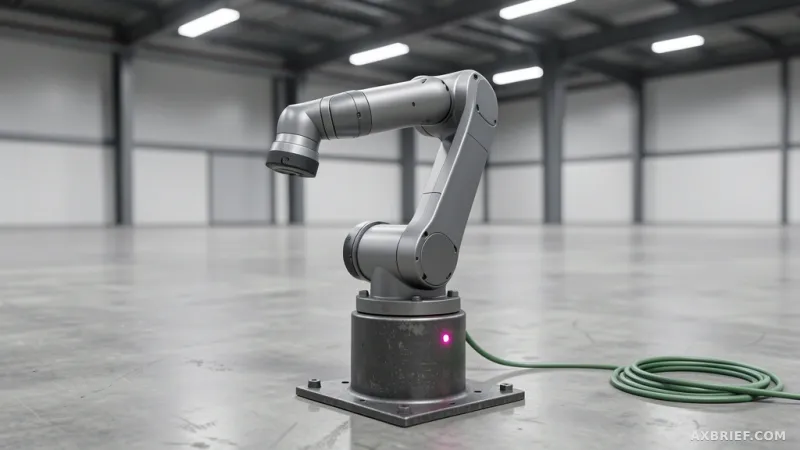
Flexiv is stepping into this gap as it prepares for its official entry into the Indian market. On July 16, 2026, the company will showcase its force-sensitive adaptive robots at the Automation India Expo 2026. Unlike traditional robotic arms that follow a fixed script, these machines are engineered to sense physical resistance in real-time and adjust their movements autonomously. This capability allows the robots to handle high-precision assembly and complex processing tasks that were previously too volatile for standard automation. For manufacturers looking to integrate these systems, detailed technical specifications and product capabilities are available via the Flexiv official website.
From Specialized Hardware to General-Purpose Utility
The true disruption here is not just the sensing capability, but the shift toward general-purpose robotics. Historically, manufacturers were forced to purchase specialized robots for every distinct task, leading to massive capital expenditure and inflexible production lines. Flexiv is challenging this model by offering a solution that can be redeployed across various processes. By treating the robot as a versatile tool rather than a single-purpose machine, companies can significantly lower their initial investment costs and increase operational agility.
This move into India represents a major milestone in Flexiv's global expansion strategy. By targeting a region with massive manufacturing infrastructure, Flexiv aims to prove that adaptive robotics can scale across diverse industrial applications. The transition is a move away from the era of the fixed automation line toward a model of physical intelligence, where the value of a robot is determined by its ability to handle exceptions rather than its speed of repetition.
The success of the next industrial era will be measured not by how fast a robot can repeat a motion, but by how intelligently it can react to the physical world.