The current state of autonomous agents is defined by a frustrating paradox. In controlled simulations, robots navigate complex mazes and manipulate objects with uncanny precision, yet the moment they enter a chaotic warehouse or a bustling city street, that confidence evaporates. The industry has long attempted to bridge this gap by scaling data or refining reward functions, but the fundamental problem remains a lack of reliability. Developers are currently trapped between two extremes: reinforcement learning, which is flexible but prone to reward hacking, and formal synthesis, which is safe but too rigid for the real world. The community is searching for a middle ground where an agent can learn from experience without sacrificing the mathematical certainty required for physical safety.
The Architecture of Verifiable Adaptation
At AAMAS 2026, Florent Delgrange addressed this tension in his award-winning paper, Foundation World Models for Agents that Learn, Verify, and Adapt Reliably Beyond Static Environments. The core of the proposal is a foundation world model that does not merely predict the next state of the environment but provides a structured substrate for formal verification. In traditional reinforcement learning, an agent maximizes a scalar reward, often finding loopholes in the reward function to achieve a high score without actually completing the task safely. Conversely, reactive synthesis ensures correctness by design but requires a fixed, explicit model of the world, making it useless in open environments where conditions shift constantly.
Delgrange proposes integrating these two traditions into a continuous loop. The foundation world model learns from experience, but it does so in a way that allows a separate verifier to reason about its outputs. As the agent updates its policy and the model evolves, the verifier measures the reliability of the underlying abstractions. If a policy update is deemed unsafe or if the model enters an area of high uncertainty, the verifier rejects the update or triggers a request for more targeted data. This creates a symbiotic relationship where learning provides the flexibility and verification provides the guardrails.
To achieve this, the foundation world model must possess three critical attributes. First is Calibration, where every learned abstraction is assigned an error or coverage metric. This allows the agent to know exactly where its predictions are valid and where it must stop and collect more data rather than guessing. Second is Compositionality, which enables the reuse of verified local dynamics and certificates. Instead of re-verifying the entire system for every new task, the agent only needs to verify the connection points between previously certified modules. Third is Semantic Queryability, allowing the model to derive reward models and task-specific abstractions from high-level natural language instructions. This transforms the world model into a common language for learning, planning, and verification.
The Fallacy of Predictive Accuracy
Most current model-based AI focuses on predictive accuracy, measuring success by how well a model can reconstruct observations or predict the next state in a trajectory. However, Delgrange introduces a critical distinction: predictive accuracy is not the same as fitness for guarantee. A model can be 99 percent accurate on average and still be completely unfit for a safety-critical deployment.
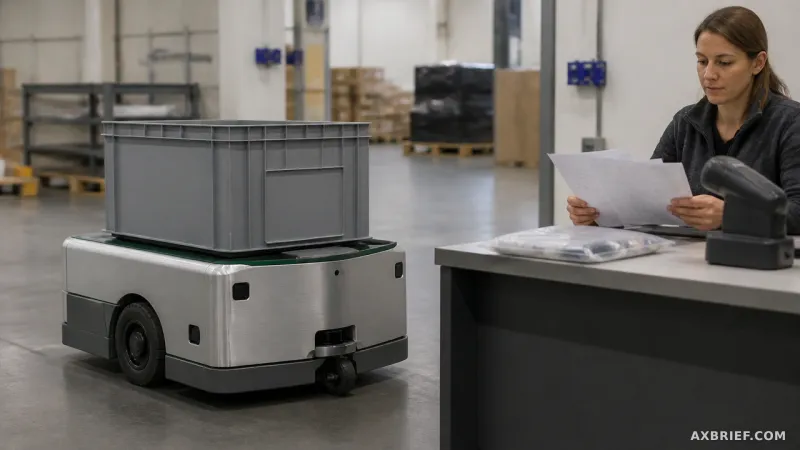
Consider a warehouse robot tasked with avoiding collisions. A world model might predict every single state transition with near-perfect accuracy across thousands of hours of operation. Yet, if it fails to predict one rare but catastrophic interaction with a forklift, the collision-avoidance guarantee is void. In this scenario, the average error is incredibly low, but the model is a failure from a verification perspective because the one transition it missed is the only one that actually matters for safety.
Conversely, a model that ignores irrelevant visual details like the color of the floor or the texture of the walls might have lower overall predictive accuracy than a high-fidelity simulator. However, if that model perfectly preserves the geometric and physical constraints necessary for path planning and collision detection, it possesses higher fitness for guarantee. The central question for physical AI must shift from how accurate the model is to what conclusions this accuracy justifies regarding the current policy and requirements. The foundation world model carries reliability information through its abstraction layers, updating this information online as the data distribution shifts.
The Test-Time Loop and Certificate Revocation
To bridge the gap between high-level human intent and low-level physical execution, the framework employs a Large Language Model (LLM) as a semantic interface. The LLM does not control the robot directly; instead, it acts as a proposer. It translates a user's natural language command into a candidate formal specification or suggests a structured update to the world model. This proposal is then handed to a formal verifier, which acts as the checker. By separating the proposer from the checker, the system prevents LLM hallucinations from manifesting as physical accidents.
This interaction creates a test-time loop. When the LLM proposes a formal program to describe a new physical dynamic, the model checker tests it and returns counterexamples or structural inconsistencies. The LLM analyzes these failures to refine its hypothesis, and the robot performs targeted experience collection to gather the specific data needed to validate the new theory. This is not a matter of scaling the model size, but of ensuring logical alignment between the components.
For real-world deployment, the system implements a certificate revocation mechanism. In a dynamic environment, a previously safe path may become dangerous if a new obstacle, such as a forklift, begins using a shortcut the robot has never seen. When the model detects a drop in confidence in a specific region, the verifier immediately revokes the safety certificate for the current policy. While the certificate is revoked, risky updates are blocked, and the robot is forced to re-explore the area to collect new data. Only after the world model is recalibrated and the safety requirements are mathematically proven again is a new certificate issued.
To implement this in practice, engineers must move away from average error metrics and use a specific framework for evaluating fitness for guarantee:
[Fitness for Guarantee Verification Checklist]- Average Error vs. Worst Case: Is average prediction error low? -> (Yes) -> Are there failure cases for specific risk scenarios (e.g., forklift collision)? -> (Yes) -> UNFIT FOR GUARANTEE
- Abstraction Validity: Has the model removed unnecessary details (color, texture)? -> (Yes) -> Are core geometric/physical constraints preserved? -> (Yes) -> FIT FOR VERIFICATION
- Confidence Grounding: Are error/coverage metrics provided with predictions? -> (Yes) -> Is confidence measured as low in data-poor regions? -> (Yes) -> FIT FOR CALIBRATION
- Dynamic Updates: Is there a process to revoke certificates when environment changes are detected? -> (Yes) -> Are certificates re-issued after recalibration? -> (Yes) -> FIT FOR OPERATIONAL RELIABILITY
Physical AI cannot rely on the hope that a low average error rate will cover all edge cases. True reliability in the wild requires a system that knows when it is ignorant and possesses the formal machinery to prove its own safety before taking a single step.