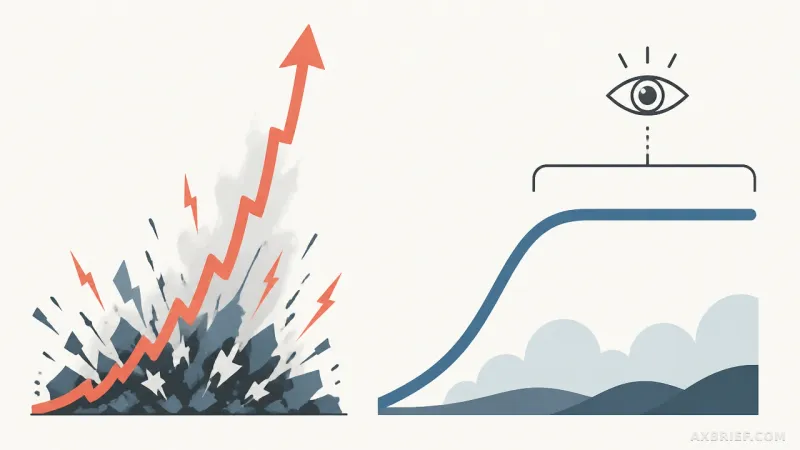
The modern student or remote professional lives in a state of constant hardware compromise. They carry a slim MacBook, a Chromebook, or a Surface tablet—devices engineered for spreadsheets, research papers, and Zoom calls, but fundamentally incapable of running a modern AAA title. For years, the only solution was the heavy lifting of a dedicated gaming laptop or a stationary desktop rig, creating a physical and financial divide between productivity and play. This week, that divide is effectively disappearing as the boundary between a low-power productivity tool and a high-end gaming station is erased by a network connection.
The Infrastructure of Hardware Agnosticism
NVIDIA GeForce NOW has evolved from a niche streaming service into a comprehensive hardware replacement strategy. At the center of this shift is the GeForce NOW Ultimate membership, which grants users access to cloud-based compute resources equivalent to an RTX 5080. This is not a mere simulation of performance but a direct allocation of server-side GPU power that renders the local specifications of the user's device irrelevant. Whether a user is operating a low-wattage office laptop or a mobile device, the heavy lifting of geometry processing and shading happens in NVIDIA's data centers, with the resulting frames streamed to the client.
This architectural shift expands the gaming ecosystem far beyond the traditional PC. The service now spans across PCs, laptops, handheld devices, mobile phones, and smart TVs. By decoupling the game's execution from the local hardware, NVIDIA has replaced the rigid requirement of owning a high-end GPU with a flexible resource allocation system. Users are no longer forced to choose their game library based on what their hardware can handle; instead, they choose based on what they want to play, effectively turning any screen with an internet connection into a high-performance gaming terminal.
The Invisible Tech Stack Solving the Cloud Dilemma
Streaming high-fidelity graphics traditionally suffers from two primary enemies: bandwidth limitations and input latency. NVIDIA addresses these not through raw speed, but through a synergistic AI stack. Deep Learning Super Sampling (DLSS) acts as the primary efficiency engine. By using AI to upscale lower-resolution images into high-definition visuals, DLSS optimizes the amount of data transmitted over the network. This allows the user to perceive a crisp, high-resolution image while the actual data stream remains lean enough to avoid stuttering, effectively maximizing visual quality within the constraints of residential bandwidth.
While DLSS handles the image, Ray Tracing and NVIDIA Reflex handle the immersion and responsiveness. Ray Tracing simulates the physical behavior of light in real-time, bringing complex reflections and refractions to the cloud experience that were previously reserved for local high-end rigs. However, the true breakthrough for competitive gaming is NVIDIA Reflex. By optimizing the pipeline between the user's input and the server's response, Reflex minimizes the latency gap. This reduces the perceived delay between a mouse click and an on-screen action, bringing the responsiveness of cloud gaming closer to that of a direct hardware connection.
Beyond the technical rendering, the service fundamentally alters the relationship between the user and their game library. The traditional cycle of downloading 100GB files, waiting for patches, and verifying data is replaced by an instant-on architecture. Because the cloud servers maintain the latest versions of games, the transition from the launcher to the gameplay is nearly instantaneous. This integration extends to major digital storefronts including Steam, Xbox PC Game Pass, and the Epic Games Store. Users can stream games they already own across these platforms without repurchase, while Cloud Save functionality ensures that progress is synchronized across all devices. This creates a unified entry point for gaming that ignores the storage limits of the local device.
This seamless integration is highlighted by the recent addition of eight new titles to the library, most notably Halo: Campaign Evolved. This modern reimagining of the original campaign features high-resolution visuals and updated cinematics, along with three new missions featuring Master Chief and Sergeant Johnson. The ability to jump into an expanded weapon system or hijack a Wraith tank without a lengthy installation process demonstrates the practical utility of the cloud-first approach.
The Shift Toward Performance as a Service
The real-world application of this technology is best seen in the workflows of creators who refuse to carry multiple devices. For instance, the creator Menguiny utilizes a MacBook Neo for video editing and daily tasks, but leverages GeForce NOW to transform that same machine into a high-end gaming rig. By offloading the GPU load to the cloud, the MacBook handles both high-end rendering and AAA gaming without the need for a secondary, bulky gaming laptop. Similarly, the creator TechWithSeong employs a multi-device strategy, switching between a large-screen MacBook for immersive sessions and a handheld device for gaming on the go, all while maintaining a single, consistent game state.
To lower the barrier to entry, NVIDIA has introduced the Day Pass. This option allows users to experience RTX 5080-class performance and low-latency streaming for a single day without committing to a monthly subscription. To further incentivize the transition to a full membership, the cost of the Day Pass can be applied as a credit toward the user's first monthly subscription. This creates a low-risk environment where users can verify their network stability and the quality of the stream before investing in a long-term plan.
For anyone currently owning a MacBook, Chromebook, or handheld device with a stable internet connection, the economic logic has shifted. The investment in a multi-thousand-dollar gaming PC is no longer the only path to high-end performance. By verifying their network capability via a Day Pass and syncing their existing Steam or Xbox libraries, users can move from a hardware-constrained environment to a performance-on-demand model.