For the past few years, the interaction between humans and artificial intelligence has followed a rigid, passive rhythm. A user types a prompt, the model processes the request, and the user waits for a text-based answer. This cycle of prompt-and-response has defined the generative AI era, positioning the AI as a digital oracle—knowledgeable, but stationary. We have treated these models as sophisticated search engines that can synthesize information, yet the actual labor of executing a task still falls entirely on the human. The friction remains in the gap between receiving an answer and taking action.
The Architecture of Action
Google shattered this passive paradigm during the May 2026 Google I/O and Android Show, introducing Gemini 3.5 and Gemini Omni. These are not merely incremental updates to a language model but a fundamental pivot toward agentic AI. Gemini 3.5 is positioned as a frontier intelligence model specifically engineered for agents and advanced coding. Unlike its predecessors, it does not just suggest a plan; it executes complex, multi-step agent workflows across various applications autonomously. This marks the transition from AI as an information provider to AI as a tool for completion.
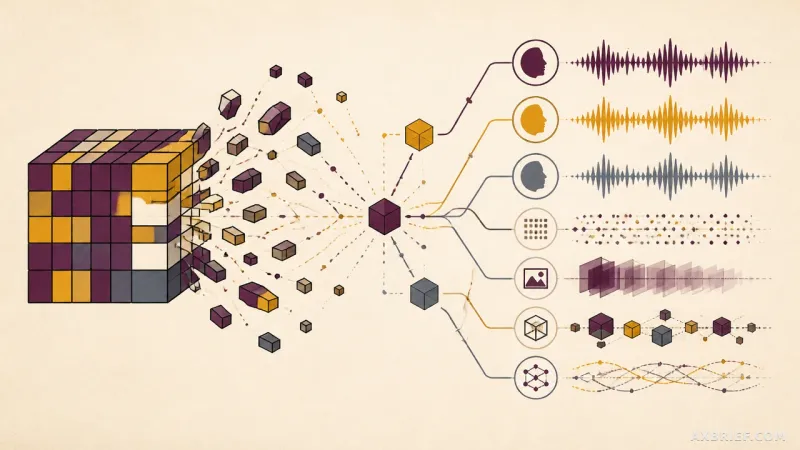
Complementing this is Gemini Omni, a multimodal powerhouse that fuses reasoning and generation. By integrating image, audio, video, and text inputs into a single unified context, Omni can generate high-definition video based on complex multimodal prompts. Meanwhile, Gemini 3.5 Flash transforms the search experience into a dynamic development environment. Instead of returning a list of links, Flash can build interactive visuals, dashboards, and mini-apps on the fly. If a user requests a specific utility, Flash calls the necessary APIs for live maps, weather data, or real-time reviews to code a custom tool, such as a fitness tracker, directly within the search interface.
This shift is mirrored in the user interface. The Gemini app has been overhauled to include personalized daily briefs and Gemini Spark, which allows the AI to operate as a proactive helper. Rather than waiting for a query, the AI works in the background to manage inboxes and schedule appointments. For Android users, the introduction of Android Halo provides a dedicated agentic workspace. This environment allows users to monitor the real-time progress of background tasks without interrupting their primary workflow, ensuring that the AI remains a supportive layer rather than a disruptive pop-up.
Beyond the Chat Box
The true disruption lies in the move from knowledge retrieval to operational execution. When an AI can design its own workflow and control the tools required to finish a job, the metric for success changes. Users no longer care if a model can recite a fact; they care if the model can successfully book a flight, reconcile a spreadsheet, or build a software prototype. This is the difference between a consultant who tells you how to fix a problem and a technician who actually fixes it. Google is effectively collapsing the distance between the intent to do something and the completion of that act.
This execution capability extends into the physical world through a new hardware ecosystem. The Googlebook, a dedicated laptop for Gemini Intelligence, utilizes a Magic Pointer to analyze a user's current context and suggest the next optimal action. To ensure this vision reaches the mass market, Google has partnered with Acer, Asus, Dell, HP, and Lenovo to produce devices based on Google's AI-optimized hardware blueprints. By embedding the agent at the OS level, Google is attempting to create a hardware standard where the AI is not an app you open, but the environment in which you work.
This integration reaches into commerce and health as well. The Universal Cart solves the fragmented journey of online shopping by unifying Google Search, Gemini, YouTube, and Gmail into a single shopping hub. Users can discover a product on YouTube and add it to a cart without ever leaving the ecosystem, turning a fragmented search process into a streamlined conversion funnel. On the wearable side, Fitbit Air—a pebble-shaped tracker—automates health monitoring by tracking heart rhythm for atrial fibrillation (Afib) alerts, SpO2 levels, and sleep stages. When paired with Intelligent Eyewear, the AI moves from the screen to the user's field of vision, providing real-time navigation and communication without the need to touch a phone.
Google is also pushing this agentic logic into high-stakes scientific research. Gemini for Science provides specialized environments for precision data analysis, moving beyond the chat interface to handle industrial-scale challenges. AlphaEvolve is already being deployed for chip design and logistics supply chain optimization, as well as simulating power grids and molecular systems. To secure the future of this intelligence, Google launched the Google DeepMind Accelerator in the Asia-Pacific region to support startups focusing on climate and energy. Furthermore, the REPLIQA program, which explores the intersection of life sciences and quantum AI, has been allocated 10 million dollars to fund research across five universities. This investment signals a strategic move to marry quantum computing's raw power with AI's reasoning capabilities.
However, the transition to autonomous agents requires a new layer of trust. If an AI is executing tasks on a user's behalf, the authenticity of the data it uses must be absolute. Google is expanding AI-generated content verification across Search, Gemini, Chrome, Pixel, and Cloud. By integrating transparency tools that immediately verify whether content is AI-generated, Google is building the necessary infrastructure for AI agents to hold actual execution authority in medical and scientific fields where errors are catastrophic.
The era of the passive chatbot is over. The focus has shifted from how accurately an AI can answer a question to how many steps of a professional workflow it can complete without human intervention. The new competitive frontier is not intelligence, but utility.