The modern traveler exists in a state of constant digital fragmentation. A typical afternoon in a new city involves a frantic cycle of app-switching: toggling between Google Maps for navigation, Yelp or TripAdvisor for reviews, a translation app for menus, and a spreadsheet or notes app to track a rigid itinerary. This cognitive load often overshadows the actual experience of the destination, turning the act of exploration into a series of administrative tasks managed on a five-inch screen. The industry has long promised a seamless assistant, but until now, the gap between planning and experiencing remained wide.
The Unified Interface of Real-Time Logistics
Google is attempting to close this gap by integrating the entire travel lifecycle into Gemini Live. In a practical demonstration at the Haeundae experience zone, the AI reduces the hours spent on itinerary planning to a single minute. Rather than requiring the user to input a list of preferences manually, Gemini analyzes the user's inherent travel style and disposition to generate an optimized route instantly. This process eliminates the need for external spreadsheets or fragmented search queries, consolidating preference analysis, route design, and location recommendations into one input window.
The output of this process departs from the standard AI list format, instead presenting the itinerary as a visual receipt. This design choice allows users to grasp the sequence of visits and spatial logic at a glance. In the Busan-based implementation, the AI strategically integrates local landmarks such as Millac the Market, The Bay 101, and Gamcheon Culture Village. Because the system identifies a preference for trendy, local atmospheres over generic tourist traps, it prioritizes emerging hotspots that reflect current regional trends. By merging subjective user taste with objective geospatial data, Gemini Live transforms the planning phase from a chore into a near-instantaneous execution of a personalized strategy.
From Information Retrieval to Visual Re-creation
While efficient planning is a utility, the true shift occurs when Gemini Live moves from processing text to interpreting the physical world in real time. The integration of multimodal capabilities allows the AI to act as a visual layer over reality. At the Gijang Yeonhwa-ri Haenyeo Village, for instance, a user can simply point their camera at a spread of fresh seafood. Gemini Live does not just identify the species of fish; it analyzes the visual evidence—such as the specific hue of abalone porridge or the cooking method—to provide a detailed, context-aware explanation. This is a fundamental departure from traditional search engines that require a keyword query to return a static result.
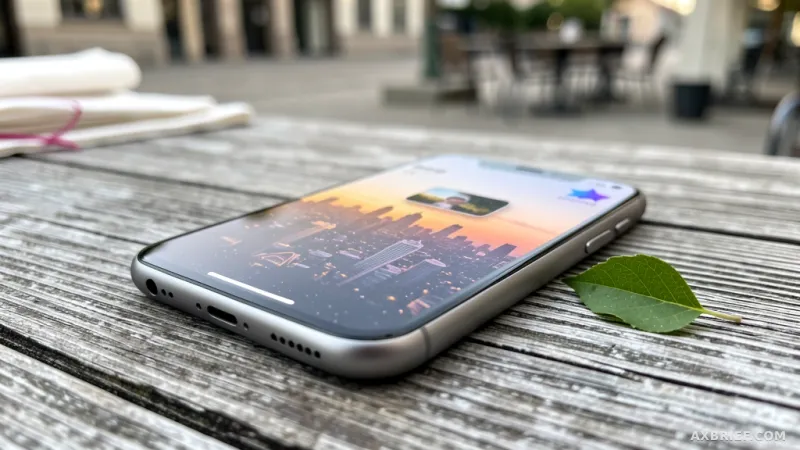
The most provocative application of this technology is the Nano Banana prompt, which triggers a Picture-in-Picture (PIP) transformation. While filming the daylight scenery of Jangnim Port, a user can invoke this command to generate a small overlay window on the live screen. Within this PIP window, the AI analyzes the current environmental data and re-renders the scene into a romantic sunset view in real time. This allows the user to maintain a continuous conversation with the AI while simultaneously witnessing a visual reimagining of their surroundings. The system is no longer just telling the user about the history of a place like Cheongsapo; it is actively manipulating the visual context of the journey to match the user's imagination.
This capability extends to the removal of linguistic and psychological barriers for global tourists. Traditional translation apps often fail because they provide literal word-for-word substitutions that strip away the cultural nuance of a local menu or a shopkeeper's greeting. Gemini Live processes visual information in real time, reading the context of the image to explain the composition of a dish or the specialty of a restaurant without requiring the user to upload a photo or type a phrase. This reduces the friction of entering local spaces and allows travelers to deviate from their planned routes based on real-time discoveries. When a user finds a recommended local spot, they can modify their entire itinerary through a voice conversation, shifting their destination based on current operating hours or local tips provided by the AI.
The Rise of Hyper-Local Emotional Intelligence
The final frontier of this integration is the move toward hyper-localization, where AI attempts to bridge the emotional gap between a visitor and a resident. One of the most distinct features of Gemini Live is its ability to switch into regional dialects, or satoori, upon request. When a user asks about the history of a location, the AI can pivot from standard Korean to a dialect specific to that region, incorporating the unique intonation and emotional cadence of the local people.
For a spontaneous traveler exploring the Gukje Market, this means the AI does not just explain the origin of fish cakes in a clinical tone; it delivers the information using the vocabulary and sentence structures of the Busan dialect. This transforms the AI from a sterile search tool into a cultural mediator that provides a sense of presence and authenticity. Technically, this is achieved by integrating dialect-specific datasets and historical narratives into the large language model's contextual understanding, ensuring the response is not a simple word replacement but a reflection of the region's social and emotional background.
This level of personalization suggests that the future of AI assistants lies in their ability to interpret the invisible layers of a location—its mood, its accent, and its visual potential. By combining real-time visual transformation via PIP windows with the emotional resonance of local dialects, Gemini Live moves beyond the role of a digital guide. It becomes an intelligent interface that reshapes how a user perceives and interacts with a physical environment.
The value of AI is no longer measured by the accuracy of a text response, but by its ability to synthesize real-time visual data and hyper-local context into a single, fluid experience.