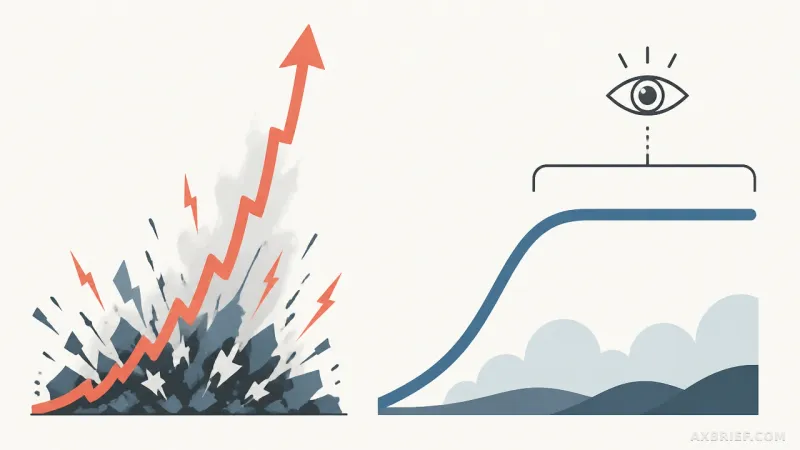
For years, the primary frustration in robotics has been the stutter. A robot receives a command, pauses to process the logic, executes a movement, and then freezes again to verify if the action worked. This stop-and-go cadence is the physical manifestation of the latency gap between high-level reasoning and low-level motor control. Developers have long sought a way to bridge this divide, moving away from rigid command-response sequences toward truly autonomous physical agents that can perceive, plan, and pivot in real time.
The Architecture of Embodied Reasoning
Google has addressed this bottleneck with the release of Gemini Robotics ER 2, a high-level brain model designed specifically for embodied reasoning. Unlike traditional models that treat robotics as a series of discrete API calls, ER 2 is engineered to understand the physical structure and properties of the world. It functions as the central orchestrator, handling spatial reasoning and multi-step task planning while allowing the robot to communicate with humans via natural language. To enhance its utility, the model integrates with external tools like Google Search and developer-defined functions, allowing it to fetch real-time information and inject it directly into an active task plan.
Access to this capability is routed through the Gemini API, Google AI Studio, and the Gemini Enterprise Agent Platform, the latter of which is currently available in private preview for corporate agent development. A critical architectural shift in ER 2 is the implementation of a parallel thinking structure. The model does not simply wait for a task to finish before planning the next; it computes the subsequent action while the current physical movement is still in progress. This removes the cognitive lag that previously plagued physical AI.
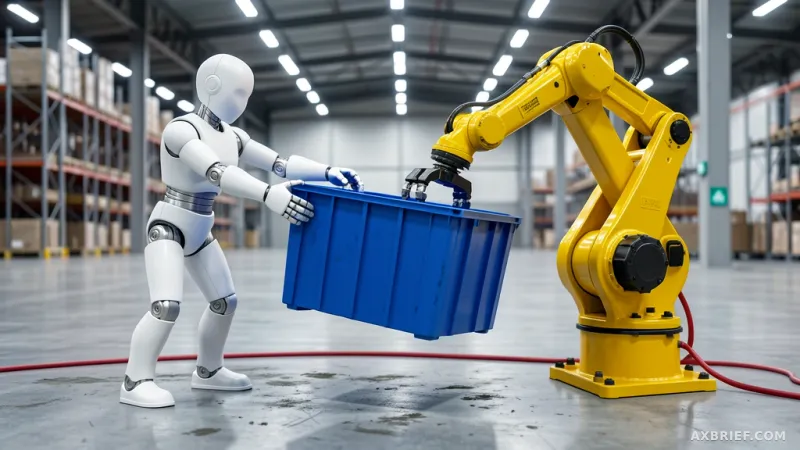
To maintain this efficiency, Google employs a strict hierarchical separation between reasoning and execution. Gemini Robotics ER 2 handles the high-level analysis and strategic planning, which it then passes down to low-level Vision-Language-Action (VLA) models or navigation APIs that control the actual motors and actuators. This orchestration ensures that the robot maintains its overarching goal even when navigating complex, unpredictable environments. This capability extends beyond single units to multi-robot collaboration, where different hardware types—such as wheeled rovers for interiors and humanoids for rough terrain—work together. By utilizing shared semantic understanding, these diverse robots can hand off tasks to one another, creating a cohesive workflow that no single robot could achieve alone. This was demonstrated through a collaborative system involving the Apptronik Apollo 2 and Franka F3 Duo robots.
Breaking the Latency Barrier with Moment Finding
The true differentiator of Gemini Robotics ER 2 lies in its ability to perceive time and progress with surgical precision. In progress classification tasks, the model recorded an accuracy of 57.4%. It achieves this by dividing a video feed into five distinct segments: 0-20%, 20-40%, 40-60%, 60-80%, and 80-100%. For complex tasks like tightening a lightbulb or tying a trash bag, the robot can now quantify exactly how close it is to completion. This prevents the inefficiency of restarting a failed process from scratch; instead, the robot identifies the specific failure point and attempts a correction from that exact moment.
Even more impressive is the model's performance in moment finding, where it achieved 91.3% accuracy and a Mean Absolute Distance (MAD) of 0.96 seconds. In this context, MAD represents the average time difference between when the model predicts an event occurred and when it actually happened in the video stream. A precision of 0.96 seconds allows the robot to capture fleeting physical events in near real-time, matching the performance of much larger, more computationally expensive models while operating at a fraction of the cost.
By optimizing for speed, Google has increased execution velocity by 4x and achieved sub-second latency. This is not merely a benchmark victory; it is a requirement for safety and fluidity. To facilitate this, ER 2 integrates the bidirectional streaming endpoints of the Gemini Live API. This allows for a simultaneous flow of data, ensuring that the high-level reasoning and low-level physical actions are locked in a continuous loop. The result is a robot that moves naturally, reacting to environmental changes without the characteristic pauses of previous generations.
This integration was validated using the Boston Dynamics Spot robot. By orchestrating Spot's navigation and manipulator APIs, ER 2 was able to process a natural language command to fetch a snack, moving from the command to the object and back to the user in one fluid motion. Developers can explore the implementation of these orchestrations via the following repository:
git clone https://github.com/google-deepmind/gemini-robotics-er2-examplesSafety Benchmarks and Implementation Logic
As robots move closer to human workspaces, the cost of a reasoning error shifts from a software bug to a physical hazard. Google validated ER 2 using two primary metrics: Safety Instruction Following and Human Proximity. Compared to ER 1.6 and other frontier models, ER 2 shows a marked improvement in recognizing physical constraints and detecting humans in its immediate vicinity. For instance, a humanoid robot powered by ER 2 can now execute a safety loop: it monitors the video feed, detects a human entering its workspace, immediately halts all motor commands, and only resumes the task once the sensors confirm the area is clear.
To standardize these requirements, Google introduced a dedicated VLA orchestrator benchmark. This framework measures the model's ability to enforce safety constraints, monitor the environment, and evaluate the physical feasibility of a plan. Crucially, it also tests the model's interaction capabilities—specifically, whether the orchestrator knows when to stop and ask a human for clarification in ambiguous or high-risk situations. This positions the high-level brain as a safety filter that screens the actions of the low-level execution models before they reach the hardware.
For practitioners transitioning to agent-based physical AI, the shift requires treating VLA models and navigation APIs as tools. Rather than following a hard-coded sequence, the system must stream multimodal video, audio, and text data to the model in real-time. This tool orchestration approach has proven more consistent across real-world VLA, simulated VLA, and human teleoperation modes than the previous ER 1.6 version. By abstracting hardware control into API calls, the system becomes hardware-agnostic, allowing the same reasoning brain to control a variety of robotic forms.
To measure the reliability of such a system, developers should focus on Success Detection and ERQA (Embodied Reasoning Question Answering) accuracy. Success Detection relies on the moment-finding capability to determine if a goal was met, while ERQA verifies the logical consistency of the robot's internal reasoning by asking it to describe its current state or environment. Gemini Robotics ER 2 currently leads in both metrics, particularly in its ability to identify exceptions during tool use and suggest corrective paths.
The transition from programmed machines to intuitive agents is no longer a matter of increasing parameter counts, but of shrinking the gap between thought and action.