The current race in artificial intelligence has shifted from models that can merely talk to agents that can actually do. For years, the industry has chased the dream of a Large Action Model—an entity capable of navigating a computer interface exactly as a human would, clicking buttons and typing commands without needing a specialized backend. This transition from passive generation to active agency is the new frontier, and the most complex testing grounds for this evolution have always been virtual worlds. While most AI agents rely on structured data or internal hooks to interact with software, a new approach from Google DeepMind suggests that the most scalable way to build an agent is to treat the software as a black box.
The Fifteen Year Blueprint from Atari to AlphaFold
The arrival of SIMA is not an isolated breakthrough but the culmination of a fifteen-year strategic obsession with game environments. DeepMind has long viewed games not as toys, but as constrained laboratories for exploring general intelligence. This trajectory reached a symbolic peak recently when the 2024 Nobel Prize in Chemistry was awarded for AlphaFold, a system that solved the protein folding problem by applying the same fundamental research principles developed in game-based environments. The ability to predict biological structures is, in many ways, a direct descendant of the ability to predict the next move in a digital simulation.
This journey began in earnest in 2015 with the Deep Q-Network, or DQN. By utilizing deep neural networks to learn directly from pixel data, DQN mastered 49 different Atari 2600 games. Whether it was Pong, Breakout, or Space Invaders, the AI did not require a manual or a set of pre-defined rules; it learned by observing the screen and maximizing a reward signal. This sparked the era of Deep Reinforcement Learning, proving that an AI could derive complex strategies from raw visual input.
The ambition scaled rapidly from there. In 2016, AlphaGo defeated Lee Sedol, and the subsequent AlphaGo Zero proved that an AI could surpass human capability through self-play, learning entirely without human data. This evolved into AlphaZero, which unified the mastery of chess, shogi, and Go under a single algorithm, and later MuZero, which could learn to play games without even knowing the rules beforehand. By 2019, AlphaStar reached Grandmaster level in StarCraft II, navigating a world defined by real-time complexity and imperfect information. Each of these milestones served as a building block for a system that could perceive a visual environment and execute a sequence of optimal decisions.
The Shift from Score Optimization to Instruction Following
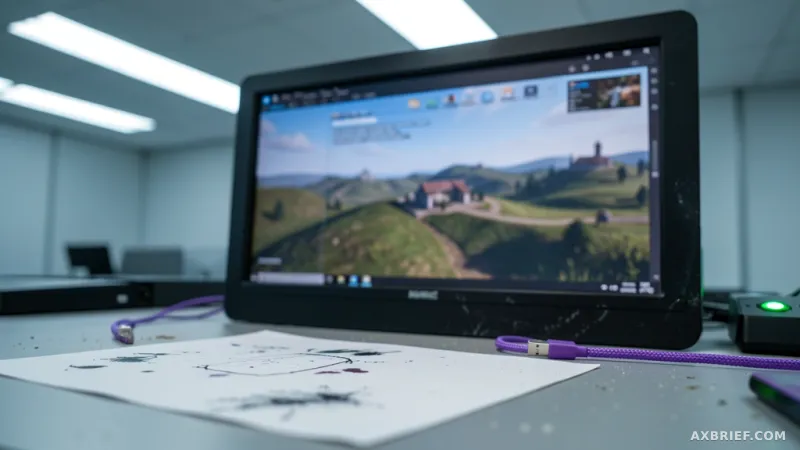
While previous iterations of game AI were designed to win—to maximize a score or defeat an opponent—SIMA, the Scalable Instructable Multiworld Agent, represents a fundamental pivot in objective. SIMA is not trying to beat the game; it is trying to follow the user. This is the critical distinction between a specialized bot and a general-purpose agent. SIMA does not have access to the game's API, its source code, or its internal memory addresses. It operates exactly like a human player: it sees the pixels on the monitor and receives instructions in natural language. Its only way to interact with the world is through standard keyboard and mouse inputs.
Under the hood, SIMA is powered by Gemini, Google DeepMind's frontier multimodal model. By leveraging Gemini's ability to process both visual and textual data simultaneously, SIMA can analyze a scene in real-time and translate a request like "find a source of water" into a series of precise mouse movements and key presses. This capability has been demonstrated across a variety of 3D environments and commercial titles, including No Man's Sky, Valheim, and Hydroneer. Because it relies on visual perception rather than internal data, SIMA can be dropped into a new game it has never seen before and begin executing tasks without requiring a massive retraining phase.
This architecture removes the primary friction point for AI integration in software. Traditionally, adding an AI agent to a game required developers to build custom APIs or modify the engine to expose specific state variables to the model. SIMA bypasses this entirely. Since it interacts with the external interface, the game engine remains untouched. The AI is an observer and an operator, not a part of the code, which allows for a level of universality that was previously impossible.
Redefining QA and the Future of Adaptive NPCs
The practical implications of this approach extend far beyond the curiosity of playing games. DeepMind has already expanded its research portfolio through partnerships with Fenris Creations and EVE Universe, collaborating with studios such as Hello Games, Coffee Stain Studios, and Foulball Hangover. The goal is to use these complex virtual worlds as training grounds for agents that can eventually solve real-world problems in physical or digital spaces.
In the immediate term, this technology transforms Quality Assurance. In a standard development cycle, every single code commit can potentially break a game's logic, forcing QA engineers to rewrite automation scripts to match the new environment. This creates a massive bottleneck in the production pipeline. An agent like SIMA, however, does not rely on scripts. Because it perceives the game visually, it can continue testing a feature even if the underlying code has changed, provided the visual goal remains the same. This reduces the manual labor of test maintenance and allows for more robust, continuous integration.
Beyond testing, SIMA opens the door to a new generation of Non-Player Characters. Current NPCs are largely prisoners of their scripts, repeating the same dialogue and following rigid paths. An adaptive NPC powered by a SIMA-like architecture could understand the world and react to player behavior in real-time without needing a pre-written response for every possible scenario. If a player does something unexpected, the NPC can perceive the change visually and adapt its behavior based on a high-level goal rather than a hard-coded trigger.
By proving that an agent can master complex environments using only pixels and language, DeepMind has demonstrated that the barrier between the AI and the software is disappearing. The ability to operate a system without needing to understand its internal code is the final step toward truly autonomous digital assistants.