The modern digital morning is a fragmented ritual of cognitive switching. We wake up and navigate a disjointed sequence of checking emails, scanning calendars, and performing a dozen disparate searches just to organize a single day. For decades, the relationship between the user and the computer has been defined by the search bar—a gateway where we ask for information and then manually perform the labor of applying that information across various applications. This week, Google signaled the end of this era. At Google I/O 2026, the company unveiled a vision where the AI is no longer a librarian providing links, but an agent capable of executing the work itself. The shift is fundamental: Google is moving from a search-centric ecosystem to an agent-centric one, where the primary goal is not to find information, but to complete a mission.
The Technical Foundation of the Agentic Era
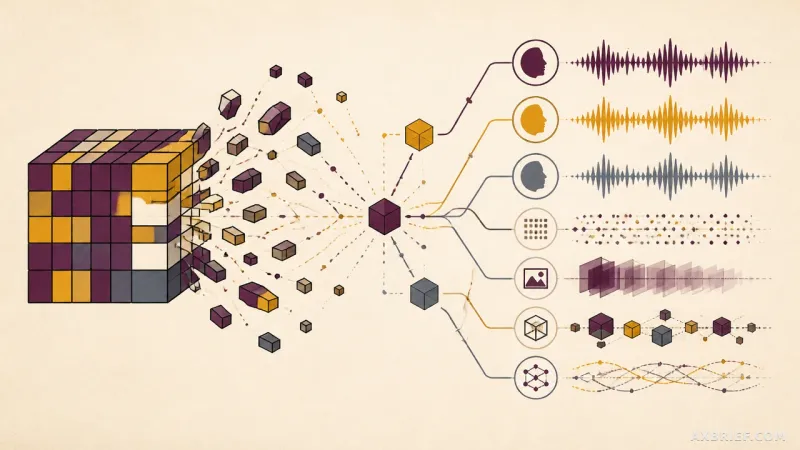
At the heart of this transition is the new Gemini Omni model, a multimodal powerhouse designed to process video, audio, and text simultaneously. Unlike previous iterations that handled different data types in silos, Gemini Omni utilizes a unified processing system. This allows a user to upload a combination of images, voice memos, and text notes, which the model then synthesizes to generate a cohesive video. The interaction does not end with the output; users can refine the resulting video through natural conversation, requesting specific changes that the model implements in real time. This tight loop between multimodal input and generative output transforms the AI from a tool into a collaborative creative partner.
To make these capabilities accessible across different tiers of usage, Google introduced Gemini Omni Flash. This version is available to Gemini Plus, Pro, and Ultra subscribers through the Gemini app and Google Flow. In a strategic move to capture the creator economy, Google is providing Gemini Omni Flash for free to users of YouTube Shorts and YouTube Create. This removes the technical barrier to high-end content production, allowing creators to produce professional-grade media through dialogue rather than complex editing software.
For the developer community and enterprise sector, the focus shifts to Gemini 3.5 Flash. This model is specifically optimized for multi-step reasoning and the completion of complex agentic tasks. It is currently available via the Google Antigravity, Google AI Studio, and Android Studio APIs, and is integrated into Gemini Enterprise and the AI-powered search mode. While Gemini 3.5 Flash handles the heavy lifting of execution, Google is currently internal-testing Gemini 3.5 Pro, which is slated for a formal release next month. Rather than simply increasing parameter counts, Google has focused on optimizing the logical flow required for goal attainment. Detailed technical specifications and API documentation are available at ai.google.dev.
From Static Results to Generative Interfaces
The most provocative shift presented at I/O 2026 is the introduction of Antigravity, a technology that enables Generative UI. Traditionally, when a user searches for something, the AI returns a response within a fixed template. Antigravity breaks this mold by allowing Gemini 3.5 Flash to code the user interface in real time based on the specific needs of the query. The AI does not just provide an answer; it builds the most efficient visual tool to manage that answer. If a user is planning a wedding or managing a cross-country move, Antigravity does not return a list of tips. Instead, it instantly codes a personalized dashboard featuring checklists, budget trackers, and interactive timelines. These are not pre-made templates but bespoke mini-apps generated on the fly to maintain the state of a long-term project.
This execution-oriented approach extends to the Information Agent. By triggering the command keep me updated, users activate a background process that monitors blogs, news feeds, social media, and real-time financial or sports data 24/7. The agent eliminates the need for repetitive manual searching by synthesizing these disparate data streams into a comprehensive report, shifting the user's role from a hunter of information to a reviewer of intelligence.
This automation reaches its peak with Gemini Spark, a persistent cloud agent integrated with Gmail, Docs, and Slides. Unlike standard chatbots that require an active session, Gemini Spark lives on the server, executing repetitive workflows even when the user's device is powered off. It can categorize emails based on complex conditions or compile daily reports autonomously. To maintain security and user agency, Google has implemented a mandatory confirmation step for critical actions, such as finalizing payments or sending outbound emails.
Complementing this is the Daily Brief, which aggregates urgent emails, calendar events, and to-do lists into a personalized morning briefing. The agent prioritizes tasks in the background and suggests the next best action, refining its suggestions based on continuous user feedback. This ecosystem is further tied together by the Universal Cart, a cross-platform shopping integration. Whether a user finds a product in a YouTube video, a Gmail message, or a Gemini chat, they can add it to a single unified cart that tracks price fluctuations and restock alerts in the background. This entire experience is wrapped in the Neural Expressive design language, which replaces static text with interactive timelines and dynamic graphics generated in real time.
Google is also pushing these agents into the physical and desktop environments. Android XR introduces two new forms of intelligent eyewear. The Audio Glasses, arriving this fall, allow for hands-free control of music, calls, and commerce via voice. The Display Glasses take this further by overlaying AI-driven visual information directly onto the user's field of vision. Simultaneously, the macOS Gemini app is evolving. Coming this summer, the integration of Gemini Spark into macOS will allow the AI to control local files and automate workflows across multiple desktop applications, significantly reducing the time spent on manual file organization and document management.
Furthermore, the macOS app is introducing a sophisticated voice experience. The AI now reads the on-screen context and converts spoken thoughts into polished drafts. It automatically strips out filler words and repetitions, capturing the core intent and inserting the refined text directly at the cursor's position. This transforms the act of writing from a manual struggle with a keyboard into a fluid conversation with a machine that understands both the spoken word and the digital context.
As AI moves from the browser to the operating system and into wearable hardware, the fundamental nature of human-computer interaction is changing. We are moving away from the era of the search query and entering the era of the executive command. The user is no longer the one doing the searching, clicking, and organizing; they have become the final decision-maker who reviews and approves the results delivered by a fleet of autonomous agents.
Search is no longer the destination; it is merely the background process for execution.