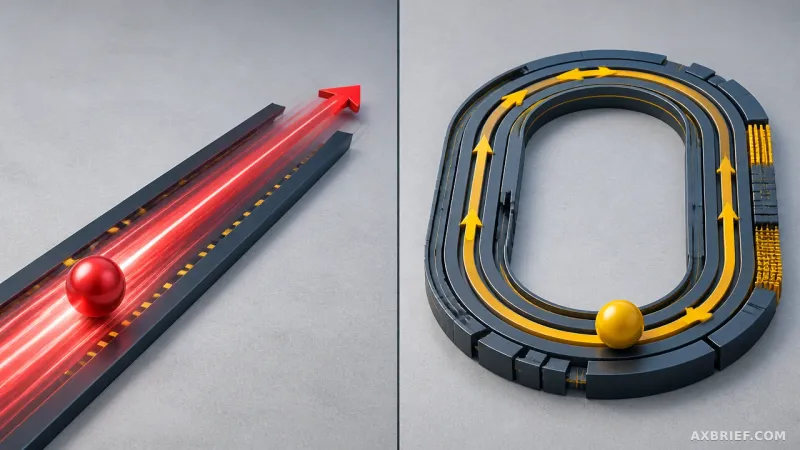
For two decades, the act of searching for an image followed a predictable ritual. A user typed a keyword into a white box, scrolled through a grid of thumbnails, and clicked a link to find a visual representation of a concept that already existed somewhere on the web. It was a process of discovery and retrieval. But this week, the interface is shifting. The search bar is no longer just a gateway to an index of existing files; it is becoming a generative canvas where the boundary between finding a picture and creating one has effectively vanished.
The Architecture of Nano Banana and the New Gallery
Google Image officially enters its 25th year since its July 2001 debut, marking a transition from a simple directory of blue links and thumbnails to a multimodal AI ecosystem. To anchor this anniversary, Google is rolling out a redesigned Image Gallery home for desktop English users in the United States. This new hub moves away from static results, offering an immersive, real-time updating gallery tailored to individual user interests. For users logged into their Google accounts, the system now includes a collections tab at the top of the main gallery, allowing them to save and organize ideas to serve as jumping-off points for future explorations.
The most significant technical addition is the introduction of the Nano Banana model. Unlike the massive foundational models that require immense compute, Nano Banana is a specialized small-scale model integrated directly into AI Overviews. Its primary purpose is to transform text prompts into high-quality, customized images instantly within the search experience. While traditional image search functioned as a navigation tool to locate existing web content, Nano Banana transforms the search bar into a production tool. This capability is being deployed sequentially across all English-speaking regions that currently support image generation in AI mode.
From Visual Indexing to Multimodal Reasoning
The shift toward generation is only one half of the evolution. The other half is the transition from simple object recognition to complex visual reasoning. For years, Google expanded its visual capabilities through Similar Images and Search by Image, allowing users to use pixels instead of words as queries. This evolved into Google Lens, which could identify products or translate text in real-time. However, the current leap is driven by a technology called visual image fan-out.
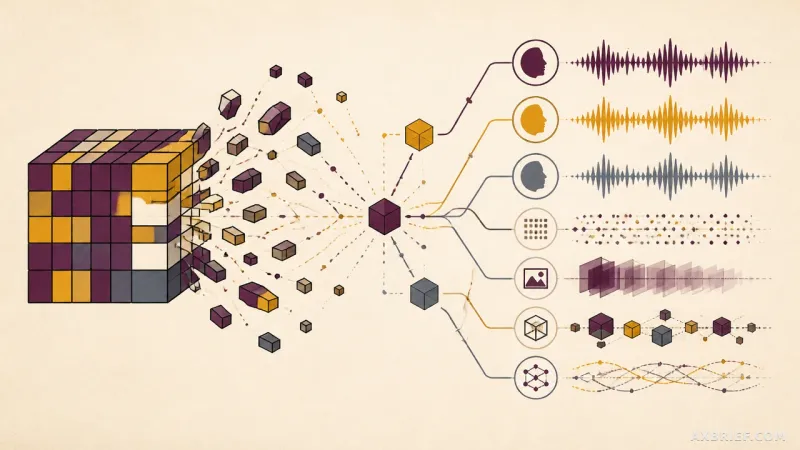
Visual image fan-out represents a fundamental change in how AI processes a scene. Instead of treating an uploaded photo as a single data point, the system decomposes a single image into dozens of distinct sub-queries. When a user uploads a photo in AI mode, the system analyzes the entire scene, breaks it down into granular components, and performs simultaneous searches for each element. This allows the AI to understand the relationship between objects rather than just identifying them in isolation. For example, instead of simply recognizing a chair, the AI can now reason about the chair's style, its placement relative to a table, and the overall aesthetic of the room to answer complex design questions.
This reasoning engine is now being pushed to the edge of the user experience through Circle to Search, which is currently active on over 580 million Android devices. By applying visual image fan-out to the Circle to Search interface, Google allows users to highlight multiple objects within a single screen and analyze them simultaneously. A user can circle an entire outfit in a photo, and the AI will decompose the image into separate queries for the shoes, the jacket, and the accessories, providing a comprehensive shopping grid in one motion.
Further extending this is Search Live, a feature that integrates a smartphone's live camera feed with AI voice interaction. By capturing the movement and context of a live video stream, the AI can provide real-time guidance for physical tasks, such as troubleshooting a piece of hardware or following a recipe in a kitchen. The search interface itself has adapted to this multimodal flow, adding a plus icon to the intelligent search bar that enables the simultaneous upload of multiple images to refine AI-generated responses.
This progression marks the end of the keyword era. When a user asks for something as specific as barrel jeans that are not too baggy, the system no longer looks for a literal text match in a product description. It interprets the nuance of the request, utilizes visual reasoning to filter styles, and presents a curated grid of products that match the user's subjective taste. The pipeline has moved from text-based search to image uploads, then to multimodal reasoning, and finally to the generative stage where the AI creates the visual answer from scratch.
Google is effectively redefining the search engine as a visual inference engine. By combining the generative power of Nano Banana with the analytical depth of visual image fan-out, the platform is moving beyond the limitations of the existing web index. The user is no longer restricted to what has already been uploaded to a server; they can now synthesize new visual information based on a reasoned understanding of the world.
This evolution transforms the search bar from a tool for finding into a tool for creating.