The modern dinner party host typically navigates a fragmented digital landscape, juggling a dozen open tabs across Pinterest for decor, specialized blogs for recipes, and streaming apps for the right atmosphere. This cognitive load creates a gap between the inspiration phase and the actual execution of the event. The friction lies not in finding information, but in synthesizing that information into a physical reality. This week, the shift toward a unified execution layer becomes evident as Google transforms the search bar from a directory of links into a comprehensive event coordinator.
The Mechanics of Visual Planning with Nano Banana
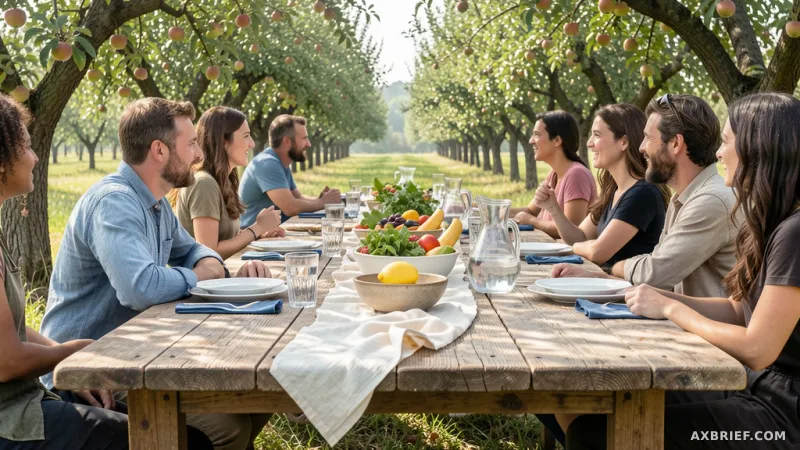
Google Search AI mode now integrates a specialized tool called Nano Banana to bridge the gap between text-based ideas and visual assets. When a user invokes Nano Banana within the AI mode, the system moves beyond suggesting themes to generating actual tablescape visualizations. These images provide concrete examples of table decorations and prop placements, allowing hosts to see how a specific theme translates to their physical space before purchasing a single item. This transition from conceptual brainstorming to visual guidance reduces the uncertainty inherent in event planning.
Beyond the environment, Nano Banana handles the graphic design of the evening. By processing a specific course list—such as a Caprese salad appetizer, a Chicken Piccata main course, and a Tiramisu dessert—the AI designs a professional, printable menu in a matter of seconds. This output is not a mere suggestion but a digital asset that users can print and place on a physical table. By automating the logistics of menu design, the system allows the host to redirect their energy toward the guest experience rather than the administrative burden of document formatting.
To streamline the selection of the food itself, Google Search AI mode implements a specific visual treatment for recipe results. Instead of a standard list of links, the top of the search response now features a curated data block combining an image with three critical quantitative metrics: the creator's name, the user rating, and the total number of ingredients. This structural change allows users to instantly gauge the credibility and complexity of a recipe without clicking through to a third-party site, significantly accelerating the filtering process during the menu-building phase.
From Information Retrieval to Multi-Sensory Execution
While visual tools handle the aesthetic, the true shift occurs when the AI begins to manage the sensory logic of the event. The AI mode analyzes the flavor profiles and aromas of the finalized menu to suggest precise drink pairings. For a combination involving Miso Salmon, a cheese platter, and Key Lime Pie, the AI does not simply list beverages; it provides the logical reasoning behind each pairing, explaining how a specific drink complements or contrasts with the ingredients. This transforms the search engine from a source of facts into a consultant providing expert-level curation.
This workflow extends into the auditory dimension through direct integration with external applications. When a user requests a playlist that matches the party's mood, the AI mode synchronizes directly with YouTube Music. Rather than providing a list of song suggestions that the user must manually search for in another app, the system creates a curated list that can be saved and played with a single interaction. This removes the technical friction between the search interface and the playback device, effectively turning the search bar into a remote control for the physical environment.
This integration represents a fundamental reversal in how we interact with search engines. For decades, the goal of search was to provide the most accurate answer to a query. Now, the value proposition has shifted toward the speed of execution. By collapsing the distance between a recipe search, a design tool, a pairing guide, and a music player, Google is eliminating the fragmented app-switching behavior that defines current digital workflows. The search engine is no longer just answering the question of how to host a party; it is providing the physical blueprints and digital triggers to make the party happen.
Search has evolved from a destination for information into a comprehensive architect for the physical lifestyle.