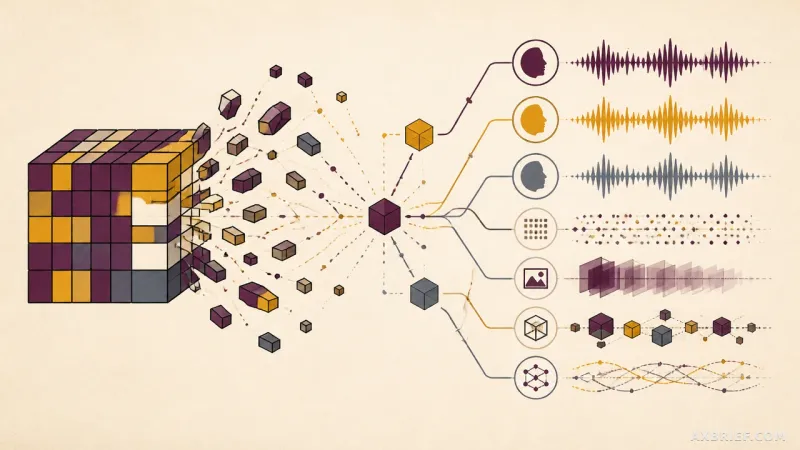
The modern digital workflow is defined by a frustrating cycle of fragmentation. A user searches for a specific recipe on a browser, finds the perfect set of ingredients, and then must manually open a grocery app, log in, and search for those same items one by one. This cognitive leap—the transition from finding information to executing a task—creates a friction point that slows down productivity and increases mental load. For years, the internet has operated as a series of disconnected silos where the search engine serves as a directory, but never the destination for the actual work.
The Integration of External Services into AI Mode
Google is now attempting to dissolve this boundary by introducing direct external app connectivity within the AI mode of Google Search. Starting this week, Google is rolling out a feature in the United States that allows users to link their accounts from third-party services directly into the search experience. This is not a simple redirection to a website; it is a functional integration that allows users to trigger specific app capabilities without ever leaving the search results page.
This update represents a strategic expansion of the connectivity features previously exclusive to the Gemini app. By bringing these capabilities into the core Google Search AI mode, the company is moving the execution layer to the very first point of entry for most internet users. The initial rollout focuses on three primary partners: Instacart for grocery shopping, Canva for graphic design, and YouTube Music for audio curation.
Through the use of secure links—encrypted pathways that safely connect a user's third-party account to the AI system—users can now perform high-intent actions. A user can add specific grocery items to an Instacart cart, browse and select design templates via Canva, or curate and save music playlists in YouTube Music, all while remaining within the AI-driven search interface. Google has confirmed that it is actively collaborating with additional partners to expand this ecosystem, aiming to turn the search bar into a universal command center for a wide array of digital services.
From Information Retrieval to Personal Intelligence
To understand why this is a fundamental shift rather than a mere UI update, one must look at the underlying architecture of Personal Intelligence. Traditional search engines operate on a request-response model: the user asks a question, and the engine provides the most relevant links. Even early generative AI search focused primarily on synthesizing those links into a summary. However, Google's new approach combines real-time API data from connected apps with a layer of personalized context that understands the user's specific preferences and current goals.
This Personal Intelligence layer analyzes the user's historical patterns and the immediate context of their query to refine the output. When a user interacts with a connected service, the AI does not just send a generic command; it filters the service's options through the lens of the user's identity. For example, if a user is planning a project, the AI doesn't just link to Canva; it identifies the most appropriate templates based on the project's context and the user's previous design choices.
The technical core of this experience is the transition from deep linking to API-driven execution. A deep link merely drops a user into a specific page of another app, still requiring the user to navigate the app's internal logic. In contrast, the AI mode interacts directly with the service's API to return specific execution values. The AI acts as the orchestrator, handling the communication between the user's intent and the app's function. This removes the physical and mental cost of app-switching, effectively turning the AI into a proxy that operates the software on the user's behalf.
This creates a new behavioral loop: search, decide, and execute. In a practical scenario, a user planning a backyard barbecue can use AI mode to generate a guest list and menu, immediately push the required ingredients to an Instacart cart, find a party-themed flyer template in Canva for the invitations, and build a high-energy playlist in YouTube Music. The entire workflow is collapsed into a single session. The AI mode ceases to be a tool for finding answers and becomes a tool for completing objectives.
By positioning the search engine as an OS-level agent hub, Google is redefining the value proposition of AI. The goal is no longer just the accuracy of the answer, but the completeness of the workflow. When the search engine can bridge the gap between a thought and a finished task, it stops being a gateway to the web and starts being the operating system for the user's digital life.