The corporate video production cycle has long been a bottleneck for internal communications. For years, the process remained stubbornly physical: a manager spends an hour setting up ring lights, a team member struggles with a tripod, and the resulting footage undergoes a grueling cycle of retakes because of a single stumbled word. Even for those who avoid the camera, the alternative is a steep learning curve in professional editing software where a simple background change requires hours of masking and layering. This friction has historically limited the frequency and personalization of business updates, leaving most teams to rely on static slide decks or long-form emails that employees rarely read in full.
The Multimodal Architecture of Gemini Omni and Google Vids
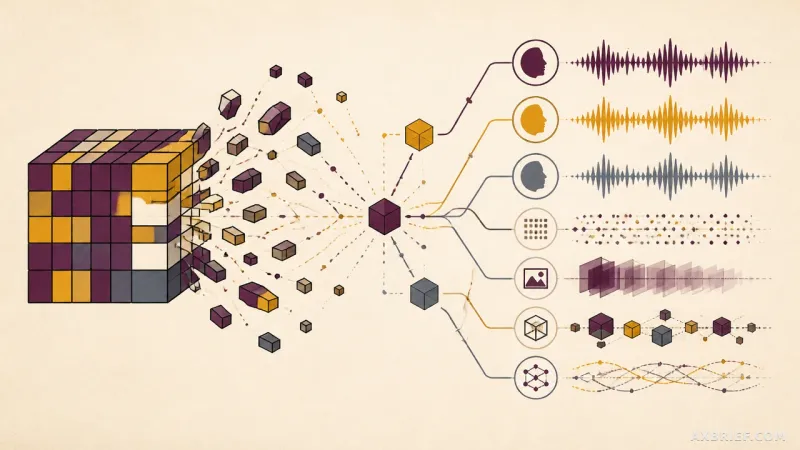
Google is attempting to dismantle these barriers by integrating Gemini Omni into Google Vids, transforming the video creation process into a conversational experience. This update builds upon the foundation of Veo 3.1, Google's video generation model released to all users in February, but shifts the focus from simple generation to precise, iterative control. Gemini Omni operates as a multimodal engine, meaning it does not rely solely on text prompts. Instead, it allows users to combine natural language instructions with visual references, such as high-resolution photographs or rough hand-drawn sketches. By providing a sketch, a user can dictate the spatial composition and framing of a scene, while the text prompt defines the mood, lighting, and specific action. This hybrid approach eliminates the randomness often associated with text-to-video models, giving the creator a direct lever to control the visual output.
Beyond initial generation, the system introduces step-by-step edits. This feature allows users to modify specific segments of a video using everyday language rather than a timeline of cuts and splices. Crucially, this capability extends beyond AI-generated clips; it applies to real-world footage uploaded from a smartphone. A user can simply instruct the AI to brighten the lighting in a dim room, swap a corporate office background for a neutral studio setting, or add specific visual effects to a clip. This iterative layering ensures that a single error does not necessitate a full restart of the production, drastically reducing the time between the first draft and the final export.
Parallel to the editing suite is the introduction of personalized digital avatars. This feature allows a user to upload a single selfie and a brief audio recording to create a high-fidelity digital twin. Once the avatar is established, the user simply types the script they wish to deliver. The system then generates a video where the avatar speaks the text with synchronized lip movements and the user's own cloned voice. To prevent misuse and impersonation, Google has implemented strict guardrails: the feature is available only to users aged 18 and older in specific regions, and the system restricts avatar creation to the verified owner of the account. Access to these Gemini Omni and avatar tools is currently reserved for Google AI Pro and Ultra subscribers, as well as Google Workspace business customers.
Shifting the Bottleneck from Technical Skill to Creative Direction
The integration of Gemini Omni represents a fundamental shift in how corporate content is produced, moving the primary challenge from technical execution to conceptual planning. In the traditional workflow, the bottleneck was the tool; the quality of the video depended on the editor's proficiency with a complex interface. With Google Vids, the bottleneck shifts to the prompt and the reference image. The ability to use a rough sketch as a guide means that the user is no longer guessing how the AI will interpret a phrase like wide-angle shot or cinematic lighting. Instead, they are providing a visual blueprint that the AI fills in. This transforms the role of the corporate communicator from a technician into a director.
However, the proliferation of hyper-realistic AI avatars and seamless video editing introduces a significant trust deficit within the enterprise. To address the risk of deepfakes and misinformation, Google has embedded SynthID into every generated clip. SynthID is an invisible digital watermark that is imperceptible to the human eye but remains detectable by system-level verification tools. Unlike traditional watermarks that can be cropped out or edited away, SynthID is integrated into the data of the video itself. This ensures that any content produced within Google Vids carries a permanent, verifiable signature of its AI origin.
For a business, this transparency is not just a safety feature but a compliance necessity. In an environment where internal communications must be authoritative and authentic, the ability to distinguish between a recorded live address and an AI-generated update is critical. By combining the efficiency of digital avatars with the accountability of SynthID, Google is attempting to create a closed-loop ecosystem where speed does not come at the expense of truth. The result is a production pipeline where a manager can update a weekly announcement in minutes without ever stepping in front of a camera, while the organization maintains a clear audit trail of what is real and what is synthetic.
This entire workflow is housed within the Google Workspace ecosystem, removing the need to export files between disparate planning, recording, and editing tools. The transition from a project brief in a Doc to a final video in Vids happens within a single environment, streamlining the distribution process to team members. The physical costs of production—lighting, makeup, and studio time—are replaced by the cognitive cost of refining a prompt. As the technical barrier to entry vanishes, the value of a corporate video will no longer be judged by its production value, but by the clarity and impact of its message.
The era of the corporate video studio is being replaced by the era of the AI-driven storyboard, where the only limit to production is the user's ability to describe their vision.