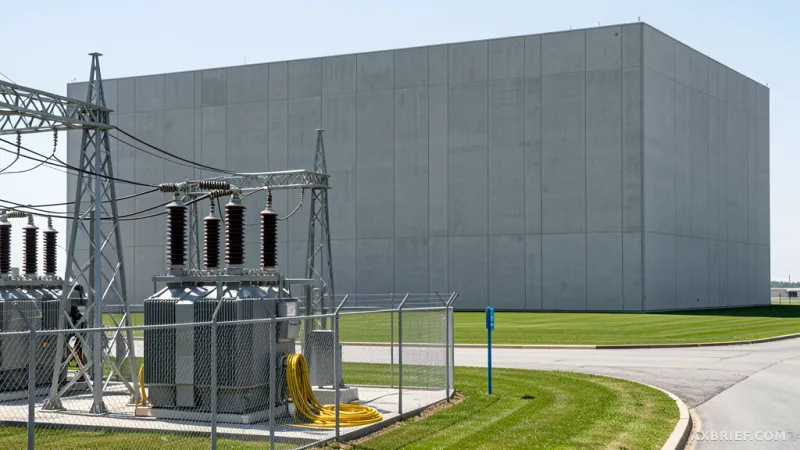
The AI race is no longer just a battle of parameters and tokens; it has become a war of electricity and copper. In the data center alleys of Northern Virginia, the friction is palpable. As hyperscalers plant massive server farms, the local grid groans under the weight, and residents face the looming threat of surging utility bills. This is the physical reality of the generative AI boom: the cloud is actually a series of power-hungry warehouses that require an immense amount of physical infrastructure to survive.
The Cost of Compute in Loudoun and Prince William
Google is attempting to preempt this friction through a targeted infrastructure offensive in Virginia. Operating across Reston, Loudoun, and Prince William counties, the company is not merely consuming power but actively expanding the supply. To offset the massive load its AI data centers place on the local grid, Google has invested in over 500MW of new energy capacity. This move is designed to neutralize the strain on the regional power network, ensuring that the expansion of AI compute does not come at the expense of local stability.
Parallel to this capacity build, Google has launched a $15 million Energy Impact Fund. This capital is earmarked for community-level projects, specifically targeting home repairs, weatherization, and energy efficiency upgrades. By lowering the energy overhead for individual households, Google aims to mitigate the rising cost of living that often accompanies the arrival of industrial-scale tech hubs. The company is effectively treating regional grid stability and community affordability as prerequisite components of its operational license.
Solving the Physical Bottleneck of Human Labor
However, the most critical bottleneck in the AI pipeline is not the availability of electricity, but the availability of the people who can install it. Unlike a software patch that can be deployed globally in seconds, a power substation requires boots on the ground and specialized expertise. The industry is facing a severe shortage of skilled electricians, creating a physical ceiling on how fast AI can scale. If there are no technicians to wire the buildings, the most advanced GPUs in the world remain useless in their crates.
Google is addressing this by funding the electrical training ALLIANCE (etA) and supporting local apprenticeship facilities. The goal is specific and ambitious: to establish a pipeline that trains 2,741 additional apprentices by 2030. This is not a localized experiment but a blueprint for a national strategy. Through Google.org, the company intends to cultivate more than 300,000 skilled technicians across the United States.
The shift here is profound. Google is moving beyond the traditional procurement of hardware and servers, treating the local labor market and the regional power grid as critical components of its AI stack. By investing in the human ecosystem, Google is ensuring that its physical expansion is not throttled by a lack of skilled tradespeople.
The ability to realize the full potential of AI now depends less on the elegance of the code and more on the scale of the physical ecosystem.