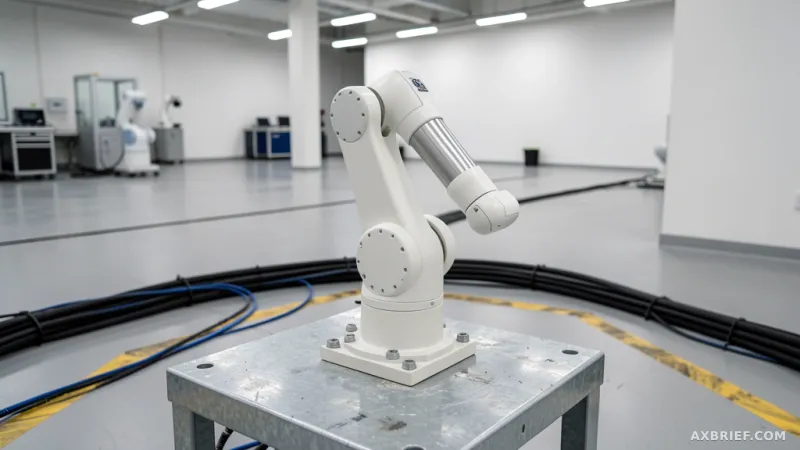
Industrial floors are undergoing a silent but profound transformation as autonomous systems move from isolated cages to collaborative spaces. For years, the primary concern of cybersecurity was the protection of data—preventing the leak of a customer database or the theft of intellectual property. However, the rise of Physical AI has shifted the stakes. When a generative AI model controls a multi-ton robotic arm or a fleet of autonomous mobile robots, a security breach is no longer just a digital crisis. It is a physical hazard. A single line of malicious code can now translate into a mechanical malfunction, leading to catastrophic equipment failure or direct human injury.
The Blueprint for a Regional Security Cluster
To address these escalating risks, Gyeongsangbuk-do and Daegu Metropolitan City are establishing a specialized information security cluster dedicated to AI robots. This initiative follows the selection of the two regions for the 2026 Regional Hub Information Security Cluster Construction Project, a competitive bid managed by the Ministry of Science and ICT and the Korea Internet & Security Agency (KISA). The project operates on a strategic timeline spanning from 2026 to 2030, with a total investment of 20 billion KRW. This funding is split equally, with 10 billion KRW provided by the national government and 10 billion KRW sourced from local municipal budgets.
The project is driven by a comprehensive consortium designed to bridge the gap between policy, research, and industry. The partnership includes Gyeongsangbuk-do, Daegu Metropolitan City, Pohang Technopark, the Daegu Digital Innovation Promotion Agency (DIP), the Korea Institute of Robot Convergence (KIRO), and the Korea Institute for Robot Industry Advancement (KIRIA). By combining the manufacturing prowess of the region with advanced cybersecurity frameworks, the cluster aims to decentralize the security industry, which has historically been concentrated in the Seoul metropolitan area, and embed it directly into the heart of Korea's robotic manufacturing belt.
Bridging the Gap Between Code and Steel
While traditional cybersecurity focuses on the perimeter of a network, AI robot security requires a concept known as convergence security. The danger in modern robotics stems from the intersection of generative AI vulnerabilities, ransomware, and supply chain attacks. If an attacker gains access to the control layer of an AI robot, they can bypass safety protocols that were designed for predictable, scripted movements. The result is a scenario where the robot behaves erratically, not because of a mechanical failure, but because its cognitive layer has been compromised.
This is where the Gyeongbuk and Daegu initiative departs from standard software incubators. Instead of focusing solely on virtual environments, the province is leveraging the existing industrial infrastructure in Pohang and Gumi. The plan involves the construction of AI robot security testbeds and real-world cyber training centers. These facilities allow security firms to deploy their solutions on actual hardware, simulating attacks to see how they manifest in physical movements. This empirical approach allows developers to verify if a security patch actually prevents a physical collision or if a detection system can spot a subtle anomaly in a robot's trajectory before it becomes a safety risk.
Beyond the hardware, the cluster focuses on the human element of the security equation. The project will implement specialized training programs to cultivate a workforce that understands both robotic kinematics and cybersecurity. For security solution providers, this environment offers a rare dual advantage: access to high-fidelity verification infrastructure and a pipeline of talent capable of operating at the intersection of AI and mechanical engineering. The ability to prove a product's efficacy in a real-world manufacturing setting becomes a critical competitive advantage for companies looking to scale their solutions globally.
The shift toward regional security hubs marks the end of the era where cybersecurity was treated as a separate software layer added after the hardware was built.