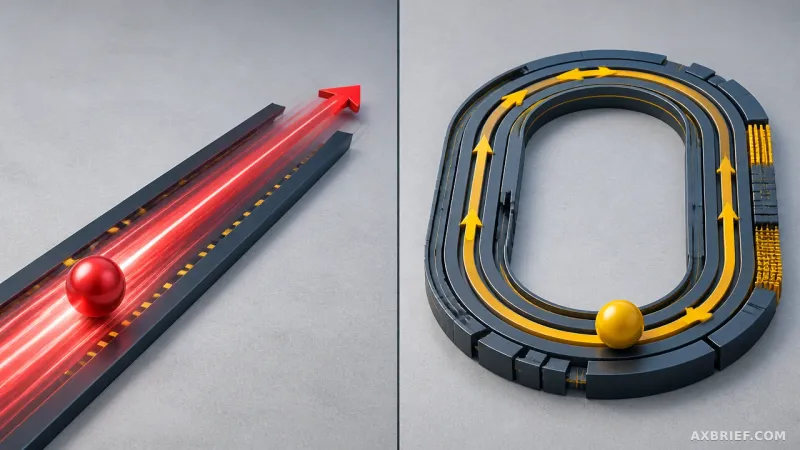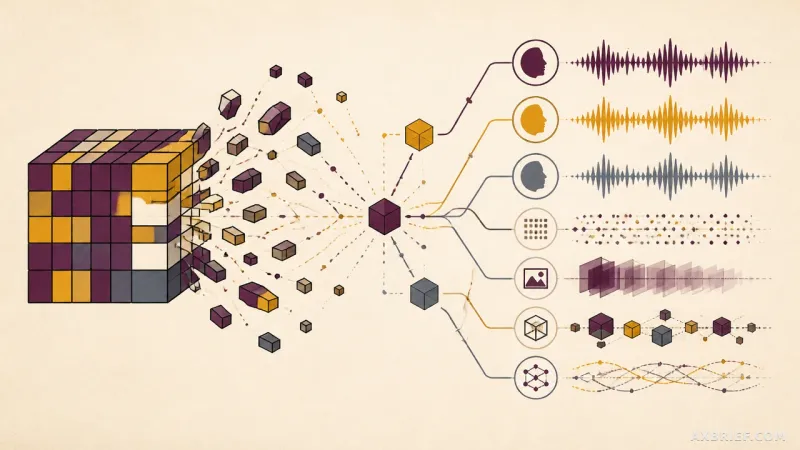
Developers building AI agents have long hit a wall where the ambition of the software meets the reality of the infrastructure. For most, the choice is a binary struggle between the prohibitive costs of cloud-based inference and the restrictive sandbox of browser-based environments. An agent that can truly navigate a desktop or a mobile device requires a level of system integration and low-latency response that cloud APIs often struggle to provide without draining a budget. This tension has left many high-potential agentic workflows trapped in the prototype stage, unable to scale because the cost of every single click and screen-read adds up to a financial liability.
The Architecture of Universal Computer Use
Holo3.1 arrives as a direct response to these constraints, leveraging the Qwen model family to build a versatile foundation for general computer use across web, desktop, and mobile platforms. To ensure that developers can deploy these agents wherever their specific workflow demands, the team released the model in four distinct sizes: 0.8B, 4B, 9B, and 35B-A3B. The smaller models, ranging from 0.8B to 9B, are engineered for cost-effective private deployments where efficiency is paramount. In contrast, the 35B-A3B variant is designed for complex, high-reasoning tasks that require maximum performance. This tiered approach allows an agent to be deployed anywhere from a high-end cloud cluster to the end-user's own hardware.
One of the most significant leaps in this version is the expansion into mobile environments. While previous iterations focused heavily on browser and desktop control, Holo3.1 tackles the distribution shift problem—the performance degradation that occurs when an agent moves between different mobile devices, agent harnesses, and execution frameworks. By solving for this environmental robustness, the 35B-A3B model pushed its task success rate on the AndroidWorld benchmark from 67% to 79.3%. Even the smaller 4B and 9B models saw substantial gains, moving from a 58% success rate to 72%. This improvement means the agent can now interact with complex mobile UI elements and control a wide array of applications with a level of reliability that was previously missing.
Breaking the Local Inference Bottleneck
The real shift in Holo3.1 is not just what it can do, but where it can do it. To make local execution viable, the team introduced three quantization formats: FP8, Q4 GGUF, and NVFP4. The standout here is the NVFP4 quantization, implemented via the NVIDIA Model Optimizer using a W4A16 configuration. By compressing weights to 4-bit while maintaining activations at 16-bit, the model drastically reduces memory overhead without sacrificing the precision necessary for complex reasoning. This allows the models to run natively on Windows PCs, Apple Silicon Macs, and DGX Spark environments.
When the agent harness runs on a local machine and the model is processed on a local device or a DGX Spark within the same network, the entire data flow remains internal. This eliminates the risk of data leakage to external servers, creating a fully closed-loop local execution structure. The performance gains from this optimization are stark. In DGX Spark environments, the NVFP4 model achieved a total token throughput 1.74 times higher than BF16 and 1.41 times higher than FP8. By combining NVFP4 quantization with a specialized agent harness developed alongside NVIDIA, the team achieved a 2x end-to-end speed increase over the FP8 baseline. This optimization collapsed the average step execution time from 6.8 seconds down to 3.3 seconds.
This speed does not come at a devastating cost to accuracy. On the OSWorld benchmark, the FP8 and NVFP4 models scored only about 2 points lower than the full-precision BF16 checkpoints. Furthermore, when paired with vLLM, the NVFP4 configuration recorded the highest request rate in both standard and fast modes, effectively removing the primary bottleneck of local inference. To further increase integration flexibility, Holo3.1 now supports native function-calling protocols in addition to traditional JSON output. Internal benchmarks across e-commerce and business software workflows show that native function calling has reached near-parity with native execution performance. In real-world testing using the Holotab product harness, Holo3.1 demonstrated a performance increase of over 25% compared to Holo3.
Developers now have a concrete set of metrics to determine their deployment strategy. By weighing the success rates of different model sizes against the token throughput and the 3.3-second step execution time of NVFP4, they can find the exact equilibrium between operational cost and response speed. This transforms the on-device agent from a theoretical possibility into a practical tool for production.