The modern classroom is often a site of invisible friction. In thousands of schools across India, the gap between a teacher's desire to mentor and their actual capacity to do so is widened by a relentless tide of administrative overhead. Lesson planning, the creation of instructional materials, and the tedious drafting of technical guides consume the hours that should be spent in one-on-one dialogue with students. This tension creates a ceiling on personalized learning, where the teacher becomes a coordinator of paperwork rather than a catalyst for curiosity.
The Architecture of ATL Saathi
To address this systemic bottleneck, Google has introduced ATL Saathi, an AI-powered educational assistant designed to absorb the administrative burden of the classroom. The tool is currently being deployed across an initial cohort of 100 pilot schools in India. At its core, ATL Saathi is powered by the Gemini 3.5 Flash model, which serves as the primary engine for generating curriculum-aligned content. The deployment focuses on transforming the traditional classroom into a more agile environment by leveraging micro-learning—the practice of breaking complex information into small, manageable units.
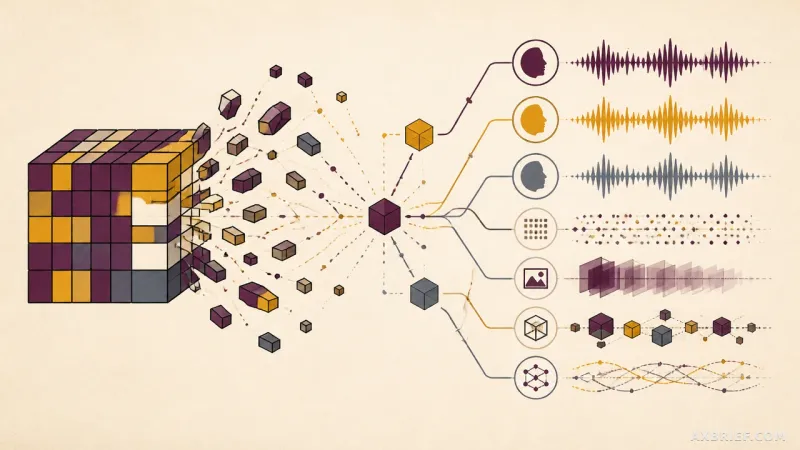
ATL Saathi does not simply provide text-based answers; it generates a diverse array of pedagogical assets. Based on core curriculum modules, the system produces AI-driven infographics, structured video outlines, and interactive quizzes. These materials are designed to help teachers quickly synthesize complex educational topics and deliver them to students in formats that are easier to digest. By automating the production of these assets, the tool aims to drastically reduce the time teachers spend on the preparatory phase of instruction.
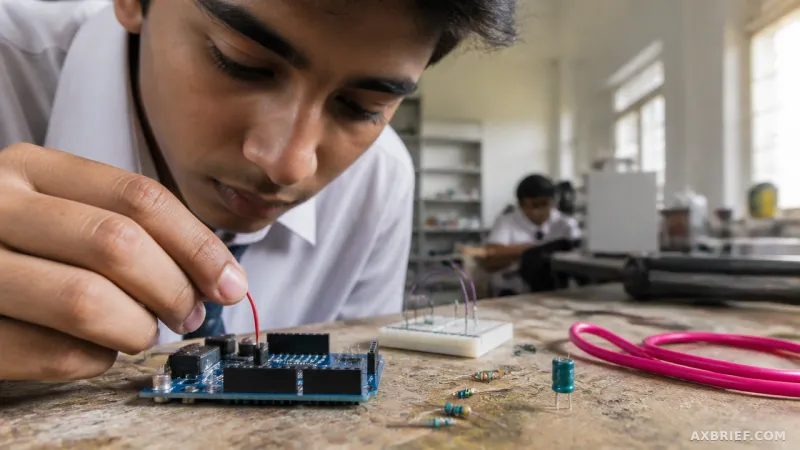
Beyond general content, the integration of Gemini 3.5 Flash is specifically targeted at the Tinkering Lab, a creative space where students engage in hands-on experimentation and building. In these labs, the AI transforms the environment into a discovery-led space. The model is tasked with generating project ideas that are not only creative but strictly aligned with the grade level and the official educational curriculum. This ensures that while students are experimenting, their activities remain tethered to the required learning objectives.
From Answer Engine to Environment Architect
The true significance of ATL Saathi lies in a fundamental shift in how large language models are applied in education. For years, the prevailing narrative around AI in the classroom centered on the model as an answer engine—a tool for students to find solutions or for teachers to generate a syllabus. However, the deployment of ATL Saathi suggests a different utility: the AI as an environment architect. The value is not found in the AI's ability to provide the correct answer, but in its ability to restructure the teacher's workflow so that the human element of education can resurface.
This distinction becomes clear when examining the technical guidance provided by the tool. In a typical Tinkering Lab setting, a teacher would spend hours drafting step-by-step assembly instructions for a project. This includes detailing how to connect specific components, drawing wiring diagrams for electrical circuits, and listing critical safety precautions. ATL Saathi automates this entire process. When a student presents a specific problem or a project goal, the AI generates the precise technical instructions and safety warnings required to move forward.
By offloading the creation of wiring diagrams and assembly guides, the AI removes the most repetitive part of technical instruction. Furthermore, the tool handles the heavy lifting of documentation and curriculum translation, tasks that historically acted as a tax on a teacher's time. The contrast is stark: the teacher moves from being the sole source of technical documentation to being a high-level mentor who guides the student's critical thinking and problem-solving process.
This transition reveals a deeper insight into the practical utility of LLMs in professional settings. The success of the pilot is not being measured by the accuracy of the AI's facts, but by the increase in the teacher's availability. The core metric is productivity—specifically, how much more time a teacher can spend in direct mentorship once the burden of content creation is removed. When the AI handles the technical scaffolding, the teacher is finally free to focus on the essence of pedagogy.
The effectiveness of this model depends entirely on the AI's ability to generate specific, actionable technical guides that integrate seamlessly with a real-world curriculum. If the AI can successfully bridge the gap between a theoretical lesson plan and a physical assembly instruction, it proves that the primary value of generative AI in education is the liberation of the human educator.