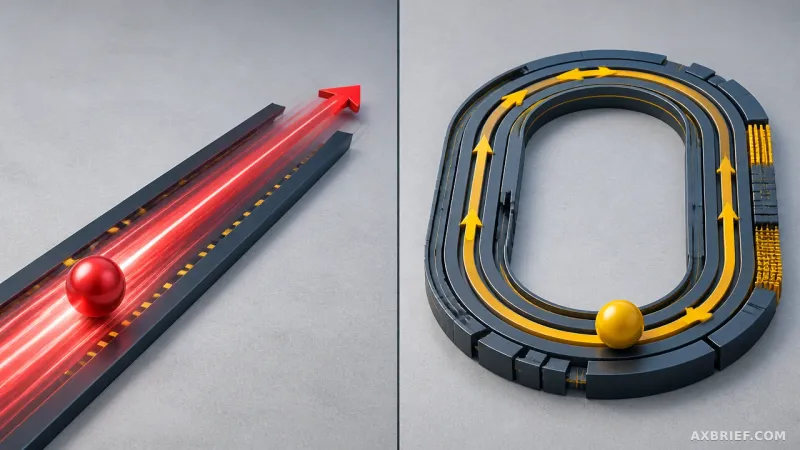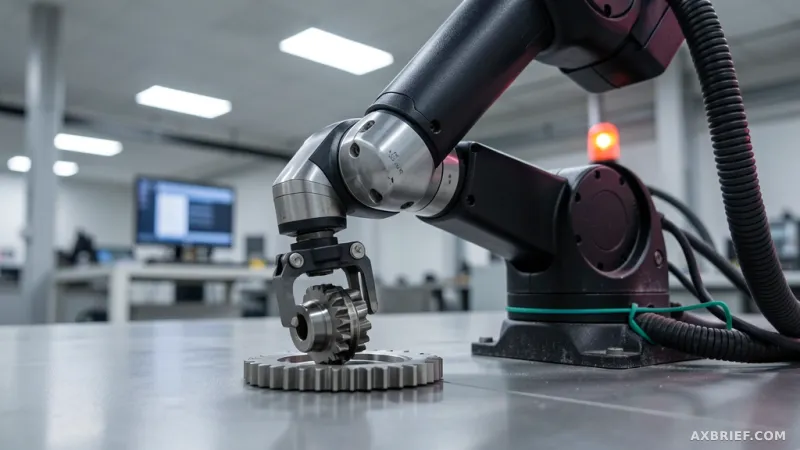
For decades, the industrial robot has been a creature of habit. In the sterile environment of a modern factory, a robotic arm performs the same arc of motion millions of times with sub-millimeter precision. However, this precision is a facade for a profound lack of intelligence. If a component on the assembly line shifts by a single centimeter, or if a shipping crate is placed slightly askew, the robot does not adapt. It simply continues its pre-programmed path, grasping at empty air or, worse, colliding with expensive machinery. This rigidity forces engineers into a grueling cycle of teaching, where every single movement must be manually mapped, and physical jigs are installed to force the world to conform to the robot's limited perception.
The Hardware Backbone of Perceptive Robotics
CMES Robotics is dismantling this rigid paradigm by implementing what Jensen Huang calls Physical AI. During the Korea AI Ecosystem Reception at the Shilla Hotel in Seoul, the company demonstrated a shift from pre-programmed trajectories to a system that sees, thinks, and acts in real time. This transition is not merely a software update but a massive infrastructure play. To train models capable of interpreting complex 3D environments, CMES Robotics operates a high-performance compute cluster featuring NVIDIA B200, H100, H200, and A100 GPUs. These chips handle the immense computational load required to process 3D vision data, allowing the company to accelerate the feedback loop between model training and field deployment.
Once a model moves from the training cluster to the factory floor, the challenge shifts from raw power to inference efficiency. CMES Robotics utilizes the NVIDIA Triton Inference Server to manage the data deluge from hundreds of 3D vision cameras installed across logistics centers and manufacturing plants. The system analyzes these concurrent data streams without dropping frames, calculating optimal grasp points and trajectories on the fly. By leveraging Triton's inference optimization, the platform minimizes latency, ensuring that hundreds of robots can operate in a shared space without the lag that typically plagues centralized AI systems.
From Digital Twins to Humanoid Autonomy
The true divergence between traditional automation and Physical AI lies in how the system handles uncertainty. While most companies rely on cloud-based AI, CMES Robotics is deploying on-premises GPU clusters. In an industrial setting, a 100-millisecond delay in network response is not just a glitch; it is a potential safety hazard or a production failure. By bringing the compute to the edge, the company ensures that AI decision-making remains stable regardless of internet connectivity, while simultaneously keeping sensitive proprietary manufacturing data within the local network.
To bridge the gap between a virtual model and a physical machine, the company employs NVIDIA Isaac Sim. This digital twin environment allows developers to stress-test robots in a risk-free virtual space. They can manipulate lighting conditions, introduce sensor noise, or place random obstacles in the robot's path to see how the AI reacts. This sim-to-real pipeline eliminates the need for costly physical prototypes and reduces the risk of hardware damage during the learning phase. The robot learns to navigate the chaos of a real warehouse in a simulation before it ever touches a physical object.
This trajectory is now leading toward general-purpose robotics. While current deployments focus on specialized industrial tasks, CMES Robotics is integrating the NVIDIA Jetson Thor platform to enable humanoid capabilities. Jetson Thor provides the necessary compute density to handle complex multi-joint control and real-time environmental awareness simultaneously. This allows the robot to move beyond the fixed base of a factory arm and into the realm of mobile, autonomous agents that can navigate human spaces and perform varied tasks without needing a new set of instructions for every movement.
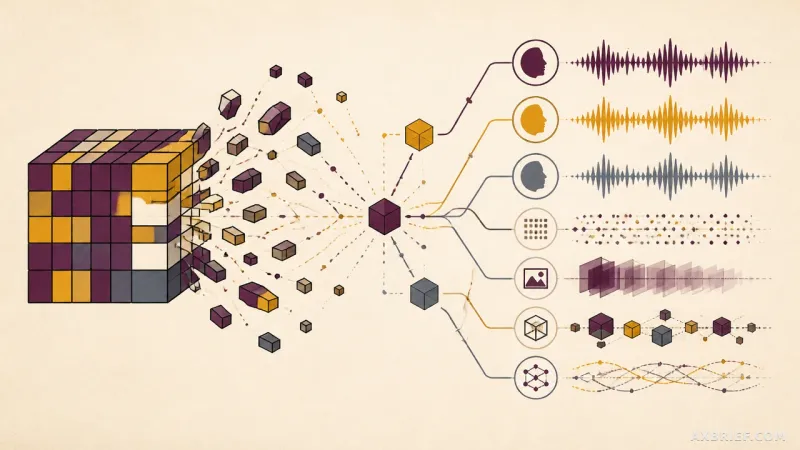
All these components are unified under the CMES Physical AI Robot Platform. This end-to-end architecture connects everything from raw data collection and GPU-accelerated training to digital twin verification and edge deployment. By treating the entire pipeline as a single integrated stack, CMES Robotics is turning the physical constraints of the factory floor into digital variables that can be optimized in real time.