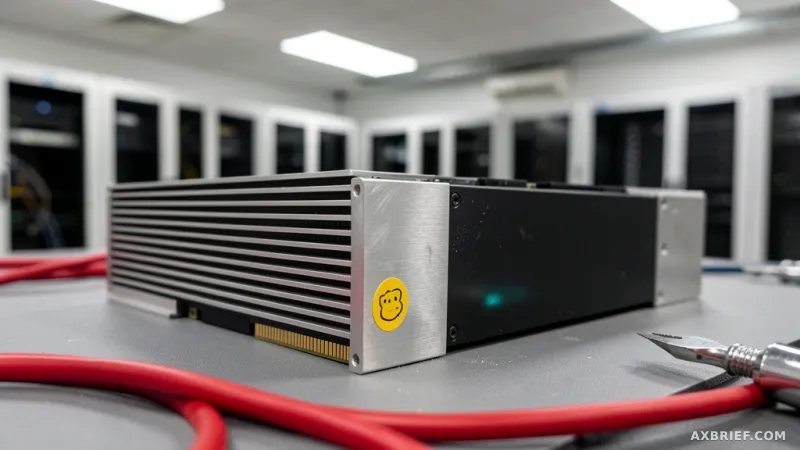
Every developer who has attempted to squeeze the last drop of performance out of an H100 or a TPU knows the specific brand of misery that comes with kernel optimization. You start with a promising Triton or CUDA implementation, but then you hit the wall of environment configuration. Suddenly, you are not an AI researcher anymore; you are a systems administrator fighting with compiler versions, driver mismatches, and fragmented toolchains. The actual logic of the optimization becomes a secondary concern to the sheer friction of the infrastructure. This is the gap where most performance gains go to die, as the cost of deployment outweighs the benefit of a few milliseconds of latency reduction.
The Infrastructure of the Kernel Hub
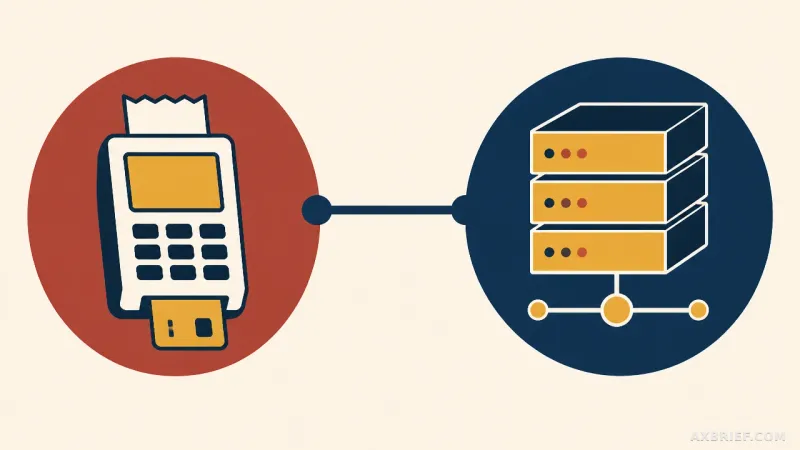
Hugging Face is addressing this friction by introducing a dedicated kernel repository type within its ecosystem. By treating kernels as first-class citizens, similar to how models and datasets are handled, the platform now provides a centralized discovery layer at https://huggingface.co/kernels. This is not merely a storage site but a structured directory where the specific requirements of the computing environment are explicitly surfaced. Users can immediately identify which accelerators a kernel supports, the required operating system, and the necessary backend versions. This shift moves the industry away from fragmented, per-developer setups toward a standardized repository where the relationship between a model, its application, and the underlying optimized kernel is transparent.
To make this ecosystem viable, Hugging Face has enforced a strict architectural separation between the library and the builder. In previous iterations, utility functions were often entangled, leading to bloated dependencies. The new approach splits these into the kernels library and the kernel-builder CLI tool. The mental model here is simple: the kernels library is solely responsible for loading and preparing the kernel for execution. It contains zero logic related to the build process. Conversely, the kernel-builder is a dedicated command-line tool that handles the heavy lifting of compilation. By stripping build logic out of the runtime library, Hugging Face has ensured that production environments remain lightweight. A developer deploying a service only needs the kernels library to achieve peak performance, avoiding the need to install heavy build toolchains in a production container.
For the practitioner, the workflow is now binary: either load a verified kernel from the Hub or use the builder to create a custom one. The decision is driven by a simple compatibility check against the hardware accelerator, OS, and backend version listed in the Hub. This separation lowers the barrier to entry for kernel development while maximizing system efficiency by allowing the selective loading of the most optimized kernel for a specific piece of silicon.
The Automation Loop and the Security Paradox
The most significant shift is the transition from manual iteration to an agentic optimization loop. Traditionally, optimizing a kernel meant a cycle of modifying code, rebuilding, and running benchmarks hundreds of times. Hugging Face has replaced this with an AI agent workflow that handles everything from scaffolding to final validation. These agents operate within a standardized project layout provided by the kernel-builder, utilizing non-interactive commands designed for machine consumption. Because the CLI output is structured for programmatic analysis, the agent can ingest build errors or performance regressions and immediately apply a fix in the next iteration. The developer's role shifts from writing individual lines of CUDA code to acting as an orchestrator who monitors the agent's optimization path.
To handle the diversity of hardware, Hugging Face introduced backend-specific skills. These are abstracted skillsets that capture the nuances of different accelerators, including specific compiler flags and performance considerations. This abstraction means the agent does not need to be manually programmed for every new chip; it applies the relevant skillset to generate hardware-aware code. The loop is closed through integration with HF Jobs, which automates the collection of benchmark results across various hardware vendors and generations. The agent does not consider a task complete upon a successful build; it only succeeds when the performance metrics from HF Jobs show a statistically significant improvement over the baseline. If the speedup is insufficient, the agent triggers another iteration of the optimization loop.
However, executing native code introduces a massive security risk. Unlike Python code, a malicious kernel runs with the same privileges as the Python process, potentially granting an attacker full system control. Hugging Face mitigates this through a Trusted Publishers system. By default, the system only loads kernels from verified organizations. Any other kernel requires the explicit use of the `trust_remote_code` argument, forcing the user to acknowledge the risk. Furthermore, the platform restricts who can publish kernel repositories, requiring a case-by-case review process for new publishers.
To ensure the binary being executed actually matches the source code, Hugging Face integrated Nix. Nix provides a hermetic build environment and a strictly isolated sandbox, ensuring that the same input always produces the same output regardless of the host machine. The Git SHA1 hash of the source code is embedded directly into the kernel, allowing users to recompile the public source and verify that the resulting binary is identical to the one distributed on the Hub. For an additional layer of defense against account takeovers, the system uses Sigstore's cosign to sign code with ephemeral private keys. These short-lived keys ensure that even if a key is leaked, it cannot be reused by an attacker. Users can verify these signatures using the `kernels verify-signature` command, a process detailed in the kernels 0.16.0 release notes.
Simplifying Deployment through System Cards and APIs
Documentation often becomes a bottleneck when it consists of sprawling README files. Hugging Face solves this by implementing System Cards for every kernel. These cards use front-matter to provide a structured summary of the kernel's usage and its exposed interface. When a kernel is pushed to the Hub, this information is surfaced at the top of the page, allowing developers to understand the input and output requirements without diving into the source code. This transforms the discovery process from a manual search into a structured data query.
From a coding perspective, the integration is handled through a few key API calls. Developers can check for hardware compatibility using the `has_kernel()` function:
has_kernel("kernel_name")This returns a boolean, allowing for the implementation of clean fallback logic. If a kernel is unsupported, `get_kernel_variants()` provides detailed information on why the current environment is incompatible, preventing runtime crashes by catching errors during the pre-check phase.
To further reduce the friction of setting up the `kernel-builder`, Hugging Face provides one-click installation scripts. For those using volatile cloud instances, Terraform guides are available to ensure consistent infrastructure provisioning. Detailed instructions on environment configuration and code signing can be found in the v0.16.0 release notes.
This systemic approach to optimization also addresses deep-seated compatibility issues in the Linux ecosystem. The `kernel-builder` targets `manylinux_2_28` to ensure broad compatibility, utilizing a GCC toolchain compiled with glibc 2.28. Initially, the team used static linking for `libstdc++` to avoid conflicts with older versions. However, this created a critical conflict with libraries like PyTorch, which link `libstdc++` dynamically. This discrepancy caused data corruption during the global initialization phase, particularly when kernels used C++ regular expressions. By resolving these static linking conflicts, Hugging Face has ensured that kernels can be deployed across various Linux distributions without triggering runtime crashes.
By combining AI-driven iteration, rigorous security signing, and a standardized distribution hub, the process of hardware acceleration is moving away from a dark art practiced by a few systems engineers and toward a scalable, automated pipeline for all AI developers.