The modern automated warehouse is a marvel of precision, where autonomous mobile robots glide across polished concrete to retrieve bins with millimetric accuracy. Yet, for all this internal sophistication, the system hits a hard wall the moment a product needs to move to a different building. At the loading dock, the high-tech choreography stops, and the process reverts to the industrial age: a human operator must manually intervene to move the goods from one facility's robot to another's, or onto a truck. This boundary between facilities has remained the stubborn bottleneck of the logistics world, turning a digital supply chain into a series of disconnected islands.
The Architecture of Multifacility Automation
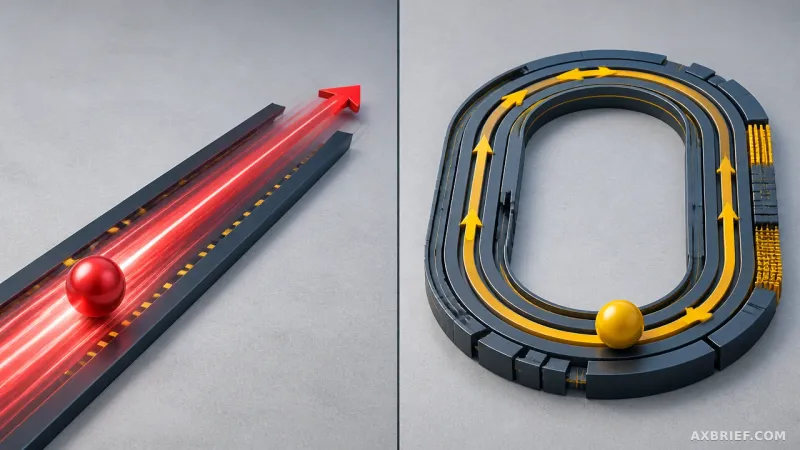
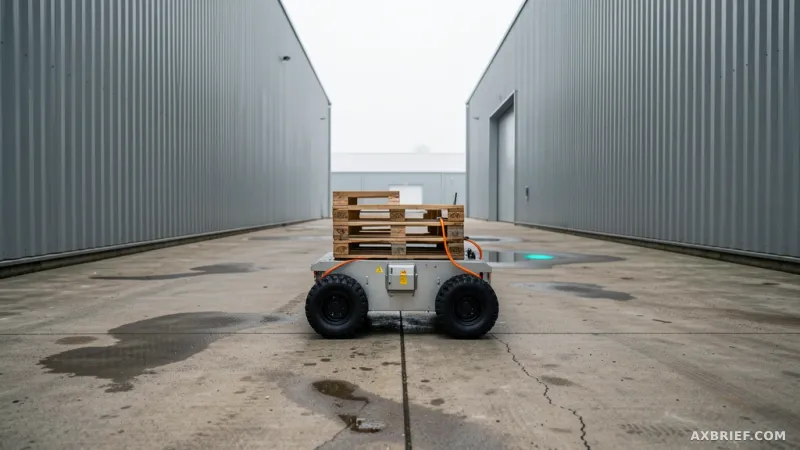
Logic Robotics, based in Waltham, Massachusetts, is attempting to erase these boundaries with the introduction of the Logic Pallet. Unlike traditional autonomous mobile robots that are designed for intra-facility movement—meaning they are optimized for the specific constraints of a single warehouse—the Logic Pallet is engineered as a multifacility mobile robot. This distinction is critical because it shifts the robot's operational scope from a single building to the entire transit path between multiple sites.
By integrating the movement within a facility and the movement between facilities into a single operational flow, Logic Robotics has implemented an end-to-end automation structure. The goal is to eliminate the physical and digital friction that occurs during the hand-off process. When a robot can navigate not just the aisles of Warehouse A, but also the transition to and the interior of Warehouse B, the need for manual reloading vanishes. Detailed technical specifications and deployment options for this system are available on the official Logic Robotics page.
Shifting the Unit of Optimization
To understand why this matters, one must look at the current state of logistics automation. For years, the industry has focused on optimizing the internal efficiency of the warehouse. Companies invested millions in robots that could pick faster or sort better, but they treated the space between warehouses as a black box handled by human labor. This created a paradox where the internal speed of a facility was neutralized by the inefficiency of the transfer point. The Logic Pallet changes the fundamental unit of automation from the individual warehouse to the entire supply chain network.
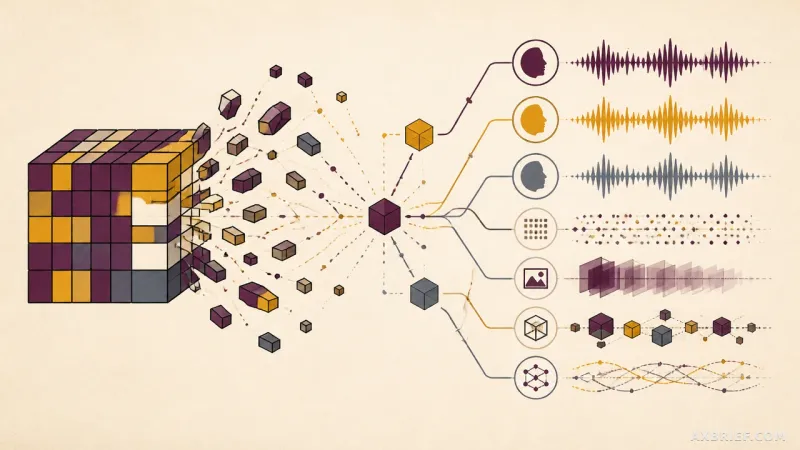
This shift does more than just remove a human worker from the loading dock; it solves the problem of data fragmentation. In a traditional setup, when a pallet leaves a facility, the digital tracking often suffers a blackout or a hand-off delay until it is checked into the next system. Because the Logic Pallet manages the entire journey, the data remains continuous. The system replaces a reliance on operator experience and manual logs with a connected data stream that tracks the movement across the entire facility-to-facility pipeline. This reduces not only the labor cost but also the energy waste associated with redundant handling and idling.
While previous generations of autonomous robots focused on how to move a pallet from point A to point B within a controlled environment, the Logic Pallet focuses on the transition itself. By treating the gap between facilities as just another part of the map, Logic Robotics is transforming the loading dock from a barrier into a bridge.
Logistics automation will no longer be judged by how fast a robot moves inside a building, but by how effectively it erases the lines between them.