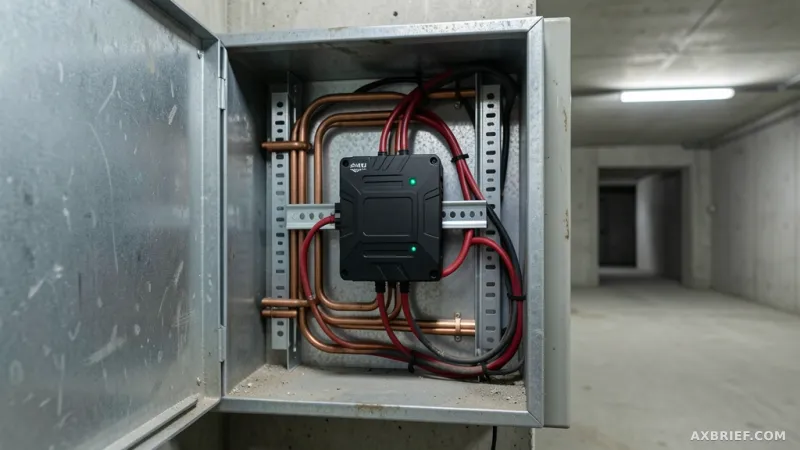
The transition from a successful AI prototype to a production-grade industrial deployment often fails not because of the model architecture, but because of the power rail. In the controlled environment of a lab, a developer might overlook the transient voltage spikes that occur when an edge accelerator jumps from an idle state to full-throttle inference. On a factory floor, these fluctuations lead to brownouts, corrupted data, or complete system resets, turning a sophisticated neural network into a liability. This gap between algorithmic success and hardware stability has become the primary bottleneck for companies attempting to scale AI at the edge.
The Architecture of Production-Grade Power
On August 4, 2026, Mouser Electronics addressed this systemic friction by unveiling its AI and Power Management Resource Hub. The platform is specifically engineered to support production-grade inference, which refers to the ability of AI operations to run continuously and reliably in real-world industrial environments without interruption. Because power design failures at the edge directly correlate to degraded inference performance, the hub provides a centralized repository of technical resources and component selection tools designed to harden the power architecture of AI hardware.
Central to the hub is the Workload Characterization guide. In industrial AI, power consumption is rarely linear; it is bursty and dependent on the specific nature of the AI task. Workload characterization allows engineers to analyze exactly how much power a specific model consumes during different phases of operation, ensuring that the power delivery network can handle peak loads without sagging. Complementing this is the Energy Harvesting guide, which explores methods for converting ambient environmental energy—such as thermal gradients or kinetic vibrations common in industrial settings—into usable electrical power for low-power edge sensors.
Beyond theoretical guidance, the hub integrates these design principles with a direct procurement pipeline. Engineers can access the AI and Power Management Resource Hub to map their specific power requirements to actual stocked components. This ensures that the production-grade power architecture is not just a theoretical blueprint but a buildable reality based on current inventory.
Bridging the Gap Between TOPS and Watts
For years, the development of edge AI has been bifurcated. Data scientists focus on TOPS (Tera Operations Per Second) and latency, while electrical engineers focus on wattage, thermal dissipation, and voltage regulation. This silos-based approach often results in a design loop where a model is optimized for a chip, but the chip's power requirements exceed the capabilities of the board's power delivery system, forcing a costly redesign of the hardware or a compromise in the model's precision.
What makes the Mouser hub a shift in the workflow is the collapse of the design-to-procurement timeline. By linking workload analysis directly to stocked components, Mouser is effectively removing the uncertainty of the supply chain from the initial design phase. Instead of designing a circuit and then searching for available parts that fit the specs, engineers can now verify part availability simultaneously with the architectural design. This prevents the common industry nightmare where a production-ready design is rendered obsolete overnight because a critical voltage regulator or capacitor is out of stock.
Furthermore, the focus on energy harvesting signals a move toward autonomous edge AI. The ability to power inference engines via ambient energy reduces the reliance on battery replacements and cabling in hazardous or remote industrial zones. When combined with rigorous workload characterization, this allows for the creation of "set and forget" AI deployments that maintain high inference stability without human intervention.
This integration transforms the power supply from a passive utility into a strategic component of the AI pipeline. When the power architecture is tuned to the specific rhythmic demands of an AI workload, the hardware can operate closer to its theoretical performance ceiling without risking instability. The result is a reduction in development cycles and a faster path from the laboratory to the factory floor.
The industrialization of AI now depends less on the size of the model and more on the stability of the electron.