
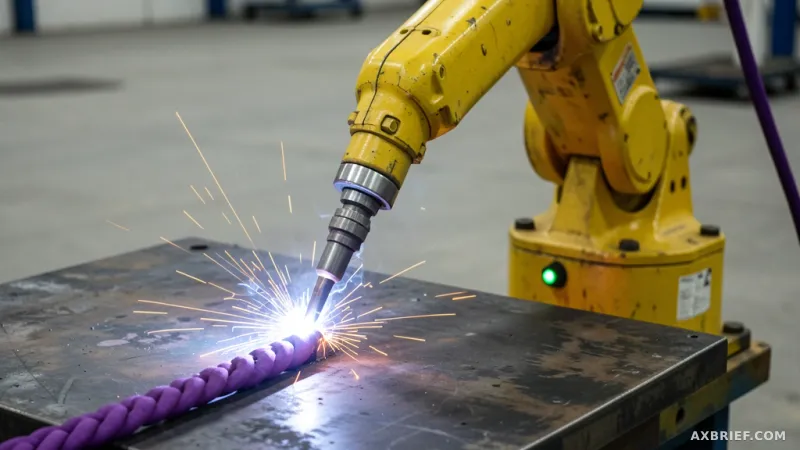
Industrial welding floors have long been defined by a frustrating paradox of precision. A robotic arm can repeat a movement with sub-millimeter accuracy, yet the moment a metal part is slightly misaligned or a thermal warp shifts the joint by a fraction of an inch, that precision becomes a liability. For years, the solution has been manual intervention, where skilled technicians spend hours painstakingly adjusting paths to compensate for real-world imperfections. This friction between digital perfection and physical reality has remained the primary bottleneck in full-scale welding automation.
The Integration of NovAI Autonomy and NovHub
At Automate 2026 in Chicago, held from June 22 to June 25, Novarc introduced a systemic shift to this workflow with the launch of NovAI Autonomy and the NovHub platform. The core of this release is the ability to embed machine vision directly into the welding process, allowing robots to perceive their environment and adjust their trajectories in real time. Rather than following a rigid, pre-programmed script, the system uses visual data to identify the actual position and state of the workpiece, correcting the welding path on the fly to ensure a perfect seam regardless of initial placement errors.
This intelligence is deployed through a hardware-agnostic approach, with Novarc confirming full integration for both ABB and Yaskawa robots. By supporting two of the industry's most prominent hardware providers, Novarc is positioning its software as a universal intelligence layer. Alongside the autonomy engine, the company debuted NovHub, an Enterprise Welding Intelligence platform. NovHub serves as the centralized nervous system for the factory, aggregating operational data from individual robots across the enterprise to provide a unified view of welding performance and quality control. Detailed technical specifications and integration options are available via the Novarc official website.
The Shift Toward Hardware Agnostic Physical AI
To understand the significance of this launch, one must look at the fundamental difference between traditional industrial automation and Physical AI. Standard industrial robots operate on a deterministic model: they are told exactly where to go, and they go there regardless of what they encounter. When the physical environment deviates from the digital twin, the process fails. NovAI Autonomy replaces this deterministic model with an adaptive one. By implementing Physical AI, the robot no longer just executes a command but reacts to the physical world, treating the welding environment as a dynamic variable rather than a constant.
This transition effectively decouples the intelligence of the process from the brand of the hardware. In the previous era of automation, a company's capabilities were often limited by the proprietary ecosystem of their robot manufacturer. If a specific feature was missing from one brand's controller, the entire workflow suffered. By proving that NovAI Autonomy can operate with equal efficacy across both ABB and Yaskawa platforms, Novarc has shifted the competitive landscape. The critical value proposition is no longer the mechanical specification of the arm, but the flexibility of the AI layer controlling it.
This agnosticism removes the risk of vendor lock-in and allows enterprises to upgrade their existing fleets with autonomous capabilities without replacing their entire capital investment. The result is a drastic reduction in manual setup time and a significant increase in overall equipment effectiveness. When the robot can see and adapt, the technician is freed from the role of a manual path-corrector and becomes a supervisor of an intelligent system.
The era of choosing a robot based on its proprietary software is ending, replaced by a demand for universal AI layers that can turn any industrial arm into a sentient tool.



