
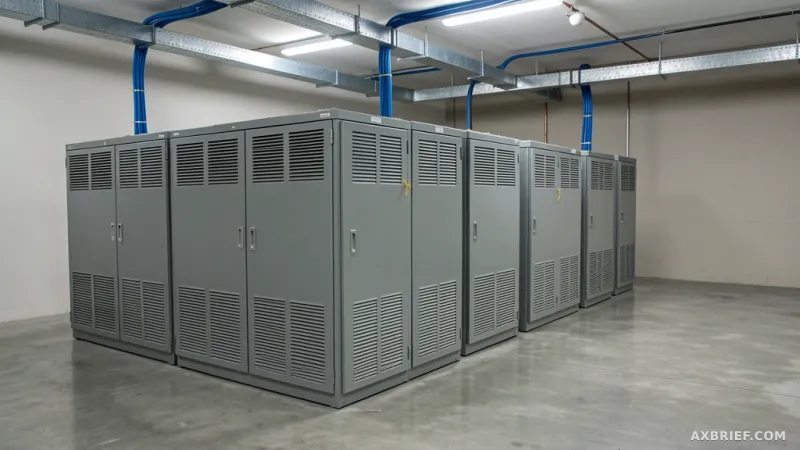
The modern data center is currently locked in a silent war against physics. As AI clusters scale from thousands to tens of thousands of GPUs, the primary bottleneck is no longer just chip architecture or interconnect speeds, but the raw delivery of electricity. Engineers are facing a wall where the energy required to power a next-generation AI factory exceeds the capacity of traditional power distribution systems, often resulting in massive energy waste through heat and inefficient conversion. The industry has reached a tipping point where simply adding more power lines is insufficient; the very nature of how electricity moves from the grid to the silicon must change.
The Blueprint for the AI Factory Power Grid
To break this bottleneck, NVIDIA, Google, and Microsoft have collaborated to define a new 800 VDC (Direct Current) power standard. This initiative, developed through the Open Compute Project (OCP), aims to fundamentally restructure the power architecture of AI infrastructure. By shifting to a high-voltage DC distribution model, these companies are attempting to eliminate the redundant conversion steps that plague traditional data centers. In a standard setup, alternating current (AC) from the grid undergoes multiple stages of transformation and rectification before it reaches the GPU, with each step introducing energy loss and increasing system complexity.
The roadmap for this transition is already set in stone. The consortium announced a joint white paper scheduled for release in March 2026 to codify the technical direction of the 800 VDC architecture. This will be followed in July 2026 by the release of the LVDC (Low Voltage Direct Current) Solid-State Transformer specification v0.3. Unlike traditional transformers that rely on heavy magnetic cores, these solid-state transformers utilize semiconductor components to reduce physical size and provide far more precise control over power delivery.
This is not a proprietary play by NVIDIA alone. The standard is being built as an open ecosystem to ensure interoperability across the global supply chain. Currently, more than 80 equipment manufacturers and infrastructure firms are building products based on these specifications. Vladimir Troy, Vice President of Data Center Infrastructure at NVIDIA, emphasizes that by working with over 80 ecosystem partners through OCP, the industry is moving beyond a theoretical vision of the AI factory toward a practical, implementable path. This broad participation ensures that hardware vendors can maintain compatibility, which in turn accelerates the speed at which operators can deploy high-density clusters.
Solving the Stranded Investment Dilemma
The critical insight of the 800 VDC standard is not just that it is more efficient, but that it provides a migration path for existing facilities. For most data center operators, the prospect of ripping out existing AC infrastructure to install a native DC grid is financially impossible. This is where the concept of stranded investment becomes a primary concern. If the industry forced a total transition to DC, billions of dollars in existing land, power permits, and building shells would become obsolete.
NVIDIA is addressing this through a tiered deployment strategy. The first phase arrives in the second half of 2026 with the launch of NVIDIA MGX-compatible 800 VDC power racks. These racks are designed to be dropped directly into existing AC infrastructure. They act as a hybrid bridge, taking the facility's AC power and converting it to 800 VDC at the rack level, delivering high-density power to the GPUs without requiring a total overhaul of the building's electrical system. This allows operators to increase their computing density immediately while protecting their previous capital expenditures.
For those scaling further, the 2027 roadmap introduces the Row Power Center. This architecture shifts power distribution from the individual rack to the entire row. By utilizing an 800 VDC busway installed in the ceiling, a single row of racks can be supported with up to 2MW of power. This centralization reduces wiring complexity and maximizes spatial efficiency, allowing for a massive increase in the number of accelerators per square foot.
At the furthest end of the spectrum is the DC Power Block, intended for entirely new greenfield facilities. This unit converts grid power to 800 VDC in a single, streamlined step, representing the theoretical maximum of power efficiency. By minimizing the conversion chain to a single event, the DC Power Block virtually eliminates the overhead associated with traditional power distribution, ensuring that the maximum possible wattage reaches the AI accelerators. This tiered approach—from hybrid racks to row-level distribution and finally to facility-wide DC blocks—creates an on-ramp for the industry to evolve without facing a catastrophic investment cliff.
This shift is driven by a staggering economic reality. Wood Mackenzie projects that global investment in AI and data infrastructure will reach 9 trillion dollars by 2040. However, this capital cannot be effectively deployed if the physical power layer remains stagnant. If the power architecture cannot keep pace with computing demand, the industry will face a scenario where companies purchase millions of dollars in GPUs that they simply cannot turn on. The 800 VDC standard is the engineering answer to this financial risk, ensuring that the physical infrastructure can actually support the projected capital influx.
By defining common interfaces, the OCP standard prevents vendor lock-in. When 80 different companies build to the same 800 VDC specification, the operator is no longer beholden to a single manufacturer's proprietary power shelf. They can mix and match the most efficient components available in the market, driving down costs and increasing the resilience of the supply chain. This standardization transforms power delivery from a bespoke engineering challenge into a plug-and-play utility.
The transition to 800 VDC marks the moment when the AI industry stops treating power as a background utility and starts treating it as a primary architectural constraint. By reducing the distance and the number of transformations between the power grid and the GPU, NVIDIA and its partners are effectively widening the pipe for the most critical resource in the AI era.



