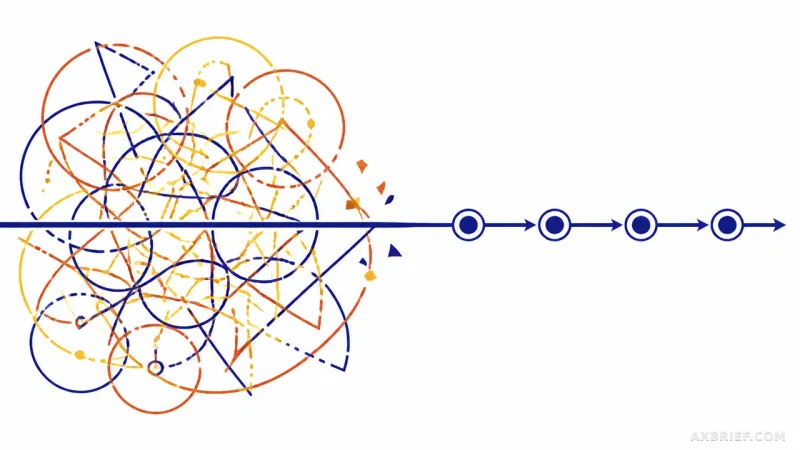
The current race to build frontier AI models has evolved into a brutal war of attrition where the primary currency is time. For any organization attempting to train a trillion-parameter model, the process is no longer just about algorithmic elegance but about the raw physics of the data center. A single training run can span several months and cost tens of millions of dollars, meaning that a delay of even a few weeks in the iteration cycle can result in a competitor capturing the market first. In this environment, the speed of the underlying infrastructure is the only real competitive advantage that cannot be easily replicated by software tweaks alone.
The Total Dominance of Blackwell in MLPerf 6.0
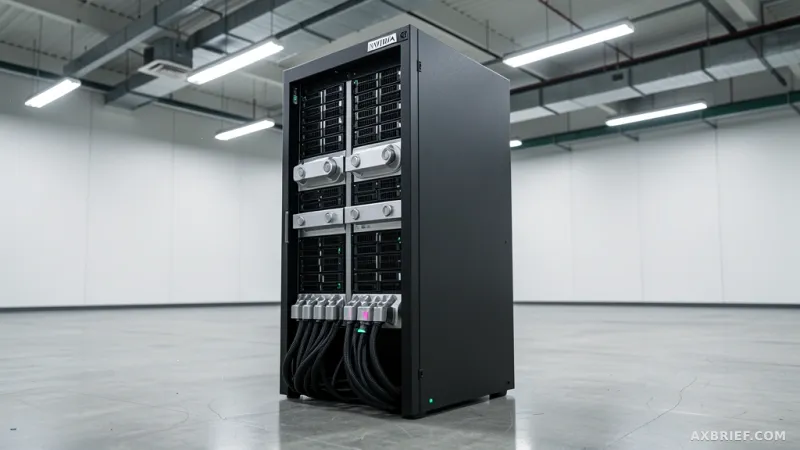
NVIDIA has recently provided a definitive answer to the scaling question through the MLPerf Training 6.0 benchmarks. As one of the most rigorous, peer-reviewed industry standards for AI performance, MLPerf provides a transparent look at how hardware handles real-world workloads. In the latest round, NVIDIA submitted results for its GB200 NVL72 and GB300 NVL72 rack-scale systems, and the result was a clean sweep. Blackwell recorded the shortest training times across all seven tested categories, making it the only platform to submit results for every single benchmark item.
This achievement is particularly significant because MLPerf 6.0 introduced workloads specifically designed for Mixture of Experts (MoE) architectures, which have become the gold standard for modern large language models. MoE models improve efficiency by activating only a subset of their parameters for any given input, rather than engaging the entire network. The benchmark included the DeepSeek-V3 671B and GPT-OSS-20B models to test how infrastructure handles these sparse, high-parameter workloads. Because MoE models require massive amounts of data to be routed between different expert networks during training, they place an extreme strain on system bandwidth. Blackwell's ability to lead in these categories proves that its architecture is optimized for the specific communication patterns of the next generation of AI.
Beyond raw speed, the submission of both GB200 and GB300 variants demonstrates a focus on stability and reproducibility. In production environments where tens of thousands of GPUs operate in unison, the ability to recover from a single node failure without crashing the entire training run is critical. By proving performance across different rack specifications, NVIDIA has shown that the Blackwell platform can maintain high throughput and reliability regardless of the specific scale of the deployment.
Solving the Memory Wall with NVLink and NVFP4
To understand why Blackwell outperformed its predecessors, one must look past the individual GPU and toward the system architecture. The primary bottleneck in AI training is rarely the peak TFLOPS of a single chip; it is the latency and bandwidth of the paths between those chips. NVIDIA addressed this through the 5th Generation NVIDIA NVLink Switch, which allows 72 GPUs to be connected into a single, unified computing and memory pool. This rack-scale integration means that 72 physically distinct GPUs operate as one massive virtual GPU. By enabling direct memory access across the entire pool, NVIDIA has effectively minimized the time spent moving data, converting idle waiting time into active computation time.
Parallel to the interconnect improvements is a fundamental shift in how data is represented. There is a constant tension in AI training between precision and speed: higher precision ensures model accuracy but slows down the math. NVIDIA introduced NVFP4 (NVIDIA Floating Point 4), a 4-bit low-precision training format that drastically increases computational density. By reducing the number of bits used to represent weights and gradients, the system can perform more operations per second and reduce the memory footprint of the model.
This is not merely a theoretical optimization. NVIDIA utilized NVFP4 to pre-train the NVIDIA Nemotron 3 Ultra, a model with 550 billion parameters. By leveraging 4-bit precision, the platform can handle larger batches and more complex models on the same hardware footprint without sacrificing the intelligence of the final output. To support this at scale, NVIDIA provides two distinct scale-out networking options: NVIDIA Quantum InfiniBand for ultra-low latency and NVIDIA Spectrum-X Ethernet for high-compatibility, AI-optimized scaling. This dual-track approach allows data center operators to choose the network fabric that best fits their existing budget and architectural constraints while still benefiting from the Blackwell compute core.
The 1.6x Performance Gap Between GB200 and GB300
While the GB200 NVL72 is already a powerhouse, the GB300 NVL72 represents a significant leap in hardware optimization. In direct comparisons, the GB300 NVL72 achieved training speeds up to 1.6x faster than the GB200 NVL72 within the same rack scale. This performance delta is the result of a concerted effort to increase computational density and thermal efficiency.
Central to this gain is the deeper integration of NVFP4, which allows the GB300 to process more data per clock cycle. However, the hardware improvements extend to the power delivery system. In high-load AI training, GPUs often hit a power ceiling, forcing the system to throttle clock speeds to prevent overheating. The GB300 NVL72 features an increased power ceiling, allowing the GPUs to maintain peak performance for longer durations without thermal throttling. Combined with expanded memory capacity, this allows for larger data chunks to be processed simultaneously, further reducing the frequency of bottlenecks.
For a developer, a 1.6x increase in speed is not just a benchmark number; it is a fundamental shift in the development lifecycle. If a model that previously took 100 days to train can now be completed in roughly 60 days, the research team gains 40 days of additional time for fine-tuning, safety testing, and deployment. This acceleration creates a compounding effect on innovation, where the speed of the hardware directly dictates the speed of the AI's evolution.
Real-World Deployment and the MoE Scale
The theoretical gains of Blackwell are already manifesting in production environments. To validate the DeepSeek-V3 671B model, NVIDIA deployed a massive cluster of 8,192 GPUs using the GB200 NVL72 system. Similarly, the Llama 3.1 405B model was verified using 5,120 GB200 NVL72 GPUs. These numbers highlight the sheer scale of modern MoE training, where the ability to synchronize thousands of GPUs without catastrophic latency is the only way to reach the finish line.
Industry early adopters are reporting similar gains. Cohere integrated the GB200 NVL72 to power its North agentic AI platform, reporting a 3x increase in training speed. Agentic AI, which requires the model to plan and execute multi-step tasks, demands significantly more complex reasoning and higher data throughput during training. Similarly, Thinking Machines Lab, operating within Google Cloud, utilized the GB300 NVL72 to double both the training and serving speeds compared to previous GPU generations. This improvement in serving speed directly translates to lower latency for the end-user, making the AI feel more responsive and intuitive.
Even in the creative AI space, the impact is visible. Higgsfield utilized Blackwell infrastructure provided by Nebius to slash model training time by 30%. For a platform serving 22 million users and generating 6 million pieces of AI content daily, a 30% reduction in training time allows for much faster version updates and a tighter feedback loop with their user base. This demonstrates that the benefits of Blackwell extend beyond the largest labs and into the hands of scaling AI startups.
Ultimately, the MLPerf 6.0 results confirm that the bottleneck for the next generation of AI is no longer the chip, but the system. By treating the entire rack as a single GPU and optimizing for the sparse communication patterns of MoE models, NVIDIA has shifted the goalposts for what is possible in large-scale AI training. The transition to low-precision NVFP4 and high-bandwidth NVLink is not just an incremental upgrade; it is the necessary infrastructure for the era of agentic, trillion-parameter intelligence.