For engineers building autonomous robots or self-driving vehicles, the final commit to a repository has long been a grueling milestone. It represents the culmination of months spent wrestling with physical world simulations and fragmented training pipelines. This week, NVIDIA introduced Cosmos 3, an open-world foundation model designed to slash that development timeline from months to mere days, fundamentally altering how machines perceive and interact with the physical environment.
The Architecture of Physical Intelligence
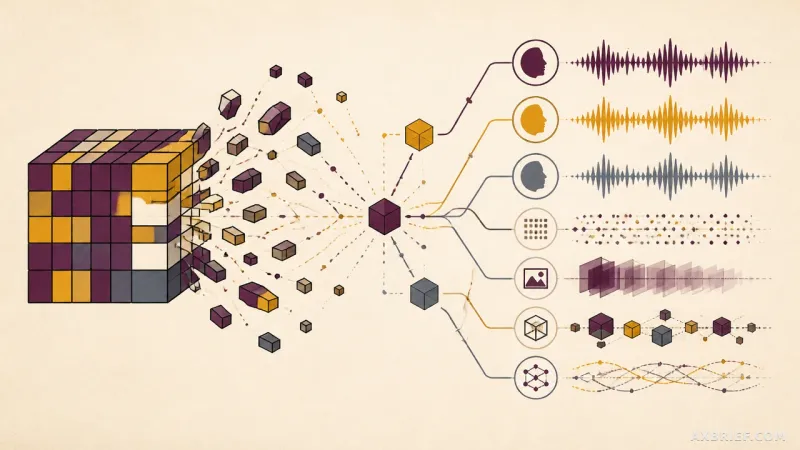
Cosmos 3 is built on a hybrid transformer architecture that integrates vision reasoning, world generation, and action prediction into a single, cohesive system. Unlike traditional models that treat these tasks as separate silos, Cosmos 3 processes text, images, video, ambient audio, and robot action data simultaneously. By ingesting the complexities of physical movement as unified data, the model learns to navigate the world with significantly higher efficiency.
At its core, the model functions by analyzing the spatial and temporal relationships between objects before it attempts to generate video or predict an action trajectory. Because it has been pre-trained on billions of multimodal data points, it can adapt to real-world scenarios even when provided with limited training data or complex, noisy simulation environments. This capability allows developers to build AI that understands physical laws rather than merely mimicking visual patterns.
Bridging the Gap Between Simulation and Reality
What sets Cosmos 3 apart is its ability to act as both a brain and a nervous system for physical agents. It functions as a Vision-Language Model (VLM) for reasoning, a world model for simulating environmental changes, and a world action model for executing precise movements. This integration is critical for robots that must not only see an object but predict how that object will behave when manipulated.
Developers can access the model via Hugging Face, where they can perform fine-tuning to meet specific industrial requirements. Once trained, the model can be packaged and deployed using NVIDIA NIM, a set of microservices that allows for immediate deployment into production environments. This workflow removes the need for companies to build custom infrastructure from scratch, allowing teams to focus on refining robot behavior rather than managing compute bottlenecks.
Benchmark Dominance and Industrial Adoption
Cosmos 3 has demonstrated its technical superiority by sweeping top spots across major evaluation metrics, including Artificial Analysis, Physics-IQ, PAI-Bench, and R-Bench. In the realm of action policy, the model achieved record-breaking scores on RoboLab and RoboArena, proving its ability to handle complex, multi-step instructions in real-world settings. For vision tasks, it topped the Vantage-Bench and TAR leaderboards, confirming its accuracy in interpreting dynamic industrial scenes.
To accelerate the standardization of physical AI, NVIDIA has launched the NVIDIA Cosmos Coalition. Members including Agile Robots, Black Forest Labs, and Runway are collaborating to refine these models using NVIDIA DGX Cloud. Furthermore, major industrial players—including Samsung Electronics, LG Electronics, and Doosan Robotics—are already leveraging this platform to optimize next-generation robot control. By utilizing synthetic data generation and neural scene reconstruction, these firms are training AI to handle rare, edge-case scenarios that are difficult to capture in the real world.
By standardizing the development stack through Hugging Face and NVIDIA NIM, the industry is moving toward a future where physical AI agents can be deployed as reliably as software applications. The barrier to entry for high-performance robotics is no longer the infrastructure, but the speed at which developers can iterate on their specific use cases.