The Shift Toward Safety-by-Design
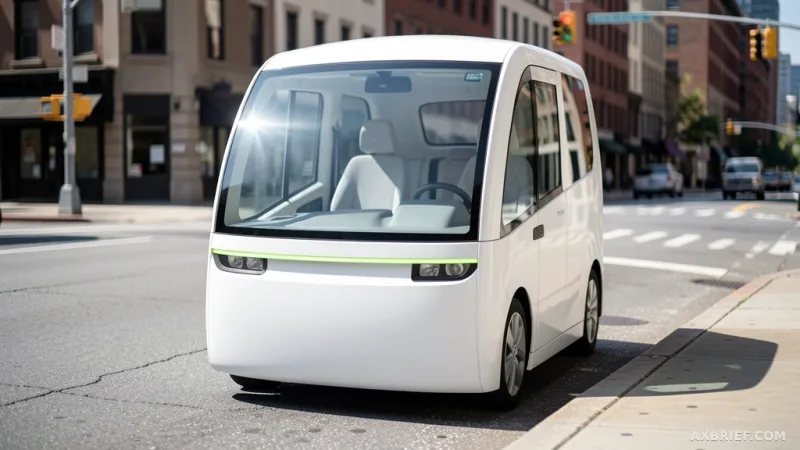
For the robotaxi industry, the novelty of steering-wheel-free transit has faded, replaced by the grueling reality of commercial deployment. As these vehicles transition from controlled prototypes to public roads, the industry is hitting a wall: regulatory scrutiny. Achieving Level 4 autonomy is no longer just about perception accuracy or path planning; it is about predictability. Regulators now demand proof that a system can isolate faults, maintain control during unexpected failures, and operate within rigid safety envelopes. Manufacturers are currently struggling to bridge the gap between high-performance AI models and the deterministic safety requirements mandated by law.
Halos OS: Decoupling Control from Computation
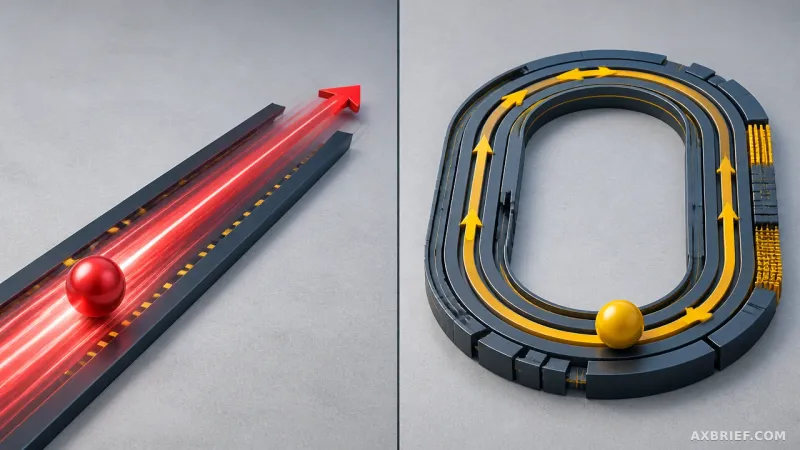
NVIDIA has responded to this architectural challenge with Halos OS, a full-stack safety system designed to ensure that even if an AI model encounters a transient error, the vehicle’s physical control remains uncompromised. At the heart of this system is Halos Core, built upon NVIDIA DriveOS and certified to ISO 26262 ASIL D, the automotive industry’s most stringent safety integrity level. By utilizing a hypervisor, Halos Core creates a digital firewall that physically separates AI-driven autonomous functions from critical vehicle controls like braking and steering. This ensures that a software crash in the perception stack cannot cascade into a loss of vehicle control.
Beyond isolation, the platform provides a path for developers to use high-performance tools within a regulated environment. Halos Core supports safety-certified versions of CUDA and TensorRT, ensuring that the underlying compute libraries meet compliance requirements. For teams integrating large language models (LLMs) directly into the vehicle, NVIDIA provides the TensorRT Edge-LLM open-source framework, allowing complex inference models to run within the strict resource and safety constraints of an automotive environment.
Halos SDK: Standardizing Hardware Abstraction
One of the most significant bottlenecks in robotaxi development is the hardware-software coupling. Historically, replacing a single sensor—be it a lidar or radar unit—required a massive rewrite of the data processing pipeline. NVIDIA’s Halos SDK introduces a Sensor Abstraction Layer that acts as a translator between hardware and software. By standardizing how data is ingested, the autonomous algorithm remains agnostic to the specific sensor model, eliminating the need for code refactoring during hardware iterations.
To ensure the system meets the deterministic timing required for safety, the SDK employs a deterministic scheduler and zero-copy data handling. By removing unnecessary memory copies and ensuring that all data processing completes within a fixed time window, the system achieves the low-latency response times necessary for split-second decision-making in urban environments.
AI Safety Guardrails and Transparent Reasoning
While AI models excel at navigating complex traffic, they often lack the deterministic nature required by safety regulators. Halos Applications bridge this gap by layering rule-based safety guardrails over AI decision-making. Utilizing the proven DRIVE active safety stack—which includes emergency braking, lane-keeping, and blind-spot monitoring—the system can override AI commands if they violate pre-defined safety parameters. Furthermore, by integrating with the NVIDIA Alpamayo open model family, the system utilizes chain-of-thought reasoning. This allows developers to provide a logical, step-by-step audit trail for every decision the vehicle makes, significantly simplifying the process of proving safety to regulatory bodies.
Halos Infra and the SEF Framework
To manage the lifecycle of safety validation, NVIDIA offers Halos Infra, a cloud-based environment that simulates and verifies vehicle behavior before it ever touches public asphalt. Central to this is the NVIDIA Halos Safety Evaluation Framework (SEF), a comprehensive guide and toolset derived from over 330 research papers and 1,000 patents. The SEF provides the theoretical and technical foundation for building a safety case, allowing developers to move from Level 2 driver assistance to full Level 4 autonomy with a standardized, verifiable roadmap. Detailed information on these safety technologies is available on the official NVIDIA automotive page.
By moving safety from a post-development validation step to the foundational layer of the operating system, NVIDIA is fundamentally changing the economics of robotaxi development, shifting the focus from raw performance to regulatory efficiency.