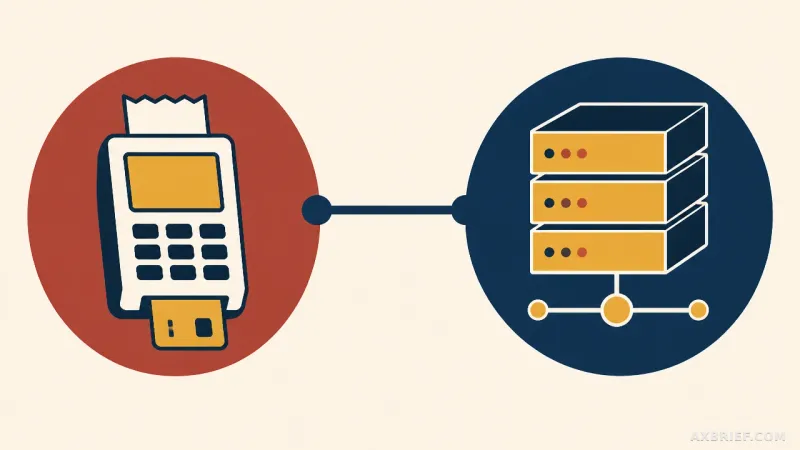
The modern AI developer is currently trapped in a high-stakes trade-off between capability and control. For the past two years, the industry standard for building complex AI agents has been a reliance on massive, closed-source models like GPT-4. These models offer the reasoning depth required for autonomous tasks, but they come with a steep API tax and a complete lack of transparency. Every time a developer attempts to scale an agentic workflow, they hit the same wall: the costs scale linearly with usage, and the black-box nature of the model makes it impossible to optimize the internal logic for specific business needs. This creates a precarious dependency where the core intelligence of a company's product is rented from a third party, leaving the enterprise vulnerable to pricing shifts and data privacy risks.
The Performance Parity of Nemotron 3 Ultra
NVIDIA has entered this fray with Nemotron 3 Ultra, a model designed to break the dependency on closed-source APIs without sacrificing the reasoning capabilities required for professional-grade agents. The most striking result of this release is not just the model's raw power, but its efficiency in production environments. In the Deep Agents benchmark, a rigorous performance measurement tool provided by LangChain, Nemotron 3 Ultra recorded the highest accuracy among all open models. More importantly, it achieved performance parity with the leading closed-source models, proving that open-weight architectures can now handle the complex tool-calling and logical reasoning necessary for enterprise-level autonomy.
Beyond accuracy, the economic shift is dramatic. Nemotron 3 Ultra reduces the inference cost per execution to one-tenth the cost of leading closed models. This 10x reduction in cost fundamentally changes the math for AI agent deployment. When the cost of a single run drops by 90 percent, the barrier to experimentation vanishes. Developers can now run thousands of iterations to refine agent behavior, conduct exhaustive A/B testing, and deploy agents across high-volume workflows that were previously cost-prohibitive. Furthermore, the model delivers significantly higher throughput, allowing enterprises to process a larger volume of concurrent business tasks using the same hardware footprint, effectively decoupling growth from exponential API spending.
The Shift Toward Harness Engineering
What makes the success of Nemotron 3 Ultra surprising is that these gains were not achieved through traditional weight retraining or massive fine-tuning cycles. Instead, NVIDIA and the LangChain team utilized a methodology called harness engineering. In the traditional LLM pipeline, when a model fails a task, the instinct is to feed it more data and retrain the weights. Harness engineering flips this logic. It treats the model as a stable engine and focuses instead on optimizing the environment in which that engine operates. A harness consists of the system prompts, the specific descriptions of the tools the model can call, and the middleware that manages the execution path between the model and the external world.
By analyzing execution traces from the Deep Agents benchmark, the LangChain team identified the exact moments where models typically fail: a misunderstood tool parameter, a logical leap that misses a step, or a failure to adhere to a negative constraint. Rather than modifying the model's neurons, they tuned the harness. They refined the system prompts to define roles more sharply, rewrote tool descriptions to eliminate ambiguity, and adjusted the middleware to better guide the model's trajectory. This approach proves that the perceived gap between open and closed models is often not a gap in intelligence, but a gap in how the model is steered. By optimizing the interface, Nemotron 3 Ultra maximizes its existing capabilities, delivering top-tier accuracy without the computational overhead of constant retraining.
This shift toward harness engineering provides enterprises with a new lever for optimization. Instead of waiting for a model provider to release a new version, companies can now iterate on their own harnesses to solve specific edge cases in their business logic. It transforms the role of the AI engineer from a data curator into a system architect, focusing on the orchestration of the agent rather than the alchemy of the weights.
To productize this approach, NVIDIA released NVIDIA NemoClaw, an open reference blueprint that packages these optimizations for immediate enterprise use. NemoClaw integrates Nemotron 3 Ultra with the tuned LangChain Deep Agent code and a critical security component called NVIDIA OpenShell. OpenShell serves as a secure runtime environment that isolates the agent's actions. When an agent issues a command to an external system, OpenShell ensures that the execution happens in a sandboxed environment, preventing the agent from accidentally or maliciously compromising the host system. This creates a complete open stack: an open model, an open harness, and an open security runtime.
For industries with extreme compliance requirements, such as finance or healthcare, this end-to-end ownership is the only viable path to production. By removing the external API from the loop, these organizations can maintain absolute governance over their data movement and enforce security policies at the runtime level. The ability to host the entire stack on private infrastructure means that sensitive patient or financial data never leaves the corporate perimeter, solving the primary blocker for agentic AI adoption in regulated sectors.
The industry is already moving toward this decentralized intelligence model. LangChain, which sees over 200 million downloads per month, now provides the optimized Deep Agent harness directly, allowing developers to implement production-ready agents instantly. Companies like Abridge, Amdocs, and Box are already embedding these tuned harnesses into their platforms to automate complex business operations with high precision. Meanwhile, global system integrators like EY are using the NVIDIA NemoClaw blueprint to help their clients build, evaluate, and govern specialized agents for high-value workflows.
For those not ready to manage their own hardware, the ecosystem has expanded to provide seamless access. Nemotron 3 Ultra is available through a variety of hosting platforms, including Baseten, Crusoe Cloud, DeepInfra, Fireworks, Nebius, and Together AI. These providers allow teams to deploy the tuned harness in a production environment immediately, providing a bridge between initial validation and full-scale infrastructure ownership.
The era of renting intelligence via expensive, opaque APIs is giving way to an era of owned intelligence. By combining the raw power of Nemotron 3 Ultra with the precision of harness engineering and the security of OpenShell, the industry is finally moving toward AI agents that are not only affordable and accurate but entirely under the control of the people who deploy them.