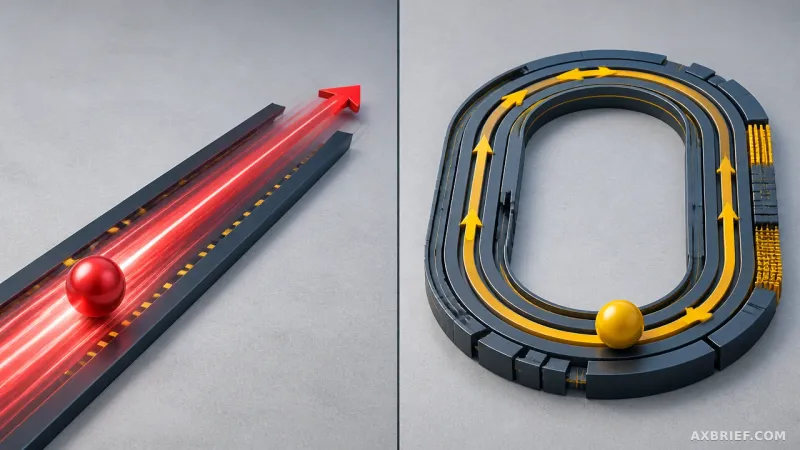
For years, the high-end computing experience has been defined by a specific, cumbersome aesthetic. To run a triple-A game at maximum settings or execute a complex local AI model, users have accepted a mandatory trade-off: a massive chassis, a power supply that resembles a brick, and cooling systems that sound like jet engines. This physical bulk was seen as the inevitable price of performance, a law of thermodynamics that dictated that power requires volume. The industry operated on a simple premise that if you wanted the cutting edge of silicon, you had to sacrifice portability.
The Architecture of Computational Density
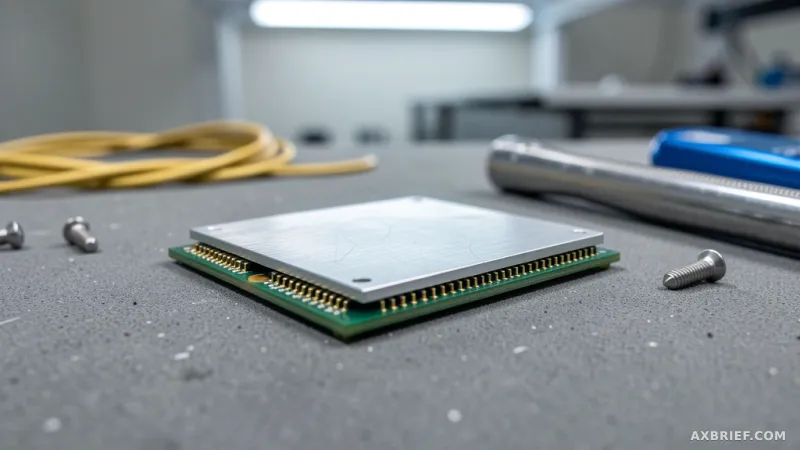
NVIDIA is attempting to dismantle this premise with the introduction of RTX Spark, a superchip designed specifically to decouple high-end performance from physical size. The core objective of RTX Spark is to deliver 1440p resolution at 100 FPS or higher within the constraints of slim Windows laptops and ultra-compact, high-efficiency desktop PCs. This is not a mere incremental update but a fundamental shift in how NVIDIA approaches the intersection of power efficiency and raw throughput. By condensing thirty years of architectural innovation into a slim form factor, the chip aims to redefine the Windows PC as a vehicle for permanent, local AI agency rather than just a workstation.
Achieving this level of performance in a low-power envelope requires a sophisticated orchestration of three primary technologies: NVIDIA Ray Tracing, Deep Learning Super Sampling (DLSS), and NVIDIA Reflex. While Ray Tracing simulates the physical behavior of light to create photorealistic environments, it is traditionally the most resource-intensive part of the pipeline. RTX Spark mitigates this load through DLSS 4.5 Ray Reconstruction, which utilizes a second-generation Transformer model. Unlike previous iterations, this Transformer-based approach analyzes the correlations between data points in the rendering process to calculate light paths more precisely. This effectively removes the noise and artifacts that typically plague high-frame-rate upscaling, ensuring that image quality remains realistic even as the hardware footprint shrinks.
Complementing this is the integration of Dynamic Multi Frame Generation and Super Resolution. These tools allow the AI to predict and fill in missing pixels and generate entirely new frames, reducing the actual rendering load on the GPU while maintaining a fluid visual experience. The result is a system where the hardware does not have to work harder in terms of raw electricity, but rather works smarter through AI-driven prediction. This efficiency is what allows a slim laptop to maintain an all-day battery life while simultaneously pushing 1440p visuals, breaking the traditional link between chassis volume and performance ceilings.
The industry response to this shift is already evident in the software ecosystem. Over 100 Windows software providers and game developers, including NetEase, Remedy Entertainment, and Xbox, have already committed to RTX Spark support. This widespread adoption suggests that the industry is moving toward a standardized environment where high-performance AI computation is no longer the exclusive domain of heavy workstations but a baseline expectation for the modern mobile PC.
From Rendering Frames to Generating Intelligence
While the frame rates and resolutions are the most immediate metrics, the true disruption of RTX Spark lies in the transition from cloud-dependent AI to local AI agency. The industry has long struggled with the latency and privacy concerns of cloud-based LLMs. When an AI agent resides in a remote data center, every interaction is subject to network jitter and server lag, which shatters the immersion of real-time applications. RTX Spark solves this by moving the inference engine directly onto the local silicon, enabling the deployment of NVIDIA ACE (AI Companion Engine).
NVIDIA ACE represents a leap from scripted NPCs to autonomous agents. In traditional gaming, non-player characters operate on decision trees and pre-written dialogue, creating a predictable and often sterile experience. ACE utilizes local AI computation to generate intelligent characters that can perceive their environment and respond to a user's voice or actions in real-time. Because these computations happen on the RTX Spark chip rather than a distant server, the response latency is virtually eliminated. The character does not just play a recording; it thinks and reacts within the local hardware loop.
This shift is best exemplified by the collaboration between NVIDIA and KRAFTON. During a demonstration at the T1 Basecamp, which included a visit from CEO Jensen Huang and legendary player Faker, the industry saw the first glimpse of the PUBG Ally. Developed jointly by KRAFTON and NVIDIA, PUBG Ally is not a scripted bot but an AI-driven teammate. By leveraging the local AI units of RTX Spark, PUBG Ally can engage in immersive, context-aware interactions with the player, behaving more like a human teammate than a piece of software. The tension here is between the old world of static scripts and the new world of generative agency, and the resolution is found in the chip's ability to handle rendering and intelligence in parallel.
This parallel processing is the secret to the chip's efficiency. While the second-generation Transformer in DLSS 4.5 is optimizing pixels for the display, the local AI units are simultaneously generating dialogue and behavioral logic for ACE. By distributing these tasks across specialized hardware accelerators, RTX Spark prevents the system from bottlenecking, allowing a slim device to act as both a high-end gaming rig and a sophisticated AI server. This transforms the PC from a tool that runs applications into a platform that hosts living agents.
This movement toward localization is further supported by NCSoft. The company, which has a long history of integrating NVIDIA technology into titles like Lineage 2 and Aion, is implementing DLSS 4.5's Dynamic Multi Frame Generation and Super Resolution in its upcoming open-world tactical shooter, Cinder City, as well as Aion 2. By ensuring these titles run flawlessly on slim form factors, NCSoft and NVIDIA are signaling that the future of AAA gaming is not about the size of the tower under the desk, but the density of the intelligence within the chip.
As the physical constraints of the PC vanish, the definition of a high-performance machine shifts from power consumption to computational density. The ability to carry a professional-grade gaming and AI environment in a slim laptop means that AI agents are no longer destination-based services accessed via a browser, but omnipresent companions that follow the user. The hardware is finally catching up to the vision of the AI agent, turning the laptop into a seamless interface for a personalized, local intelligence that learns and reacts in real-time.
The era of the behemoth PC is ending, replaced by a paradigm where efficiency is the ultimate measure of power.