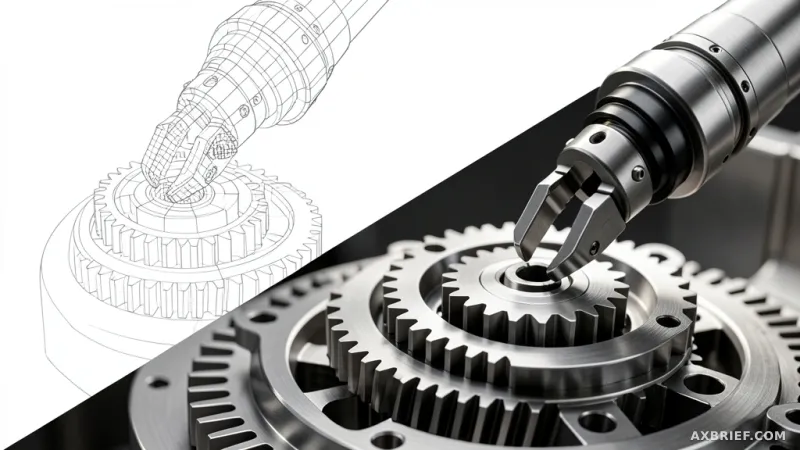
For years, the robotics community has been haunted by a persistent ghost known as the sim-to-real gap. It is the frustrating reality where a robot performs a complex task with flawless precision in a simulated environment, only to fail catastrophically the moment it is deployed into the physical world. In the lab, the lighting is perfect, the surfaces are frictionless, and the objects are exactly where they are supposed to be. In reality, a slight shift in ambient light or a millimeter of misalignment in a part can render a million-dollar machine useless. The industry has long sought a way to transfer the speed and safety of simulation into the messy unpredictability of the real world, and recently, a success rate of 75% has emerged as a critical benchmark in overcoming this hurdle.
The Architecture of Autonomous Adaptation
At the International Conference on Robotics and Automation (ICRA), NVIDIA Research presented a suite of eight distinct robot control frameworks designed to dismantle the barriers between virtual training and physical execution. These frameworks represent a concerted effort to move beyond simple repetition and toward genuine environmental reasoning. One of the primary bottlenecks in multi-robot systems has been the sequential nature of planning, which creates latency and inefficiency. NVIDIA addressed this with ScheduleStream, a GPU-based parallel planning framework for multiple robot arms. By shifting from sequential to parallel processing, ScheduleStream achieved a 3x increase in planning speed for multi-arm scenarios when running on NVIDIA Jetson hardware. The implementation details and source code are available via the ScheduleStream repository.
Beyond coordination, the problem of morphological variance—how a robot's specific physical build affects its movement—was tackled through the COMPASS framework. COMPASS utilizes a hybrid approach: it first establishes basic navigation through imitation learning and then employs residual reinforcement learning within NVIDIA Isaac Lab to specialize the control for specific robot bodies. This method proved remarkably effective, increasing the average success rate by 4.5 times compared to standard imitation learning. In real-world trials involving autonomous mobile robots and humanoids, COMPASS maintained a success rate of approximately 80% across 20 separate tests.
Manipulation of objects remains one of the hardest challenges in robotics, particularly when dealing with unknown shapes. Grasp-MPC solves this by leveraging the GraspGen dataset and cuRobo, a CUDA-accelerated library for robot motion generation. By generating 2 million simulation trajectories across 8,000 different objects, NVIDIA pushed the real-world grasping success rate from a mediocre 41% up to 75%. For even more complex, non-rigid environments, the Deformable Cluster Manipulation framework was introduced. Inspired by the need to clear tangled branches from power lines, this framework moves away from traditional gripper-based picking and instead uses the entire arm to wrap and push objects. By using a tree generator based on biological growth equations to create virtual training environments in Isaac, the team achieved zero-shot performance, meaning the robot could operate in real-world environments without any additional fine-tuning.
Precision assembly introduces a different set of challenges, where microscopic errors in simulation lead to total failure in reality. To solve this, NVIDIA introduced SPARR (Simulation-to-Real Assembly with Residual Reinforcement Learning). SPARR splits the assembly strategy into two layers: a global strategy learned in Isaac Lab and a residual learning layer that uses real-time camera data to correct physical errors during deployment. This dual-layer approach improved success rates by 38% and reduced task completion time by 30% compared to zero-shot methods. When tested against assembly tasks from the National Institute of Standards and Technology (NIST), SPARR improved success rates by 75%.
For complex, multi-stage assembly lines, the Refinery framework ensures that the output of one step is perfectly positioned for the next. By optimizing the transition between stages, Refinery achieved a 91% success rate in simulation, preventing the compounding error effect where a slight angle deviation in the first part causes a failure in the final step. Supporting these physical movements is the PEEK pipeline, which optimizes visual processing. By using a Vision-Language Model (VLM) to identify only the most critical objects related to a specific command and filtering out environmental noise, PEEK demonstrated up to 41 times higher accuracy in real-world settings. Finally, the SEAL methodology acts as a logical fail-safe, detecting discrepancies between the robot's inferred plan and its actual execution at runtime to prevent logical errors before they manifest as physical crashes.
From Rigid Planning to Fluid Correction
When analyzing these eight breakthroughs, a clear pattern emerges: the fundamental paradigm of robot control is shifting from precise pre-planning to real-time adaptation. For decades, the gold standard in robotics was the creation of a perfect trajectory. Engineers would calculate every single joint angle and movement in advance, assuming the world would remain static. However, the success of Grasp-MPC and SPARR suggests that the future lies in the ability to correct errors on the fly. This is akin to how a human reaches for a cup; we do not calculate the exact coordinates of our fingers in a vacuum, but rather use constant sensory feedback to adjust our grip as we close in on the target.
This shift is made possible by the concept of residual learning. By allowing a robot to learn a general strategy in simulation and then learn the specific delta—the difference between the simulation and reality—on the actual hardware, NVIDIA has created a system that is both scalable and precise. The robot no longer needs a human to demonstrate every single possible variation of a task. Instead, it uses the simulation to understand the physics and the residual layer to understand the friction, the slip, and the noise of the real world.
Furthermore, the reliance on massive synthetic datasets is breaking the traditional cost curve of robotics development. Historically, collecting data required moving physical robots for thousands of hours, a process that is slow, expensive, and prone to hardware wear. By using Isaac Lab and Isaac open simulation frameworks, NVIDIA has replaced physical trial-and-error with GPU-accelerated computation. This allows for the generation of millions of edge cases in a fraction of the time, ensuring that by the time a robot touches a real floor, it has already experienced every possible failure mode in a virtual one.
This ecosystem is completed by the use of digital twins via NVIDIA Omniverse NuRec. By creating a high-fidelity virtual replica of a specific deployment site—such as a power grid or a farm—developers can validate and calibrate robot behavior in a mirror world before the physical deployment. This transforms simulation from a mere testing tool into a mandatory stage of the production pipeline. The ability to move from a virtual twin to a physical asset with minimal friction is what allows robots to finally leave the sterile confines of the laboratory and enter unstructured outdoor environments.
The convergence of high-fidelity simulation and residual reinforcement learning is effectively erasing the line between the virtual and the physical. By focusing on the ability to adapt rather than the ability to predict, NVIDIA is moving the industry toward a future where software efficiency and data generation capacity are more important than the mechanical precision of the hardware itself.