For enterprises operating in the healthcare and legal sectors, the allure of generative AI often hits a hard wall called data sovereignty. In the United Kingdom, this is not merely a preference for local hosting but a legal mandate. When data must physically reside within national borders to satisfy regulatory frameworks and service contracts, the convenience of global managed AI services becomes a liability. This tension defines the current struggle for thousands of organizations that need the reasoning power of the latest large language models without risking the legal fallout of cross-border data transfers.
The Infrastructure of Sovereignty
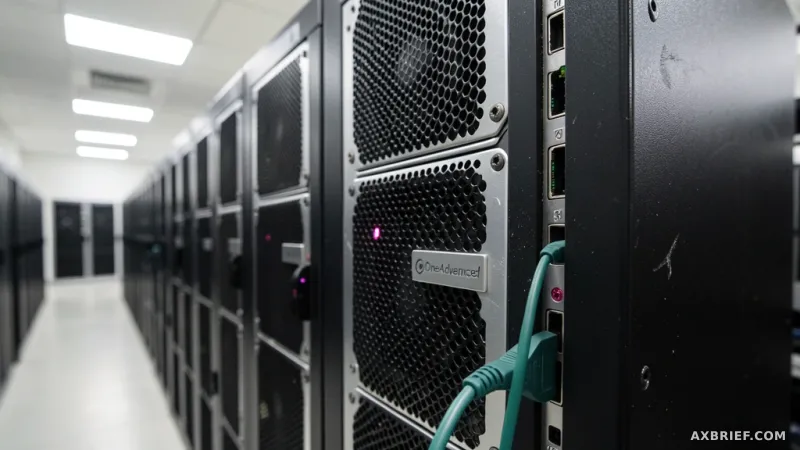
OneAdvanced, which serves over 10,000 customers in highly regulated industries, faced this exact dilemma. To integrate the latest capabilities of Llama 4 Maverick and Llama Guard 4, the company found that these specific models were not available via AWS managed services within the UK region. To bypass this limitation while maintaining absolute control over data residency, OneAdvanced abandoned the ease of managed APIs in favor of self-hosting open-weight models on their own AWS infrastructure. By deploying directly onto AWS in the London (eu-west-2) region, they ensured that no data ever left the country, effectively turning a regulatory hurdle into a competitive architectural advantage.
To handle the massive document analysis required for legal and medical workflows, the team upgraded their compute layer from p4d.24xlarge instances to p5.48xlarge instances. This hardware shift was critical to securing a context window between 120K and 128K tokens, allowing the models to process vast amounts of professional documentation in a single pass. The serving layer utilizes vLLM on Amazon SageMaker AI, an engine chosen for its superior memory management and high inference throughput. Specifically, they deployed `meta-llama/Llama-4-Maverick-17B-128E-Instruct-FP8` and `meta-llama/Llama-Guard-4-12B`. The use of FP8 (8-bit floating point) precision allows the system to maintain high model accuracy while significantly reducing memory overhead and increasing response speeds.
Security is implemented as a serial pipeline. Llama Guard 4 acts as a primary gatekeeper, filtering user inputs for harmful content before they ever reach the main Llama 4 Maverick model. This separation of concerns ensures that the primary reasoning model focuses entirely on generation while the guardrail model handles safety. The deployment process relies on Hugging Face models and AWS Deep Learning Containers to ensure environment consistency and rapid scaling. On the data side, the pipeline converts documents stored in Amazon S3 into markdown format, which are then chunked and embedded into Amazon Aurora PostgreSQL using the `pgvector` extension. This allows the system to perform high-speed vector similarity searches, retrieving the most relevant document fragments to feed into the LLM's context window.
To validate this technical setup against international standards, OneAdvanced pursued ISO 42001 certification. This international standard for AI management systems provides a governance framework that proves the company is not just isolating data technically, but managing AI risks and operations through a standardized, audited process. The combination of self-hosting and ISO certification creates a transparency layer that satisfies the most stringent requirements of public sector and regulated industry clients.
From Prototype to Agent Factory
While the infrastructure provided the foundation, the real breakthrough occurred in the orchestration layer. OneAdvanced began with a prototype built on Amazon Bedrock to validate basic chat and legal query functions during two-week sprints. However, as they moved toward production, they encountered a common industry friction point: the rigidity of traditional AI workflows. Most agentic frameworks rely on Directed Acyclic Graphs (DAGs) or predefined sequences where every possible path is hard-coded. In a complex professional environment, this approach is brittle; any change in business logic requires a complete redesign of the workflow graph.
OneAdvanced pivoted to a model-centric approach using the Strands Agents SDK, running on Amazon ECS. Unlike LangChain or LangGraph, which often emphasize structured state machines, the Strands SDK allows the model to dynamically select tools and determine the next step based on the real-time context of the conversation. This shift in philosophy transformed their development speed. After deploying their first agent, the company scaled to over 50 specialized agents in just three weeks, with the build time for individual agents dropping to less than one day.
To further accelerate this expansion, they developed a no-code builder that empowers non-technical subject matter experts, such as clinical leads or product managers, to create agents. These users can design input forms via a drag-and-drop interface. To bridge the gap between the UI and the LLM, the team implemented an `@` syntax for system prompts, allowing form field values to be injected directly into the agent's persona and instructions. These configurations—including the agent's persona, toolset, and form structure—are stored in Amazon DynamoDB and loaded at runtime, allowing experts to tune agent performance without writing a single line of code.
The utility of these agents is driven by a shared library of common tools. These range from basic calculators and file readers to complex integrations like Mermaid diagram generation and Snowflake cloud data warehouse queries. For example, a specialized agent can query specific metrics from a Snowflake database and immediately pass those results to a chart generation tool to produce a visual report in one interaction. They also implemented an interview-style interaction pattern, where the agent is programmed to ask clarifying questions to gather necessary context before attempting an analysis, significantly reducing hallucinations in ambiguous requests.
This transition from a rigid, developer-led workflow to a flexible, model-driven ecosystem allowed OneAdvanced to deploy agents across a vast array of domains, from clinical safety notice generation and medical incident response to educational curriculum design and performance evaluation. By decoupling the agent's logic from a fixed graph and placing it in the hands of domain experts via a no-code interface, they moved from experimental AI to a production-grade agent factory.
The blueprint established here suggests that for regulated industries, the path to AI maturity is not through the most convenient managed service, but through the strategic ownership of the stack. By combining high-spec GPU instances, open-weight models, and a model-centric orchestration layer, enterprises can achieve the rare balance of strict regulatory compliance and hyper-rapid deployment.