The artificial intelligence industry has reached a pivotal inflection point where the primary bottleneck is no longer the elegance of an algorithm or the availability of data, but the raw availability of electricity. For years, the conversation around frontier models centered on parameter counts and token efficiency, yet the reality of 2024 is that the ceiling of AI intelligence is now dictated by the capacity of the power grid. This shift has transformed the most ambitious AI labs into infrastructure companies, forcing a move from renting cloud space to designing the very power plants and transmission lines that will feed the next generation of intelligence.
The Scale of the PORTS-Pike Infrastructure
OpenAI is addressing this physical constraint by securing a massive power capacity of approximately 8GW-IT at the PORTS-Pike technical campus in Pike County, Ohio. In the context of data center engineering, GW-IT refers specifically to the power capacity required to drive the actual IT equipment—the servers, storage arrays, and networking gear—rather than the total utility power entering the site. By targeting 8GW-IT, OpenAI is attempting to maximize computing density on a single campus, effectively removing the physical power limitations that currently throttle the training of frontier models.
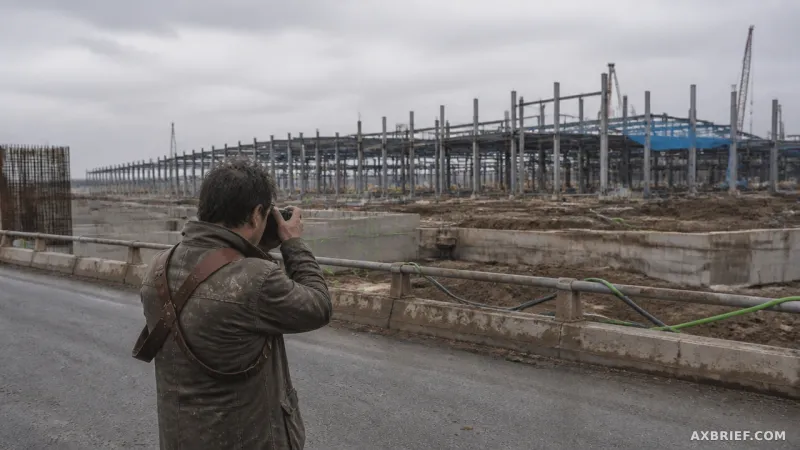
The roadmap for this infrastructure is a six-year build-out scheduled for completion by 2032. The expansion is designed to be phased, ensuring that computing resources become available as the power grid scales. The first critical milestone arrives in 2028, when the campus will begin operations with an initial 800MW of power. This initial capacity alone is sufficient to drive tens of thousands of GPU servers simultaneously, providing a massive leap in compute availability long before the final campus is finished. From 2028 to 2032, the capacity will be incrementally increased until the full 8GW-IT target is realized.
This project is as much a socio-economic venture as it is a technical one. The construction phase is expected to employ 35,000 workers over the six-year period, followed by the creation of 2,500 permanent operational roles once the campus is fully functional. To manage the impact on the local community, a total fund of $80 million has been established, with OpenAI contributing $40 million and SB Energy providing an additional $40 million. This community fund is specifically earmarked for development projects identified and prioritized by local residents.
Furthermore, OpenAI is integrating educational accessibility into the project's footprint. The company is providing $84 million in Codex credits to college students across the state of Ohio. Distributed via ChatGPT, these credits allow students to access Codex, the AI tool designed to translate natural language into code and assist in software development. By lowering the financial barrier to high-end AI compute for students, OpenAI is effectively seeding a local talent pipeline of AI-native engineers in the region where its hardware resides.
The Financial Synergy and the NVIDIA Standard
While the scale of the campus is staggering, the financial and technical architecture behind it reveals a deeper strategic shift. Rather than bearing the full brunt of capital expenditure and depreciation, OpenAI has adopted an asset management model through SB Energy. Under this arrangement, SB Energy handles the entire lifecycle of the data center—from design and construction to ownership and operation. OpenAI has entered into a 20-year long-term lease to secure the facility, but the payment structure is based on availability rather than upfront investment. OpenAI pays lease fees based on the revenue and cash flow generated once the capacity actually becomes available for use. This shifts the operational risk and depreciation costs to SB Energy, allowing OpenAI to maintain a leaner balance sheet while ensuring a guaranteed supply of power.
NVIDIA is not merely a vendor in this equation; it is a primary financial and engineering partner. NVIDIA has made a direct investment of $1.5 billion into SB Energy and is providing critical credit support for the initial 4.25 IT-GW of infrastructure. This credit support is strategically targeted at the most volatile stages of development: land acquisition, grid connection, and the shell build-out—the phase where the physical structure is erected before the hardware is installed. By providing both capital and credit, NVIDIA is compressing the time gap between the construction of the physical shell and the deployment of its chips, ensuring that its hardware has a ready-made, optimized environment the moment it leaves the factory.
This partnership extends into the very physics of the data center. The PORTS-Pike campus will exclusively host NVIDIA AI computing infrastructure, creating a monolithic hardware environment. OpenAI and NVIDIA are collaborating on every stage of the process, from initial design and testing to the commissioning phase, where they verify that the facility operates exactly as intended. This is a move toward joint engineering, where the physical layout of the building, the distribution of power, and the efficiency of the cooling systems are co-optimized for NVIDIA's specific hardware architecture to eliminate physical bottlenecks before a single server is racked.
Beyond the physical site, the two companies intend to publish a technical white paper to establish a new global design standard for next-generation supercomputers. This document will detail resilient infrastructure designs capable of rapid recovery from system failures and set strict qualification standards for individual components, such as power supply units and cooling systems. They are also developing software-level strategies to distribute workloads more efficiently, minimizing resource waste across the cluster. The ultimate goal is to increase the Mean Time Between Failures (MTBF). In a cluster of tens of thousands of GPUs, a single hardware failure can halt a training run, leading to massive losses in time and capital. By maximizing physical stability, they aim to extend the duration of uninterrupted training.
Detailed progress on the project is being tracked and disclosed at portscampus.com.
The convergence of massive power, specialized chips, and high-speed networking is the only way to sustain the trajectory of frontier models. As model parameters grow and training sets expand, the demand for electricity increases exponentially. The competition for AI supremacy has moved beyond the realm of software optimization and into the realm of gigawatt-scale power procurement. The stability of the power grid and the efficiency of the network topology now act as the hard ceiling for AI performance.
Ultimately, the scale and reliability of this infrastructure directly dictate the cost, availability, and reliability of tools like ChatGPT and Codex. A fragile infrastructure leads to training interruptions and higher operational costs, which are eventually passed down to the user. By securing 8GW-IT of power and defining a new standard for supercomputer resilience, OpenAI is not just building a data center—it is constructing the physical foundation required for the next leap in artificial general intelligence.