
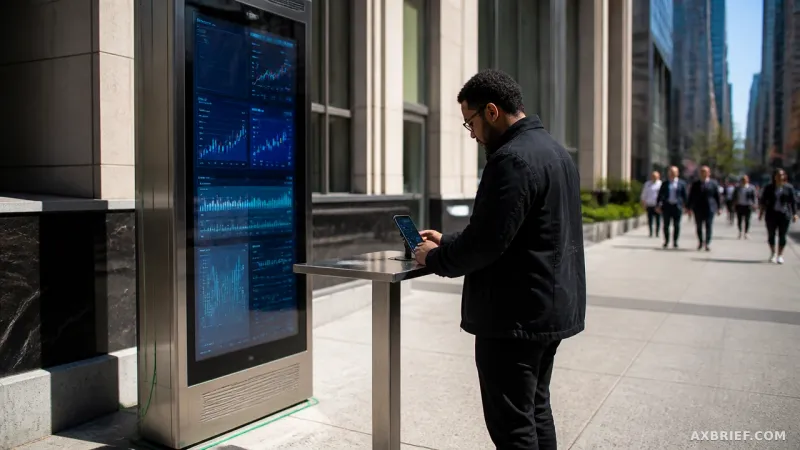
Every finance team knows the ritual of the month-end close. It is a period of high tension characterized by frantic spreadsheet reconciliation, chasing down missing invoices, and the manual assembly of reports that are already outdated by the time they reach the executive suite. For decades, this lag has been accepted as a structural necessity of accounting. The business operates in real-time, but the financial understanding of that business operates on a delay. This gap creates a dangerous blind spot where leadership makes decisions based on a rearview mirror rather than a windshield.
The Architecture of the Zero-Day Close
OpenAI is dismantling this legacy cycle by designing a zero-day close system. The goal is to eliminate the waiting period entirely, allowing the organization to verify its financial health in real-time. Unlike traditional reporting that relies on post-hoc cleanup of manual records, this AI-native approach creates a continuous, unified view of the company's financial position. The system integrates approved spending plans, general-ledger actuals, purchase orders, accrued expenses, and granular transaction details into a single, living stream of data.
In this model, every fluctuation is traceable back to its foundational activity data. The operational flow shifts the burden of labor from the human to the machine. AI agents handle the first pass of data collection and organization, drafting initial explanations for variances and flagging exceptions that require human attention. The finance professional no longer spends their day hunting for the source of a discrepancy; instead, they act as the final validator and approval authority. This transforms the finance function from a data-entry operation into a verification layer.
This real-time settlement data feeds directly into a system of continuous forecasting. Rather than static quarterly projections, the organization utilizes a live view where statistical forecasts, supporting evidence, and various scenarios are updated instantly. When a new customer contract is signed, the system does not wait for the next reporting cycle to reflect the change. It identifies the relevant evidence, calculates the immediate impact on quarterly and annual performance, and presents the adjusted forecast for review. The finance team simply reviews the assumption and approves the update, ensuring that the company's strategic trajectory is always aligned with current reality.
The Rise of the Finance System Architect
The true shift, however, is not just in the speed of the data, but in who builds the tools to manage it. OpenAI has moved away from a centralized IT model where finance requests a feature and waits months for deployment. Instead, they have adopted a bottom-up approach, empowering finance practitioners to build their own solutions through internal hackathons and AI tools. This has led to the creation of specialized agents like IR-GPT, a custom GPT designed for the Investor Relations team. IR-GPT is constrained to answer due diligence questions using only approved source materials, ensuring accuracy and compliance without requiring a human to manually sift through documents for every query.
This democratization of tool-building extends to those with zero coding experience. Using Codex, the AI code generation tool, employees are now writing functional software to solve specific business problems. One notable example is a tool created to convert monthly advertising forecasts into granular weekly and daily plans. The tool incorporates complex logic to distinguish between business days and public holidays, ensuring that spend is allocated accurately. Because the output is linked directly to approved financial models, data integrity is maintained without manual double-checking. Marketing leaders can now adjust a variable and immediately see the impact on projected ROI and investment points, bypassing the traditional engineering pipeline entirely.
This shift is fundamentally altering the professional identity of the finance practitioner. Recent internal research at OpenAI reveals that 40% of specialized AI use cases within the finance team occur outside of traditional accounting tasks, with 22% of those cases focused on engineering-related work. The role is evolving from a number manager to a data-driven system designer. The primary unit of work is no longer the collection of inputs, but the design of the decision path. The static Excel model and the PowerPoint deck are being replaced by live dashboards built with ChatGPT Work and Codex. These dashboards do not just display data; they respond to follow-up questions in real-time, providing the full business context behind every number.
To maximize the impact of these tools, OpenAI employs a strategy of decision back-calculation. Rather than asking how to automate a manual task, the team starts with the consequential decision—the high-stakes choice a leader must make—and reverse-engineers the data flow required to support it. This prevents the common trap of automating an inefficient process. By mapping the path from the final decision back to the source data, the team can identify exactly which points the AI can handle and where human judgment is non-negotiable.
In the budget-versus-actuals reconciliation process, for instance, the AI is tasked with verifying approved inputs and checking sources, leaving the finance expert to focus solely on the final review. In capital allocation, the system provides real-time visibility into the ROI and marginal utility curves of marketing spend, allowing leaders to reallocate resources instantly. The success of this AI integration is not measured by how many hours of manual labor were saved, but by how much faster a leader can move from insight to action.
By removing the physical time required for data collection, OpenAI has eliminated the exhaustive process of reconstructing the past to explain the present. The finance professional has transitioned from a historian of the company's spending to an architect of its decision-making visibility.



