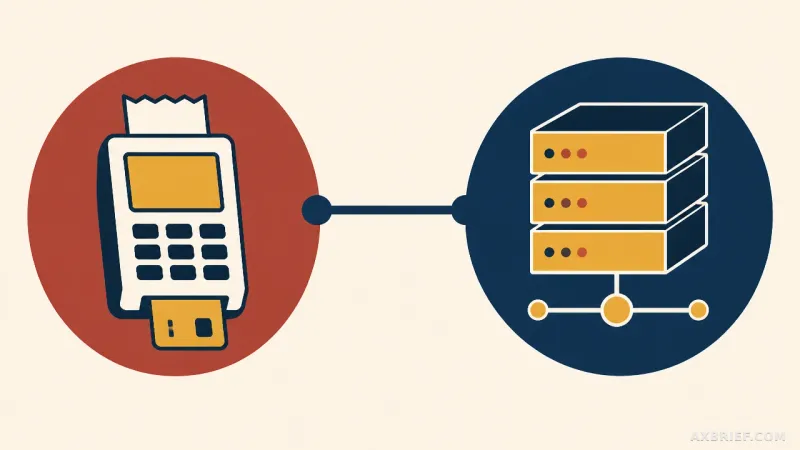
Developers building autonomous agents have long hit a frustrating wall: the payment gateway. An agent can plan a complex workflow, browse the web, and write perfect code, but the moment it encounters a premium API or a paywalled content service, the process grinds to a halt. Currently, this requires a human to intervene, manually enter credit card details, and restart the session. This friction transforms a potentially autonomous agent back into a sophisticated tool that still requires a babysitter for every financial transaction.
The Architecture of Autonomous Machine Payments
AWS and the OpenClaw Foundation have addressed this bottleneck by integrating the payment capabilities of Amazon Bedrock AgentCore directly into the OpenClaw plugin framework. This collaboration introduces a dedicated payment layer that allows agents to resolve billing requests programmatically without human intervention. The integration is built upon the x402 v2 pattern and the Machine Payments Protocol (MPP), creating a standardized way for machines to negotiate and execute financial transactions.
In a typical x402 v2 workflow, a merchant service issues an HTTP 402 Payment Required challenge when an agent attempts to access a paid resource. Instead of returning an error to the user, the OpenClaw agent routes this challenge through a configured wallet provider. Once the payment is processed, the provider returns a signed certificate that the client uses to resubmit the original request, granting the agent seamless access to the service. To facilitate the actual movement of assets, the system supports integration with Coinbase and Stripe Privy wallets.
Underpinning this is the infrastructure of Amazon Bedrock AgentCore. AgentCore Identity manages the secure storage of wallet credentials, ensuring that sensitive keys are not exposed to the model runtime. Meanwhile, AgentCore Observability provides the necessary telemetry for financial auditing. Every payment event, log, and trace is streamed to Amazon CloudWatch and AWS X-Ray, allowing administrators to monitor agent spending and track transaction flows in real time.
Solving the Micro-payment Dilemma and the Security Gap
Traditional payment rails are fundamentally broken for the agentic economy. When an agent needs to pay a few cents for a single API call or a specific data query via a Model Context Protocol (MCP) server, the flat fees associated with credit card processing often exceed the cost of the service itself. To solve this, the OpenClaw and AWS integration leverages stablecoins. By using digital assets on networks like Base and Base Sepolia, agents can execute high-frequency, low-value transactions with minimal overhead, removing the latency of human approval for every cent spent.
However, granting an AI model the ability to spend money introduces a critical security vulnerability: prompt injection. If a malicious actor can manipulate an agent's instructions, they could theoretically trick the model into draining its wallet by sending funds to an attacker-controlled address. To mitigate this, the developers implemented a Bounded Payment Layer.
This layer acts as a deterministic firewall between the model's intent and the actual execution of a payment. The Bounded layer enforces strict constraints on the recipient's address, the specific asset being used, the network type, the maximum amount per transaction, the total cumulative budget, and a hard expiration date. Because these rules are defined in the management plane and not the model's prompt, they cannot be overridden by a prompt injection attack. The model can request a payment, but it cannot change the rules of the budget.
To further harden the system, the architecture separates the model runtime from the administrative path. The model runtime serves only as a trigger; it can request a payment within an already approved session, but it possesses no authority to create new sessions or increase its own budget. Any attempt to perform an action outside the administrator-defined policy is rejected at the runtime level before it ever reaches the wallet provider.
For developers implementing this in production, the model runtime is only exposed to two specific tools: `get_payment_session_status` to check the current state of a session, and `get_paid_content` to request the actual payment and resource. If a developer finds that session creation or shell-related tools are exposed to the model, it indicates a compromised or outdated package that must be immediately remediated.
To integrate these capabilities, developers can install the plugin using the following command:
npm install @aws/aws-agents-payOnce installed, the plugin is identified as `aws-agents-pay` with the bundled skill name `agents-pay`. While the system defaults to Base Sepolia for testing and Base for production, it is designed to be extensible to any EVM-compatible chain, including Ethereum or Solana. It is critical to note that administrative commands, such as wallet generation and budget allocation, must be executed by a human administrator via a trusted terminal.
This deployment follows the AWS Shared Responsibility Model. While AWS and OpenClaw provide the framework for secure payments, the end user remains responsible for configuring IAM permissions, protecting wallet credentials, and defining the boundaries of the payment policies.
This shift transforms AI agents from passive information processors into active economic participants capable of procuring their own resources.