
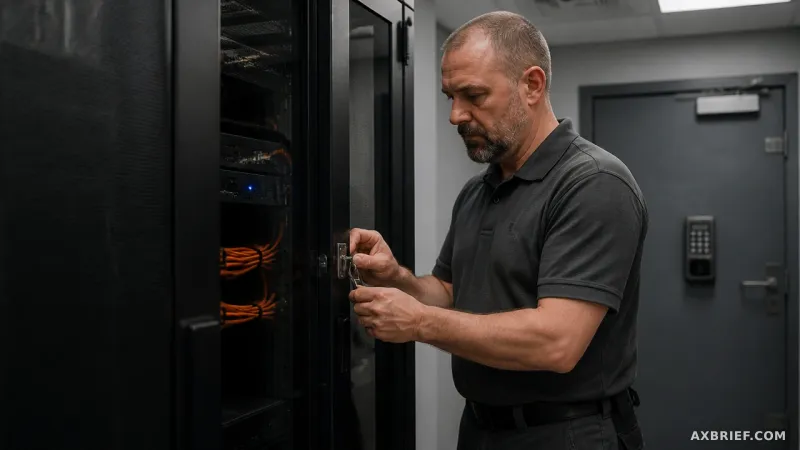
The tension in high-security corridors is palpable as government agencies grapple with a fundamental paradox. They crave the transformative productivity of large language models like ChatGPT, yet the very act of sending a prompt to a cloud server constitutes a catastrophic security breach in the world of national intelligence. For organizations where data leakage is not just a corporate liability but a matter of national security, the standard cloud-based AI pipeline is a non-starter. This systemic friction has created a demand for a third way: AI that possesses frontier-level intelligence but exists in total physical isolation from the internet.
The Architecture of Total Isolation
Palantir has addressed this critical vulnerability by deploying NVIDIA Nemotron open models within a strictly air-gapped environment tailored for the United States government. An air-gapped system is not merely a firewall or a private cloud; it is a physical disconnection from all external networks, ensuring that data cannot exit the perimeter through any digital pathway. This infrastructure is designed to support approximately 3 million civilian government employees across a vast array of administrative and operational sectors. The deployment spans critical domains including commerce, energy, healthcare, agriculture, education, and transportation.
In practice, this means that complex operational challenges, such as managing national food safety protocols or maintaining interstate highway infrastructure, are now handled by an AI engine that never touches the public web. The computational backbone of this operation is NVIDIA's accelerated computing infrastructure, which provides the raw processing power necessary to analyze massive public service datasets locally. To make this possible, Palantir integrated a sophisticated sovereign AI stack consisting of AIP, Ontology, Foundry, and Apollo. This combination creates an operating system for AI that manages data permissions at a granular level, ensuring that even within the air-gap, information is only accessible to authorized personnel.
To ensure enterprise-grade stability, Palantir combined its software stack with NVIDIA AI Enterprise. This integration allows for the deployment of the Nemotron model with full control over the underlying hardware and software configurations. By utilizing domain-optimized harnesses, Palantir has tuned the model to perform at frontier levels without requiring a connection to the developer's home servers. The result is a system where the government maintains absolute data sovereignty, operating a high-performance AI engine entirely within its own physical walls.
The Strategic Pivot to Open Model Weights
The decision to use NVIDIA Nemotron, an open model, rather than a proprietary closed-source API, represents a fundamental shift in how regulated industries approach AI. The core distinction lies in the ownership of model weights—the numerical parameters that represent the knowledge the AI has acquired during training. In a closed-model ecosystem, the weights are a trade secret held by the provider; the user merely rents access via an API. In the Palantir and NVIDIA implementation, the government owns the weights. This ownership transforms the AI from a leased service into a permanent internal asset.
This shift solves the transparency crisis inherent in black-box AI. Open models allow for independent reviews, enabling security auditors to identify vulnerabilities, biases, or unintended behaviors that a single developer might overlook. For national security, this visibility is not a luxury but a requirement. When a model is open, it can be scrutinized and modified to meet the exact safety standards of the deploying agency. Furthermore, the ability to perform fine-tuning—adjusting the model's weights using specific, internal datasets—allows the US government to optimize the AI for niche administrative tasks without that specialized knowledge ever leaving the secure facility.
This architecture also enables the creation of a localized data flywheel. In a typical AI setup, feedback loops often involve sending data back to the model provider to improve future versions. In an air-gapped environment, the flywheel is entirely internal. Users generate data and feedback within the secure perimeter, which is then used to further refine the model locally. This creates a virtuous cycle of improvement where the AI becomes more adept at government-specific tasks over time, while the training data and the resulting model improvements remain under total government control.
Beyond security, the move to open models addresses the economic volatility of the AI market. Closed models typically operate on a token-based pricing structure, where costs scale linearly with usage and are subject to the pricing whims of the provider. By deploying Nemotron on their own infrastructure, the government moves toward a predictable cost model. This economic stability is a primary driver for the two-thirds of enterprises currently migrating toward open models, as it allows for scaling AI services without the risk of exponential API costs.
For practitioners in highly regulated sectors, such as finance or public administration, this model of ownership is the only viable path toward compliance. Strict data privacy laws often forbid the transmission of sensitive personal information to third-party servers. By owning the model weights and running them on isolated hardware, organizations can implement the most advanced AI capabilities while remaining in total alignment with legal mandates. The dependency on global tech giants for basic intelligence is replaced by a self-sustaining infrastructure that is immune to external service outages or policy changes.
The conflict between the convenience of the cloud and the necessity of security is ultimately resolved through the physical and logical isolation of the AI stack. The collaboration between Palantir and NVIDIA demonstrates that frontier-level intelligence does not require a connection to the outside world. By combining the NVIDIA Nemotron open model with a sovereign operating system like AIP and Apollo, the blueprint for zero-leakage AI is now a reality. The future of sovereign AI will not be defined by who has the largest cloud, but by who possesses the capability to own, control, and evolve their model weights within a secure, independent perimeter.



