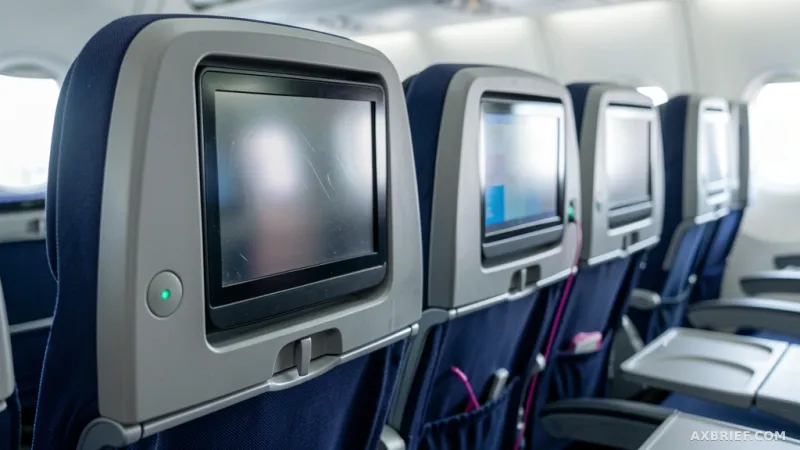
Imagine a global fleet of aircraft, each equipped with complex In-Flight Entertainment and Connectivity (IFEC) systems serving billions of passengers annually. When a system failure occurs mid-flight or during a turnaround, the clock starts ticking. For years, the burden of resolution fell on a handful of elite engineers who had to manually sift through thousands of unique deployment configurations, cross-referencing logs, metrics, and support tickets to find a single point of failure. It was a high-stakes game of digital forensics where the primary tool was the deep, often undocumented domain expertise of a few veterans. This manual bottleneck meant that diagnosing a critical issue could take several hours of grueling analysis before a solution was even proposed.
The AWS Backbone for Global Fleet Scale
Panasonic Avionics has fundamentally rewritten this operational playbook by deploying a multi-agent AI system built on Amazon Web Services. According to internal testing, the company has successfully compressed the diagnostic window from several hours of manual review down to just a few minutes of automated analysis. The primary objective of this transition is the aggressive reduction of Mean Time to Detect (MTTD) and Mean Time to Repair (MTTR), ensuring that service availability remains high across a massive, geographically distributed infrastructure.
To handle the sheer volume of data generated by a global fleet, the architecture relies on a serverless foundation that scales dynamically with demand. The core stack utilizes Amazon Bedrock for foundation model management and Amazon SageMaker as the runtime environment for the AI agents. Data orchestration is handled by AWS Glue, a serverless data integration service, and Amazon EMR, which provides the managed Hadoop and Spark frameworks necessary for processing massive log datasets. By offloading infrastructure management to these serverless tools, Panasonic Avionics engineers can focus entirely on the diagnostic logic rather than server maintenance.
This infrastructure is designed to eliminate investigation overhead. Instead of spending the majority of their time on the tedious task of data gathering and correlation, engineers are now positioned to focus on high-value activities such as solution design, system optimization, and strategic reliability engineering. The system does not merely react to individual failures but is designed to recognize patterns across the entire fleet, evolving from a reactive troubleshooting tool into a proactive monitoring ecosystem.
From Raw Logs to Semantic Intelligence
Collecting data is the easy part; making it meaningful is where most AI initiatives fail. In a fleet environment, hardware is rarely uniform. Different aircraft models and hardware versions log the same error using different terminology, making simple keyword searches useless. Panasonic Avionics solved this by implementing a data lakehouse on Amazon S3 using Apache Iceberg. As an open table format, Apache Iceberg allows the system to manage and modify massive datasets with table-like efficiency, while the ETL pipeline—powered by AWS Glue and Amazon EMR—standardizes raw operational data into a unified set of service metrics.
To bridge the gap between disparate hardware languages, the company developed a domain ontology. This is essentially a shared vocabulary that defines every entity and relationship within the fleet. Whether a legacy system calls a failure a connection timeout or a modern system calls it a handshake error, the ontology maps both to a single, standardized term. This mapping connects performance metrics to hardware metadata and maintenance tickets, providing a unified view that allows engineers to compare the health of different aircraft configurations side-by-side.
This normalized data feeds into a sophisticated orchestration layer powered by LangGraph and the Strands Agents SDK. While the Strands Agents SDK defines the specific behaviors and interfaces of the agents in Python, LangGraph manages the stateful workflow. It ensures that the AI remembers the context of previous steps and passes that intelligence to the next agent in the sequence. This allows for parallel diagnostic execution, where multiple agents investigate the same incident from different angles—one analyzing logs, another checking system metrics, and a third correlating ticket history—simultaneously.
To prevent the system from starting from scratch with every incident, Panasonic Avionics integrated `pgvector` within Amazon RDS. By storing past incidents and their resolutions as high-dimensional vectors, the system creates a collective institutional memory. When a new failure occurs, the system performs a semantic search, calculating the distance between the current symptoms and historical cases. This means the AI can identify a solution based on the conceptual meaning of the error rather than a literal text match, effectively scaling the expertise of the most experienced engineers across the entire organization.
Synthesis and the Human-in-the-Loop Safety Net
Once the parallel agents complete their investigations, the fragmented findings are handed over to Anthropic Claude via Amazon Bedrock. The LLM's role here is strictly defined: it acts as a synthesizer. Claude takes the raw analysis from the correlation, system check, and log agents to produce a structured diagnostic report. This report includes a root-cause hypothesis, an impact analysis specifying which fleet segments are affected, and a prioritized list of recommended resolution actions. By limiting the LLM to synthesis and reasoning rather than raw data retrieval, Panasonic Avionics minimizes the risk of hallucinations and ensures the output is grounded in evidence.
Despite the high accuracy recorded in internal tests, the system is not fully autonomous. The company employs a Human-in-the-Loop (HITL) architecture for all final recovery actions. While the AI can automate the triage process—routing high-severity alerts to the correct engineering team with a pre-written recommendation—the final decision to apply a fix remains with a human engineer. This ensures that the risks associated with automated changes in a critical aviation environment are mitigated.
To maintain this system over time, the agents are designed as atomic units. Each diagnostic function, such as log pattern matching or metric correlation, is a modular component. If a new metric is introduced or a diagnostic logic needs updating, engineers can replace a single agent without redeploying the entire pipeline. This modularity, combined with a feedback loop where human approvals are fed back into the system as ground truth data, creates a self-improving cycle of diagnostic precision.
By strategically deploying LLMs only where generative capabilities add value—specifically in synthesis and reasoning—and relying on deterministic logic for data processing, Panasonic Avionics has built a system that balances the speed of AI with the rigor of aviation engineering.