
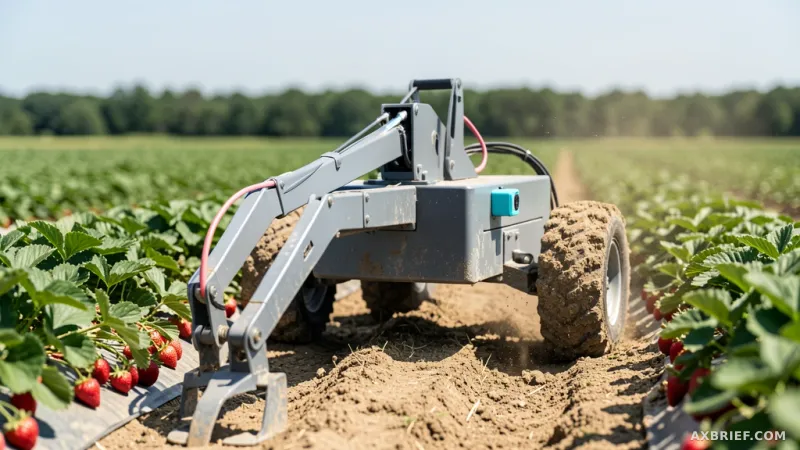
The agricultural technology sector is currently haunted by a recurring ghost: the demo that works perfectly in a controlled laboratory but fails the moment it hits actual soil. For years, developers have built sophisticated robots capable of precision weeding or autonomous harvesting, only to see those machines succumb to the chaos of mud, unpredictable weather, and the sheer physical volatility of an open field. This discrepancy between a polished pilot program and scalable commercial productivity has created a bottleneck that prevents Physical AI from reaching its full economic potential.
The Strategic Integration of Contain Inc.
To dismantle this barrier, California-based Reservoir VC has announced the acquisition of Contain Inc., an agricultural finance and data platform headquartered in Reno, Nevada. This move marks the first corporate acquisition for Reservoir VC, signaling a pivot toward a more hands-on approach to venture capital in the agricultural sector. By absorbing Contain, Reservoir VC is not merely adding a portfolio company but is integrating a specialized infrastructure designed to move Rugged AI—AI specifically engineered for harsh, outdoor environments—from the experimental phase to commercial viability.
As part of the transition, Nicola Kurslake, the founder of Contain, has been appointed as General Partner and Chair of the Investment Committee at Reservoir VC. Kurslake brings over a decade of venture capital asset management experience, including the founding of Newbin Capital and the launch of Indoor Ag-Con. While the specific financial terms of the acquisition remain undisclosed, the deal effectively expands Reservoir VC's investment mandate to encompass agricultural equipment and Controlled Environment Agriculture (CEA).
Shifting the Metric from Intelligence to Unit Economics
The acquisition reveals a critical shift in how the industry evaluates Physical AI. For too long, the primary metric for success has been software intelligence—the accuracy of a computer vision model or the efficiency of a path-planning algorithm. However, the reality of the field is that intelligence is secondary to unit economics. A robot that can identify a weed with 99 percent accuracy is commercially useless if the cost of deploying it across a thousand acres exceeds the value of the crop saved.
Reservoir VC is leveraging Contain's existing marketplace, underwriting frameworks, and deep financial data to solve this specific problem. Instead of relying on traditional data rooms filled with optimistic projections and slide decks, the firm is implementing a rigorous due diligence system centered on incubator farms. These farms serve as real-world proving grounds where hardware is tested against the actual costs of deployment and maintenance. This approach forces startups to confront the brutal reality of their business models early, ensuring that the transition from a pilot to a commercial scale is based on financial sustainability rather than technical novelty.
This focus on the physical infrastructure of AI will be a central theme of the Ruggedize event, a two-day gathering scheduled for August in Salinas, where the firm intends to address the specific challenges of deploying automation in the field.
Commercial success for Physical AI now depends less on the sophistication of the model and more on the efficiency of the physical deployment pipeline. By combining financial underwriting with hardware validation, Reservoir VC has built a mechanism to ensure that Rugged AI can finally survive the transition from the lab to the land.



