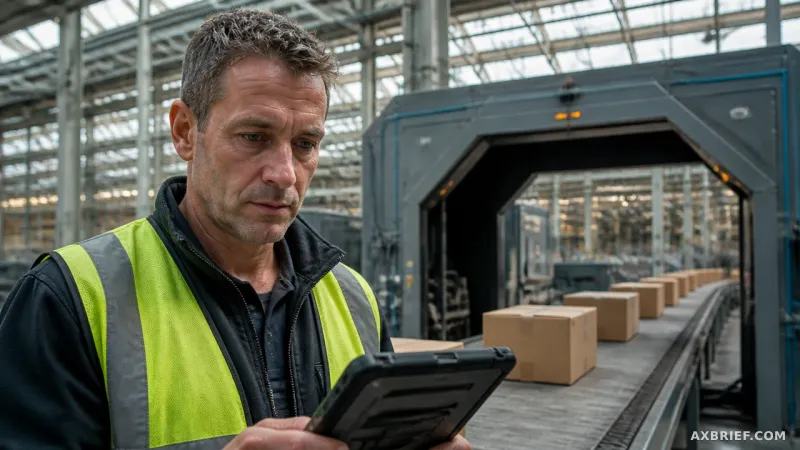
For years, the deployment of industrial robots has been plagued by a tedious, manual bottleneck. Every time a new arm is installed or a gripper is swapped, engineers must spend weeks tuning parameters, adjusting joint trajectories, and recalibrating sensors to fit the specific physical constraints of that environment. This friction has kept robotics in a state of rigid specialization, where a model trained for one machine is useless for another. The industry has long craved a universal brain—a system that understands the intent of a task regardless of the hardware executing it.
The Global Push for Physical AI
On June 10, 2026, Realworld addressed this systemic inefficiency by unveiling RLDX-1, a Robotics Foundation Model (RFM) designed to decouple artificial intelligence from specific hardware constraints. The launch served as the finale of a strategic global tour that spanned San Francisco, Tokyo, and Taipei, before concluding in Seoul. This geographic trajectory was intentional, targeting the primary manufacturing and logistics hubs of Asia to establish a foothold for what the company calls Physical AI. The Seoul event, titled Dexterity Night in Seoul, drew approximately 350 industry leaders, investors, and engineers from the global manufacturing sector to witness the model's capabilities in real-time.
The momentum behind RLDX-1 is already reflected in its industry reception. Just prior to the Seoul launch, Realworld secured the Grand Prize at the InnoVEX Pitch Contest 2026 during Computex in Taiwan. Furthermore, the company has been recognized by NVIDIA's robotics ecosystem leadership as a core partner in the development of Physical AI. The scale of the ambition is supported by a heavyweight coalition of strategic partners, including Amazon Web Services (AWS) and Microsoft, providing the necessary cloud computing and GPU infrastructure to train and deploy these massive foundation models. On the investment side, the company has attracted backing from South Korean industrial giants such as SK Telecom, LG Electronics, CJ Logistics, and Lotte, signaling a shift from laboratory experimentation to industrial-scale application.
Breaking the Body-Brain Link
To understand why RLDX-1 represents a departure from previous iterations of robotic control, one must look at the shift from deterministic trajectories to reactive intelligence. Traditional robot control relies on pre-defined paths; the robot moves from point A to point B based on fixed coordinates. RLDX-1 replaces this with 5-finger precision manipulation, or dexterity. Instead of simply following a path, the model processes physical feedback in millisecond intervals. It senses the friction, pressure, and slippage at the point of contact, adjusting its grip strength dynamically. This allows the robot to handle fragile or irregularly shaped objects with a level of nuance previously reserved for human hands.
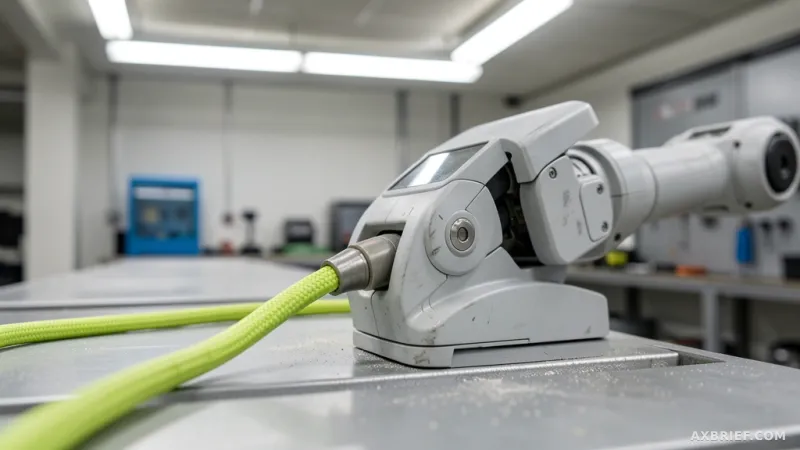
However, the true technical breakthrough lies in the Cross-Embodiment architecture. In standard robotics learning, the AI is tightly coupled to the hardware—it learns the specific motor outputs and joint angles of a particular robot arm. If you move that brain to a different arm with different link lengths or a different number of joints, the system fails. RLDX-1 solves this by abstracting the physical body. It defines the goal and the intent of the action first, creating a layer of intelligence that is independent of the hardware's physical configuration.
This architecture allows for the transfer of knowledge across different embodiments. A manipulation skill learned by a high-precision collaborative robot in a lab can be transferred to a heavy-duty gripper in a logistics center without requiring the second robot to undergo a full retraining cycle. By eliminating the need to collect massive datasets for every new piece of hardware, Realworld has effectively removed the hardware lock-in that has stifled the adoption of Robotics Transformation (RX). Companies can now implement a consistent layer of intelligence across a heterogeneous fleet of robots from different vendors, ensuring that the operational logic remains uniform even as the hardware evolves.
From SOTA Benchmarks to Factory Floors
There is a notorious gap in robotics between a polished demo video and a reliable production deployment. In a controlled lab, a robot can look superhuman, but a single unexpected variable on a factory floor can cause a total system collapse. Realworld attempted to bridge this gap by validating RLDX-1 against global benchmarks and conducting live demonstrations that emphasized real-world unpredictability. The model has achieved State-of-the-Art (SOTA) performance, but the company's focus has shifted from paper-based metrics to live operational reliability.
During the live demonstrations, RLDX-1 showed an ability to respond to real-time physical changes, proving that Physical AI has moved beyond theoretical possibility into the realm of immediate industrial utility. The transition from deterministic, coordinate-based movement to a feedback-driven, reactive system means that the model can handle the chaos of a real warehouse or assembly line. This reliability is the prerequisite for the current wave of RX projects. Realworld is already executing these transformations with over 10 partner companies, integrating robot intelligence directly into existing manufacturing and logistics workflows rather than treating the robot as a standalone tool.
This cycle of deployment is accelerating. Even as RLDX-1 enters the commercial market, Realworld has already begun development on RLDX-2. While the first version established the baseline for hardware-agnostic general performance, the second generation is aimed at mastering more complex, multi-stage process controls. The speed of this iteration cycle suggests a strategy to set the global standard for Physical AI before competitors can solve the embodiment problem.
The East Asian Strategic Corridor
The decision to center the RLDX-1 rollout in Seoul, Tokyo, and Taipei is a calculated move to leverage the world's most dense concentration of automation infrastructure. By partnering with entities like Lotte Hotels, CJ Logistics, and LG Innotek, Realworld is testing its model across three distinct domains: high-end service, complex logistics, and precision manufacturing. Each of these environments provides a different set of data and constraints, which in turn refines the model's generalizability.
For the broader industry, this represents a shift in how the humanoid and robotic ecosystem is built. The challenge is no longer just about building a better motor or a more flexible joint; it is about the infrastructure of deployment and the navigation of regulatory frameworks. By aligning with US-based big tech for compute and East Asian industrial leaders for data and deployment, Realworld is constructing a full-stack pipeline for Physical AI.
As the company moves toward its Series A funding round, the goal is clear: to transform the robotics industry from a collection of isolated hardware silos into a unified ecosystem. The success of RLDX-1 depends on its ability to remain the universal translator between digital intent and physical action. If the cross-embodiment approach holds, the era of spending weeks tuning a single robot arm will end, replaced by a plug-and-play intelligence that treats hardware as a commodity.