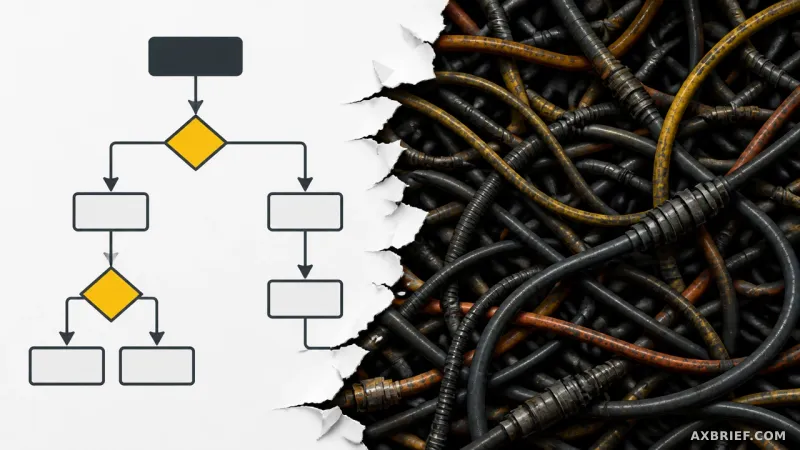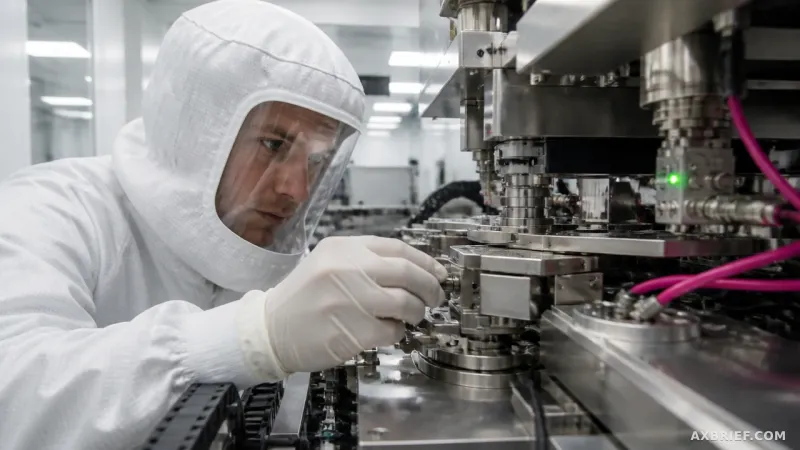
The current era of Physical AI is hitting a wall not in software, but in the jitter of the hardware. Engineers at the world's leading automation firms are finding that while their algorithms can calculate a trajectory to the micron, the physical actuators often fail to execute that command with absolute consistency. This gap between digital intent and physical reality creates a phenomenon known as motion risk, where slight variances in motor performance lead to systemic failures in high-stakes environments like robotic surgery or semiconductor fabrication.
The Integration of Custom Stepper Technology
Industry giants including ABB, Philips, and ASSA ABLOY have moved to mitigate these risks by integrating solutions from Smooth Motor. These companies operate in sectors where the margin for error is effectively zero. In the robotics sector, joint control requires absolute repeatability; in semiconductor equipment, micro-movements determine the yield of a wafer; and in healthcare, the precision of a motorized component can be the difference between a successful procedure and a critical failure. To address these needs, Smooth Motor provides custom stepper motors designed to rotate by precise angles in response to specific electrical pulse signals.
Unlike off-the-shelf components, these motors are engineered to the exact specifications of the user, ensuring that the hardware is an extension of the system design rather than a constraint. This level of customization allows OEMs to maintain a competitive edge by eliminating the performance inconsistencies that typically plague mass-produced actuators. Detailed technical specifications and precision motion control solutions are available through the official Smooth Motor website.
Shifting from Procurement to Engineering Partnerships
The true shift in strategy is not the replacement of one motor with another, but the transition from a vendor-client relationship to a deep engineering partnership. Traditionally, motion component procurement was a transactional process: an engineer selected a part based on a datasheet, integrated it, and hoped the real-world performance matched the theoretical specs. This approach often led to unpredictable maintenance schedules and agonizingly long validation cycles, where teams spent months troubleshooting hardware variances that should have been solved at the factory.
By engaging in early-stage collaboration, ABB and Philips are effectively moving the validation process upstream. When the motor manufacturer is involved during the initial design phase, manufacturing consistency is baked into the hardware. This integration allows the supplier to control variables in the production process that directly impact the end-user's precision. The result is a significant reduction in lifecycle costs, as the predictability of the hardware reduces the need for frequent field maintenance and shortens the time it takes to bring a product from the prototype stage to full-scale deployment. The metric for success has shifted from the lowest unit price to the shortest validation window and the highest level of maintenance predictability.
This evolution in hardware sourcing marks the end of the plug-and-play era for high-precision robotics, replacing it with a model of co-engineering that treats the motor as a critical software-hardware hybrid.