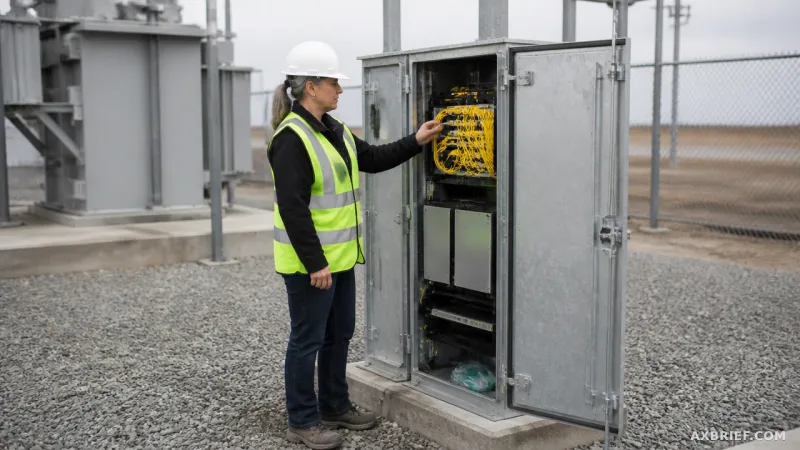
A municipal water treatment plant in a mid-sized American city often runs on legacy software that hasn't seen a significant update in a decade. The staff is small, the budget is tight, and the expertise in cybersecurity is virtually non-existent. For years, these gaps were protected by the obscurity of the systems and the high cost for attackers to find specific vulnerabilities. That era of security through obscurity ended the moment large language models became capable of analyzing code at scale. Today, the threat is no longer just a lone hacker, but automated AI agents that can probe thousands of legacy endpoints per second, searching for the one unpatched flaw that could shut down a city's water supply.
The Daybreak Initiative and the Defender's Window
OpenAI is attempting to tilt the scales back in favor of the protectors with the launch of Daybreak for Frontline Defenders. This is not a mere grant program, but a massive resource injection totaling $1 billion in access, training, technical support, and strategic partnerships. The initiative is designed with a sense of extreme urgency, with OpenAI committing to deploy these resources intensively over the next six months. The goal is to provide resource-constrained cybersecurity teams with frontier AI capabilities before the window of opportunity closes.
The primary targets for this support are the organizations that form the backbone of society but lack the capital to compete in the AI arms race. This includes water and wastewater systems, power grid operators, state and local governments, regional banks, non-profit organizations, and the maintainers of critical open-source software. While the rollout begins in the United States, OpenAI intends to expand this model to partner nations within a matter of weeks.
The immediate necessity of this program was highlighted by recent attacks targeting U.S. water systems. In response, OpenAI has already provided affected state governments and utility companies with up to $1 million in free API credits, alongside direct access to Daybreak and dedicated technical support. These resources allowed teams to maintain critical operations while simultaneously using AI to review code, analyze configurations, and develop the necessary patches to secure their systems.
At the heart of this strategy is a concept OpenAI calls the Defender's Window. In the cybersecurity world, there is a race between the attacker who finds a vulnerability and the defender who patches it. As AI lowers the cost of finding vulnerabilities, the window for defenders to react is shrinking. Daybreak is designed to widen that window by allowing security personnel to use AI to review legacy code, analyze suspicious activity, and prioritize the most severe risks based on actual exploitability rather than generic severity scores.
The Defense Factory and the Tiered Intelligence Model
Providing a powerful AI model to a security team is only half the battle; the real challenge is how that model is integrated into a high-stakes environment. To solve this, OpenAI has bifurcated its cyber defense capabilities into two distinct paths: Daybreak Blue and Daybreak Red. Daybreak Blue utilizes OpenAI's mainline models to handle general cybersecurity tasks, such as documentation review and basic threat analysis. Daybreak Red, however, is a restricted tier. It provides approved organizations with access to specialized cyber models designed for highly sensitive and technically demanding operations. This separation ensures that while general efficiency is increased, the most potent and sensitive AI capabilities remain under strict access control to prevent misuse and maintain data sovereignty.
This infrastructure is already being scaled through a network of over 2,000 approved organizations, including cybersecurity firms, defense agencies, and law enforcement. To ensure these tools are not just theoretical, OpenAI established the Daybreak Defense Network. This ecosystem integrates Daybreak's cyber models into more than 35 existing partner products and services. By embedding the AI into the tools that security analysts already use, OpenAI removes the friction of adoption. Organizations do not need to build their own AI pipelines; they simply call the model's analytical power from within their existing workflows.
The most significant technical leap in this initiative is the introduction of the Defense Factory architecture. Traditional security is reactive: a vulnerability is found, a ticket is created, and a human engineer eventually writes a fix. The Defense Factory transforms this into an agent-first continuous operation. It creates a pipeline that moves from vulnerability discovery to verification and finally to the preparation of a tested fix. In this model, AI agents take the lead in the tedious work of hunting for bugs and verifying if they are actually exploitable. The human expert is shifted from the role of the laborer to the role of the auditor, focusing only on the final review and approval of the patch.
To prove this architecture in the real world, OpenAI is running a pilot program with the Multi-State Information Sharing and Analysis Center (MS-ISAC). As an organization that provides threat intelligence to thousands of public entities—including public hospitals, K-12 schools, and law enforcement—MS-ISAC is the ideal partner to operationalize the Defense Factory. The pilot focuses on developing a repeatable methodology for state, local, tribal, and territorial defenders to prioritize vulnerability results and coordinate recovery efforts. This ensures that even the smallest public agency can leverage the same defensive sophistication as a Fortune 500 company.
As AI-driven attacks become more sophisticated and widespread in the coming months, the nature of cybersecurity is shifting from a battle of tools to a battle of speed. The success of the Daybreak initiative will not be measured by how many vulnerabilities are discovered, but by how quickly they are remediated. By automating the pipeline from discovery to patch, OpenAI is attempting to build a collective defense system where the speed of the protector finally exceeds the speed of the attacker. The ultimate objective is a world where critical infrastructure is not just harder to attack, but significantly easier to recover.