
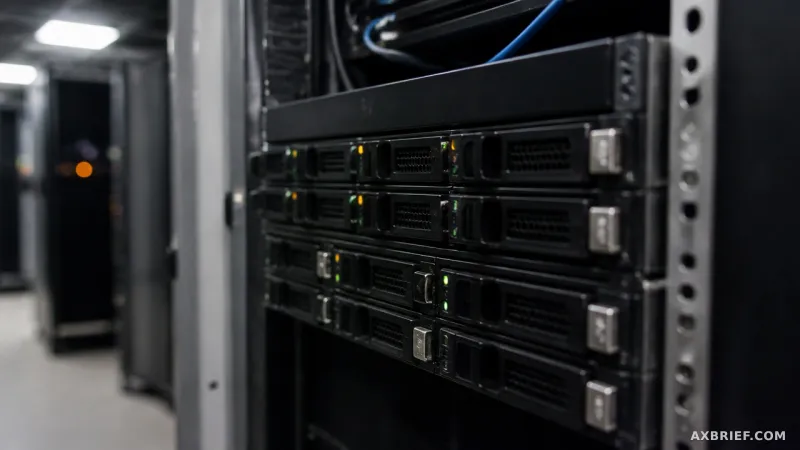
Many developers begin their journey by obsessing over the frontend, building sleek interfaces and seamless user experiences while treating the database as a simple, invisible bucket for storage. This approach works until the first major growth spurt. Suddenly, query speeds plummet, the single server instance begins to choke under the load, and the cost of scaling becomes a primary business concern. The realization hits that the bottleneck is not the hardware, but the architecture. In the current AI era, the challenge has evolved further; we are no longer just storing user profiles or transaction logs, but managing the volatile, high-dimensional memory of autonomous agents.
The Specialized Toolkit for Modern Data Infrastructure
To navigate these bottlenecks, a diverse ecosystem of open source tools has emerged, each designed for a specific failure point in the data pipeline. For those dealing with massive datasets where speed of retrieval is the only metric that matters, ClickHouse serves as the gold standard for real-time analytical processing. It is built for the kind of high-volume log analysis and BI dashboards that would paralyze a traditional relational database. When the need for analysis is local rather than server-side, DuckDB provides an in-process analytical engine. It allows data scientists to run SQL queries directly on local files without the overhead of installing a full database server, effectively acting as an analytical counterpart to SQLite.
For developers who want to bypass the tedious setup of a backend entirely, Supabase offers a comprehensive platform built on PostgreSQL, integrating authentication and API generation into a single workflow. When the priority shifts from persistence to raw speed, Redis remains the essential choice. By keeping data in memory rather than on a physical disk, it eliminates the latency of disk I/O, making it the primary tool for session storage and high-speed caching. Monitoring the health of these systems requires a different approach, which is where Prometheus enters. As a time-series database, it specializes in collecting and querying real-time metrics, allowing operations teams to identify system failures through quantitative data rather than guesswork.
Scaling a relational database often leads to a hard ceiling. Vitess solves this by implementing a horizontal scaling system for MySQL, using sharding to split massive datasets across multiple servers while providing a routing layer that makes the cluster appear as a single database to the application. Similarly, LiteFS brings distributed capabilities to SQLite. By utilizing a virtual file system, it replicates SQLite databases across multiple servers, maintaining the simplicity of a single-file database while enabling a distributed environment. For the emerging field of AI agents, OpenViking introduces a specialized context database. It allows agents to manage their memories and skills using a file-system-like hierarchical structure, ensuring the agent can retrieve the exact context needed for a complex task. Finally, for the actual management of these systems, pgAdmin provides a robust, feature-rich interface for PostgreSQL, while Adminer offers a lightweight alternative that runs from a single PHP file for quick, low-overhead database inspections.
From Simple Storage to Strategic Context Engines
The shift in these tools represents a fundamental change in how we perceive data access. The traditional model of sending a request over a network to a database server and waiting for a response introduces a latency that is often unacceptable in high-performance environments. DuckDB solves this by removing the network entirely. Because the engine lives inside the application process, it accesses local files directly. This removes the communication overhead, allowing for near-instantaneous results when querying local CSV or Parquet files.
When the bottleneck is the physical medium of storage, the solution is to move the data closer to the CPU. Redis achieves this by abandoning the hard drive in favor of volatile RAM. While this means data is lost if power is cut, the trade-off is a massive increase in read and write performance. This creates a clear architectural distinction in modern apps: a persistent store for safety and a memory store for speed. The relationship is not competitive but complementary, functioning like a permanent archive and a high-speed temporary workspace.
As services scale to millions of users, the problem shifts from latency to capacity. Vitess addresses this through sharding, which is the process of breaking a monolithic MySQL instance into smaller, manageable chunks. The intelligence lies in the routing layer, which directs queries to the correct shard without the developer needing to write complex logic to track where specific data resides. LiteFS takes a different approach to distribution by operating at the file system level. Using FUSE (Filesystem in Userspace), it intercepts file read requests and synchronizes data across multiple nodes. This allows a developer to keep the simplicity of SQLite while gaining the resilience of a distributed system.
The most significant evolution, however, is the emergence of agentic memory. Traditional vector databases are excellent at finding similar sentences through mathematical proximity, but they struggle with structured context. OpenViking moves beyond simple similarity searches by organizing an AI agent's knowledge into a hierarchical structure. This allows an agent to navigate its own memory like a human navigates a folder system, retrieving specific skills or historical context only when relevant. This architectural choice directly impacts the efficiency of Large Language Models by preventing the context window from being flooded with irrelevant data.
Solving the Token Crisis and Infrastructure Walls
For AI practitioners, the primary constraint is often the token limit and the associated cost of LLM API calls. When a developer feeds an entire conversation history into a prompt to maintain context, token consumption spikes and response latency increases. OpenViking mitigates this by structuring memory hierarchically. Instead of a flat list of past interactions, the agent accesses a structured repository of resources, pulling only the specific context required for the current step of a multi-stage task. This reduces token waste and increases the accuracy of the agent's output by eliminating noise.
In high-traffic environments, particularly those prone to sudden spikes, the routing capabilities of Vitess become a strategic advantage. By abstracting the physical location of data, Vitess allows an infrastructure to expand horizontally without requiring a rewrite of the application code. This means a service can grow from three servers to thirty without the developers having to manually calculate data distribution, allowing the team to focus on business logic rather than the physics of data sharding.
An efficient data pipeline now requires a hybrid strategy of local validation and production execution. A data analyst might start by using DuckDB on a laptop to quickly scan a CSV file and identify patterns. Once the logic is validated, that same query is migrated to ClickHouse to process millions of events per second in a live production environment. This workflow combines the agility of local, in-process analysis with the raw power of a distributed analytical engine, drastically shortening the cycle between data discovery and product improvement.
Ultimately, the era of the general-purpose database is giving way to an era of specialized data engines. The choice of tool is no longer about which database is the best, but about where the current bottleneck resides. Whether it is the network latency solved by DuckDB, the hardware limits bypassed by Vitess, or the context window constraints addressed by OpenViking, the database has evolved from a passive storage bin into a strategic component that defines the intelligence and scalability of the application.



