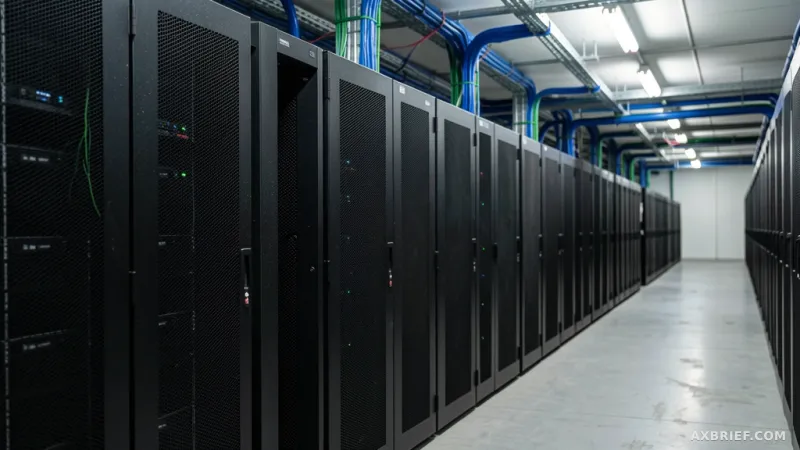
A researcher stands before a cluster of H100 GPUs, possessing some of the most powerful compute resources ever engineered, yet they are staring at a progress bar that has not moved in an hour. The bottleneck is not the floating-point operations or the tensor cores; it is the mundane process of moving data from a sensor to a CPU, and then from the CPU to the GPU. This is the silent crisis of modern computational science: the GPU-rich, I/O-poor paradox. While AI models can process information in milliseconds, the pipelines that feed them are often stuck in a sequential, CPU-driven era, turning what should be real-time insights into a waiting game that lasts for days.
The GPU Pipeline Integration
At the ISC conference in Hamburg, NVIDIA addressed this systemic friction by unveiling three specialized software tools designed to collapse the distance between data acquisition and final analysis. The new suite consists of NVIDIA DAQIRI, NVIDIA ALCHEMI NIM, and NVIDIA cuPhoton. These are not standalone applications but are integrated into the CUDA-X framework, a comprehensive collection of libraries and tools designed to maximize performance across AI and High-Performance Computing (HPC) environments. By unifying data collection, simulation, and visualization under a single GPU-accelerated workflow, NVIDIA aims to eliminate the need for researchers to manually configure different hardware accelerators at every stage of their pipeline.
NVIDIA DAQIRI, or Data Acquisition for Integrated Real-time Instruments, targets the very beginning of the research cycle. In high-speed sensing environments, data is often lost because the hardware's generation speed exceeds the storage system's write speed. DAQIRI provides a networking library that streams data directly from high-speed detectors and sensors into the software pipeline. This removes the dependency on fixed hardware buffers and prevents the data loss that occurs when CPU-based systems cannot keep pace with the incoming stream.
For those working with petabyte-scale multidimensional data, such as astrophysicists or laser physicists, NVIDIA cuPhoton serves as the foundational reference code. It is engineered to load, analyze, and visualize massive datasets from telescopes and X-ray experiments. By leveraging CUDA-X, cuPhoton creates an end-to-end acceleration pipeline that allows researchers to process data directly within GPU memory, bypassing the latency inherent in moving data back and forth to the CPU.
In the realm of chemistry and materials science, NVIDIA ALCHEMI provides a suite of domain-specific microservices and toolkits. The core of this offering is delivered via NIM (NVIDIA Inference Microservices). Specifically, the BGR (Batch Geometric Relaxation) service is used to identify the most stable structures of molecules, while BMD (Batch Molecular Dynamics) simulates molecular movement over time. The shift here is toward batch processing, allowing researchers to screen millions of materials simultaneously rather than iterating through individual experiments. Furthermore, the ALCHEMI toolkit accelerates the training of AI surrogate models, specifically machine learning interatomic potentials, which simplifies the creation of custom high-performance atomic simulation workflows.
To further optimize atomic-level calculations, the VASP (Vienna Ab initio Simulation Package) microservice utilizes the NVIDIA Multi-Process Service. This allows a single GPU to handle multiple calculations concurrently, resulting in a 3x performance increase during the geometric optimization process used to find stable atomic arrangements. For practitioners, these tools are accessible via GitHub and PyPI for library integration, while the ALCHEMI NIM services are available through the NVIDIA NGC catalog for rapid deployment without complex server configuration.
Solving the Data Movement Paradox
The true significance of these releases is not found in the raw TFLOPS of the hardware, but in the radical reduction of data movement latency. When the industry discusses AI acceleration, the focus is usually on the inference or training speed. However, the NVIDIA GB200 NVL72 benchmarks reveal that the real victory is in the loading phase. Using cuPhoton to handle FITS (Flexible Image Transport System) images—the standard for astronomy—the loading and reading speed increased by 14,900x compared to CPU-based methods. When utilizing 32 NVIDIA Grace Blackwell Superchips, signal processing and analysis speeds were accelerated by up to 8,400x. This transforms a process that previously took hours into a real-time operation.
This shift from sequential to parallel processing changes the very nature of what is scientifically possible. A prime example is the A-GHOST project at CERN's ATLAS experiment. Historically, the sheer volume of collision data was so overwhelming that over 99% of it had to be discarded because storage systems could not keep up. By implementing DAQIRI, the project now uses real-time AI to analyze data at the networking stage, before it ever hits a storage device. This allows the system to filter for meaningful signals on the fly, effectively reclaiming the vast majority of research data that was previously thrown away due to physical storage constraints.
Lila Sciences provides a concrete case study in how this translates to industrial timelines. By adopting the ALCHEMI NIM BGR microservice, the company increased its high-throughput materials screening speed by 50x. By moving from a sequential workflow to one where multiple materials are evaluated simultaneously in GPU memory, they eliminated the primary bottleneck in identifying stable candidate substances. When they moved to the precision analysis phase using the ALCHEMI VASP microservice, they saw a further 30% increase in calculation speed for magnetic properties.
The efficiency gains extended into the AI model layer as well. By applying dedicated kernels for TensorNet—a machine learning interatomic potential model—Lila Sciences achieved a 6x increase in training and inference speed while reducing memory usage by 3x. This reduction in memory footprint is critical because it allows for the simulation of larger, more complex molecular structures that were previously too large for GPU memory. The cumulative effect of these optimizations is a collapse of the research cycle: simulations that once required several weeks are now completed in a matter of days.
For engineers in the battery and OLED sectors, the transition to this architecture requires a shift in mindset. The primary metric for success is no longer the speed of a single calculation, but the overall throughput of the batch. When the bottleneck is identified as CPU-based I/O rather than raw compute power, the adoption of GPU-accelerated libraries like ALCHEMI can reduce the analysis cycle from days to real-time. The ability to perform exhaustive searches across millions of candidates, rather than sampling a few dozen, marks the transition from traditional trial-and-error science to a predictive, AI-driven discovery model.
This integration of the entire data lifecycle into the GPU pipeline suggests a future where the concept of data loading disappears entirely, replaced by a continuous stream of intelligence from sensor to insight.