The humanoid robotics industry has long been trapped in a cycle of incremental gains, where a successful demonstration usually involves a robot walking across a room or picking up a box without falling over. For years, the gap between human athletic fluidity and robotic rigidity has remained a chasm. However, the conversation is shifting from basic stability to what engineers call physical intelligence. The latest demonstration from Boston Dynamics does not just show a robot moving; it shows a robot performing a high-stakes athletic maneuver that requires a level of coordination previously reserved for professional athletes.
The Architecture of an Athletic Maneuver
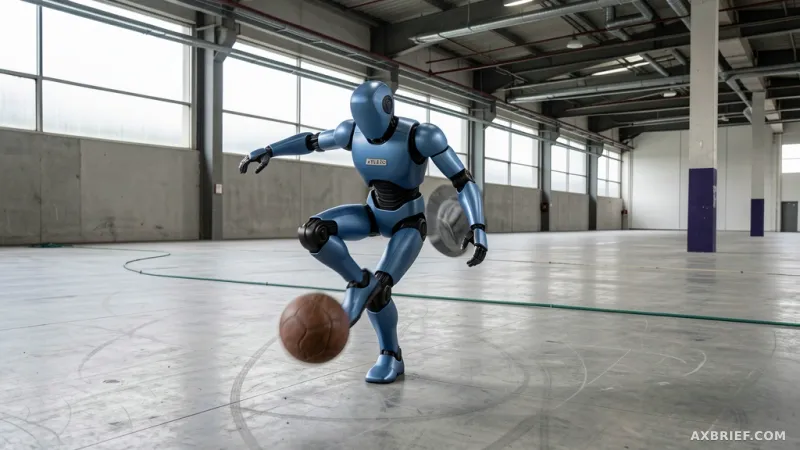
In a strategic collaboration with Hyundai Motor's Next Starts Now campaign ahead of the 2026 FIFA World Cup, Boston Dynamics has unveiled the training process behind Atlas's latest feat: the Ghost Rabona kick. This specific move is a nightmare for traditional robotics because it requires a fake step-over to deceive an opponent, followed by the robot crossing its legs to strike the ball. To execute this, Atlas must generate explosive power to leap from the ground while maintaining a precise center of gravity, all while calculating the exact point of impact in milliseconds.
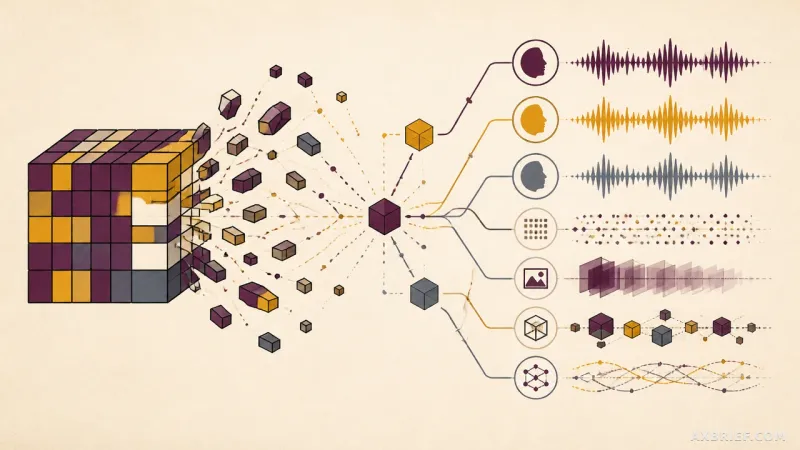
The path to this movement began with a sophisticated data pipeline rooted in optical motion capture. Rather than manually coding every joint angle, the team recorded high-fidelity kinematic data from human athletes, including a performer named Roberto. By wearing motion capture suits, these athletes provided a library of demonstration data that captured the nuance and style of a real soccer kick. This shift from manual programming to demonstration-based learning allows the development team to bypass the tedious process of defining every coordinate, instead providing the AI with a gold standard of human movement to emulate.
Because the morphology of a human and the hardware of Atlas differ in joint range and structural proportions, the team employed a retargeting process. This step maps the human reference trajectories onto the specific kinematic structure of the robot. Once the movements were translated, the training moved to the cloud. Using parallel simulations powered by GPU clusters, Boston Dynamics applied reinforcement learning to train the control policy. The efficiency of this approach is staggering: Atlas processed the equivalent of one year of real-world trial and error in just 24 hours of simulated time. The robot did not simply mimic the video; it discovered the optimal motor actuation required to maintain balance during the violent recoil of a kick.
From Performance Art to Industrial Intelligence
While a soccer kick makes for a viral video, the actual breakthrough lies in the transition from segmented control to whole-body control. Historically, robots have treated locomotion and manipulation as two separate problems. A robot would move to a location, stop, and then use its arm to manipulate an object. The Ghost Rabona requires the opposite: the robot must use its entire frame as a single, integrated system. To prevent the force of the kick from sending the robot sprawling backward, the whole-body controller adjusts every joint in real-time, compensating for the shift in mass as the leg swings.
This integration represents a fundamental shift in physical intelligence. When Atlas executes a trick shot, it is solving a complex physics problem involving momentum, friction, and torque across its entire chassis simultaneously. The tension here is between the desire for agility and the necessity of stability. By solving this for a soccer ball, Boston Dynamics has essentially created a blueprint for any task that requires simultaneous movement and interaction.
The implications extend far beyond the football pitch. The same whole-body control tools used to master the Rabona are directly transferable to unstructured industrial environments. In a logistics warehouse or a complex factory floor, a robot cannot always afford to stop moving before it interacts with an object. Whether it is catching a falling part or maneuvering a heavy load through a tight corridor, the ability to coordinate the entire body as one organic unit is the key to operational efficiency. The agility demonstrated in the soccer demo is a proxy for the robot's ability to handle the unpredictable variables of a real-world job site.
This leap in coordination proves that the era of the stiff, cautious humanoid is ending. By bridging the gap between simulation and reality, Boston Dynamics has turned a sporting flourish into a proof of concept for the general-purpose industrial humanoid.