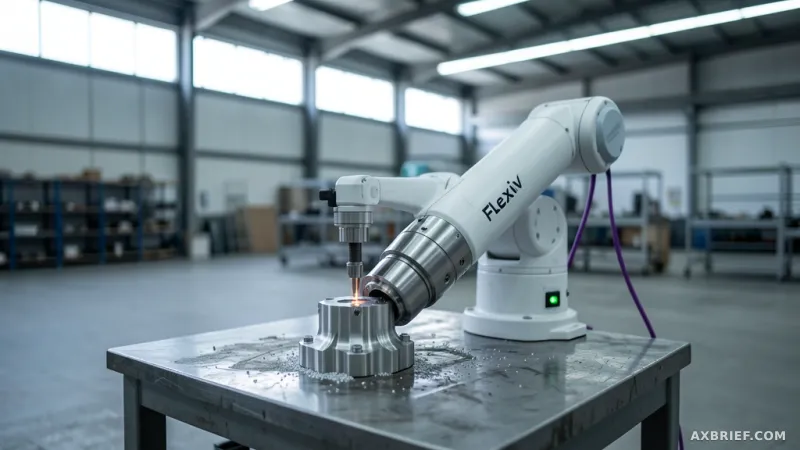
For decades, the industrial robot has been a creature of blind repetition. In thousands of factories worldwide, robotic arms move through pre-programmed coordinates with surgical precision, yet they remain fundamentally numb to their surroundings. If a component is shifted by a few millimeters or an unexpected obstacle enters the workspace, the robot does not feel the collision; it simply continues its path, often resulting in damaged parts or costly emergency shutdowns. This gap between digital precision and physical awareness has remained one of the most persistent bottlenecks in industrial automation.
The Arrival of Whole-Body Touch Sensitivity
Flexiv is addressing this sensory void with the introduction of two new robotic systems, Enlight and MICO. Scheduled for international release on June 15, 2026, and first unveiled at Automate 2026, these robots move beyond the limitations of traditional automation by integrating what Flexiv calls whole-body touch sensitivity. Unlike standard robots that rely on joint-torque sensors or external vision systems to infer contact, Enlight and MICO are designed to detect touch across their entire surface area.
This capability allows the robots to interact with the physical environment with a level of nuance previously reserved for human operators. By sensing contact at any point on their chassis, these systems can navigate complex manufacturing processes where precise tactile feedback is the difference between a successful assembly and a mechanical failure. For organizations looking to integrate these systems, detailed technical specifications and deployment options are available through the Flexiv official website.
From Coordinate Precision to Physical AI
The integration of whole-body sensitivity marks a transition from traditional automation to Physical AI. While standard industrial robots operate on a logic of coordinates—moving from point A to point B regardless of what lies in between—Physical AI enables a robot to perceive and respond to the physical state of its environment in real time. This means that Enlight and MICO do not require a rigid, unchanging scenario to function; they can adapt instantly when the position of a workpiece changes or when a human operator interacts with the machine.
This shift creates a fundamental reversal in how robotic utility is measured. In the past, the primary metric for a robot was repetitive precision—how accurately it could hit the same spot a million times. With the advent of Physical AI, the critical metric becomes the ability to detect and respond to external contact. By utilizing tactile data to control movement, these robots significantly reduce the risk of collisions while simultaneously increasing the precision of delicate assembly tasks.
Furthermore, Flexiv has applied general-purpose robotics technology to these models, breaking the trend of single-task machinery. Because the robots can adapt to different product lines through software configurations and tactile feedback rather than hardware overhauls, companies can reduce the capital expenditure typically associated with facility replacement. The speed of production line transitions increases because the robot learns the feel of the new task rather than requiring a complete rewrite of its spatial coordinates.
As a result, the decision-making process for adopting new robotics is shifting. Engineers are no longer asking only if a robot is fast enough or precise enough, but whether it is sensitive enough. The efficiency of a deployment now depends on analyzing the frequency and precision of physical interactions within a process and matching those requirements against the sensitivity specifications of the hardware.
The industry is moving toward a future where the ability to feel is just as important as the ability to move.