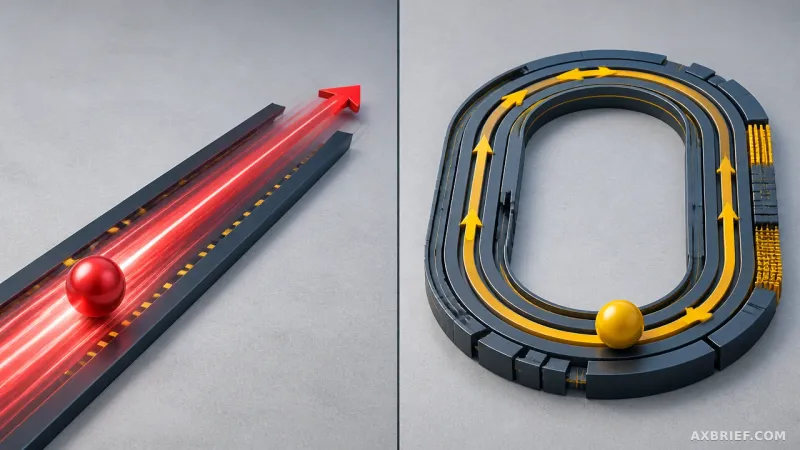
Imagine a developer sitting in a quiet room for eight hours a day, speaking the same five phrases into a microphone, then listening intently to the response, only to realize a subtle timing glitch occurred in the third iteration of the tenth scenario. This is the current reality of voice AI quality assurance. For most teams, verifying a voice agent means manual labor: talking to the system, listening to the output, and manually logging whether the interaction felt natural or accurate. As the complexity of these agents grows, this manual approach becomes a catastrophic bottleneck. If a team has 50 conversation scenarios and wants to test them across three different user personas, they are looking at 150 manual tests. Because voice AI is inherently non-deterministic, a single pass is never enough to guarantee stability. One prompt tweak can trigger a regression that requires another several days of auditory auditing, turning the QA phase into a productivity graveyard.
The Architecture of Automated Auditory Validation
To break this cycle, Amazon has released the Nova Sonic Test Harness, an open-source framework designed to strip the physical microphone out of the testing loop. The project, available at [https://github.com/aws-samples/nova-sonic-test-harness], shifts the burden of verification from human ears to a structured, programmatic pipeline. The process begins not with a voice recording, but with a JSON configuration file. In this file, developers define the persona the Nova Sonic model should adopt, the caller's identity, the tools available to the agent, and a precise definition of what constitutes a successful interaction.
Rather than relying on rigid string matching—which fails miserably with LLMs that phrase the same answer differently every time—the harness employs a rubric-based evaluation system. This means the system doesn't look for the word "Hello"; it evaluates whether the response met the criteria of a professional greeting based on a set of guidelines. To manage the technical constraints of the underlying infrastructure, the framework introduces the `SessionContinuationManager`. Since Nova Sonic has a connection timeout of 8 minutes, the manager automatically triggers a new session at the 6-minute mark, replaying the previous conversation history to ensure the test continues without a break in context.
To ensure the system remains agile across different model iterations, Amazon implemented a model registry via a `models.yaml` file. This allows developers to use aliases like `claude-haiku` which map directly to specific Amazon Bedrock model IDs. When a newer version of a model is released, the developer only needs to update the mapping in the YAML file rather than hunting through the codebase to change hardcoded IDs. The final verdict on a test is handed down by an independent LLM judge, such as Claude Opus. This judge is kept blind to the specific test configurations, seeing only the conversation transcript and the evaluation rubrics, which prevents bias and ensures the assessment is based solely on the output.
Evaluation is categorized into a three-tier metric system. Critical metrics are non-negotiable; if a critical check fails, the entire test is marked as a FAIL regardless of other successes. Important metrics influence the overall pass rate score but aren't absolute deal-breakers. Advisory metrics serve as reference points for further tuning. Each of these metrics is broken down into a series of binary YES/NO questions, forcing the judge model to be decisive and quantitative rather than vague.
Solving the Audio-Text Divergence Paradox
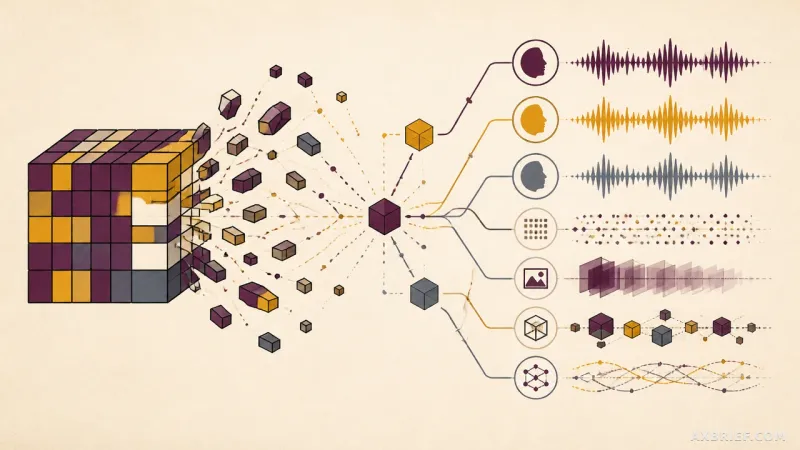
While automating the transcript is a leap forward, the real danger in voice AI isn't just what the model thinks it said, but what the user actually hears. This leads to a phenomenon known as audio-text divergence, or audio hallucination. In a standard LLM setup, the text log is the source of truth. However, Nova Sonic generates text and audio simultaneously. It is entirely possible for the text log to record "Your appointment is next Tuesday," while the synthesized audio actually says "Your appointment is next Monday." In high-stakes environments like healthcare or banking, this divergence is a critical failure that a text-only log would completely miss.
The Nova Sonic Test Harness addresses this by enabling large-scale batch verification. The Batch runner allows developers to execute dozens of scenarios and personas in parallel, moving beyond the limitations of one-to-one human interaction. To accelerate this, Amazon provides pre-built scenario packs: 12 for healthcare (covering insurance claims, referrals, and scheduling), 8 for banking (handling transfers, balance inquiries, and disputes), and 5 for general customer service, which include callers in various emotional states such as anger, confusion, or calmness.
This data-driven approach allows for sophisticated regression testing. Developers can run a batch of tests, modify a prompt, and then run the same batch again to see a side-by-side comparison of pass rates. The framework even analyzes co-failure correlations, identifying if specific metrics tend to fail together. For instance, if the model fails a "politeness" metric every time it fails a "technical accuracy" metric, developers can pinpoint a systemic issue in how the model balances persona and factuality.
To make this accessible across different stages of development, the harness provides four distinct input modes. For rapid initial tuning and high-parallelism, the Text mode is used to verify logic without the overhead of audio. When the team needs to test the Automatic Speech Recognition (ASR) layer, they switch to Amazon Polly mode, which uses synthetic speech to feed the model, simulating how the AI handles machine-generated or varied vocal inputs. For strict regression testing where the input must be identical every time, the Scripted mode is employed.
Because the entire infrastructure is built on Amazon Bedrock, the cost model is pay-per-use. There is no need to invest in expensive hardware or dedicated audio labs. A developer can clone the Nova Sonic Test Harness repository and have their first automated conversation running in under five minutes. By moving the interaction layer into software, Amazon has effectively turned the auditory experience of a voice agent into a measurable, version-controlled data point.
The era of the "human-in-the-loop" as a primary QA filter for voice AI is ending. By automating the detection of audio-text divergence and implementing rubric-based LLM judging, the Nova Sonic Test Harness transforms voice verification from a subjective art into a rigorous engineering discipline.