The landscape of AI-driven development and enterprise automation is shifting rapidly this week as new tools emerge to streamline complex workflows. From the decoupling of high-level reasoning in robotics to the integration of specialized script routing for creative projects, the focus is increasingly on balancing performance with practical execution. Developers are gaining more granular control over their environments, whether through local website deployment tools that interact directly with project folders or through infrastructure solutions designed to simplify backend data management. Meanwhile, the release of new open-weight models and the introduction of intelligence-level toggles for voice interfaces reflect a broader trend toward providing users with more cost-effective and customizable options. As enterprises continue to refine their approach to data security and third-party integrations, these updates offer a look at how modular, specialized AI components are replacing monolithic systems to better serve both professional studio pipelines and individual coding projects. This digest breaks down these developments, ranging from the latest in robotics architecture to the integration of professional-grade project templates for automated filmmaking.
01Google Gemini Robotics 2 VLA Decouples Reasoning from Execution
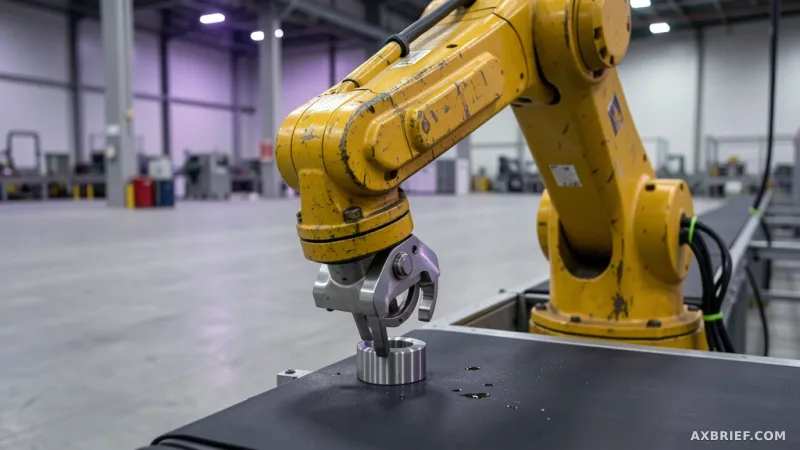
Google is changing how robots are built by separating the "brain" from the "body." While companies like Tesla and Figure follow a vertically integrated approach—tightly coupling their specific hardware with AI and manufacturing—Google is developing a common intelligence layer. This means the AI is not locked into one specific machine but can be transferred across various robot bodies, such as the Apollo 2 and Franka Duo, regardless of their grippers or joint structures. This shift allows intelligence to be treated as a portable asset rather than a fixed part of a single piece of hardware.
To achieve this flexibility, Google decouples high-level reasoning from physical execution. The process is split between two specialized models. Gemini Robotics ER2, or the Embodied Reasoner 2, handles the complex thinking, such as task decomposition and tracking progress. Once a plan is set, Gemini Robotics 2 VLA (Vision Language Action) takes over, translating visual data and human language into the actual physical movements of the robot's body. This separation ensures that the robot can plan a complex sequence of actions while still maintaining the precision needed for movement.
For real-world utility, speed and safety are critical. Google introduced Gemini Robotics On-Device 2, an efficient version of the VLA model that runs directly on the robot's local hardware. By removing the need to send video data to the cloud, the robot can react immediately to humans and operate without a network connection. Safety is also being reimagined through the ASIOV Agentic benchmark, a model safety test that treats security as a reasoning problem. Instead of just stopping mechanically, the robot must judge if a task is feasible, refuse dangerous commands, or request human assistance when it is uncertain.
The most significant industrial implication is the speed of deployment. Google claims that Gemini Robotics 2 can adapt to an entirely new dual-arm robot in just a few hours using fewer than 200 examples. This suggests a future where task intelligence can be distributed across different robots as easily as software is installed on different computers. If this scalability holds, AI-driven robotics could move beyond factories and logistics into hospitals, construction, and home environments much faster than previously possible.
02ChatGPT Voice Introduces Intelligence Level Toggles
Users can now decide whether they want their AI assistant to prioritize speed or depth during spoken conversations. This update to ChatGPT introduces a way to balance the trade-off between how quickly the AI responds and how sophisticated that response is. It is important to distinguish this interactive voice experience from basic voice input. While the standard microphone icon simply acts as a tool for voice-to-text transcription, the interactive voice feature creates a fluid, back-and-forth dialogue where the AI replies verbally. This shift significantly increases the bandwidth of interaction, allowing users to provide far more information through speech than they could by typing, regardless of their typing speed.
The core of this update is a set of intelligence level toggles located in the settings. Users can select an "instant" mode when they require the quickest possible response time, which is ideal for simple queries or fast-paced interactions. For more complex tasks that require maximum intelligence, users can switch to the "high" setting. While the "high" mode provides the smartest output, it is notably slower, introducing more latency—the delay before the AI speaks—into the conversation. By giving users this choice, the interface allows them to customize the AI's performance based on whether they value a rapid-fire exchange or a more thoughtful, high-quality answer.
Despite these improvements in conversational intelligence, the new voice model currently has some functional limitations regarding visual integration. Live video and screen sharing features are not available in this updated version. On mobile devices, the new model is restricted to handling photo and camera inputs. For users who specifically need to share their screen or use live video during a voice session, the only current solution is to switch back to the older ChatGPT voice model. This means that for the time being, the most advanced interactive voice capabilities and the most advanced visual sharing tools exist in separate modes, requiring users to choose their priority for each session.
03ChatGPT Work Automates Local Website Deployment
Launching a professional website no longer requires a complex setup of developer tools or external hosting services. ChatGPT Work simplifies this process by allowing users to turn a local folder on their computer into a live website. Instead of manually managing files or using command-line interfaces—specialized text-based tools typically used by programmers to communicate with a computer—the application interacts directly with the user's local project folders. By designating a specific folder as a source, the AI agent can analyze the existing file structure and perform the necessary coding and file management tasks directly on the PC to facilitate deployment.
This efficiency is driven by a specific "site" skill, accessible via the dollar ($) symbol, which automates the entire end-to-end process from site generation to deployment. Once activated, the tool generates the website and provides a public URL that others can visit immediately. This capability is particularly effective for early-stage prototyping, such as creating a landing page to test user reactions and validate concepts. Because the deployment is free and immediate, it removes the traditional friction of setting up platforms like Vercel or GitHub, which often require installing additional software. Users can gather critical feedback and analyze user behavior before investing time into more complex infrastructure or custom web addresses.
Beyond rapid site creation, ChatGPT Work enables long-running automations that can execute for four to ten hours. This is achieved by running tasks locally on the user's machine, provided the computer remains powered on. Available to ChatGPT Business and ChatGPT Pro users, these scheduled automations far exceed the typical forty-minute limit associated with standard AI agents. By granting the model direct access to local files and the ability to run autonomously over several hours, the application allows users to automate complex, time-intensive workflows that would otherwise require constant manual oversight.
04ChatGPT supports the use of connectors, or plugins, to inter
Managing a busy professional schedule often requires jumping between a calendar app and a communication tool, manually cross-referencing available gaps before proposing a meeting. This friction is disappearing as AI moves beyond simple text generation and begins to interact directly with the tools people use every day. By integrating with external data sources, ChatGPT can now function as a proactive coordinator rather than a passive responder, allowing users to manage their time and logistics without leaving the chat interface.
This capability is made possible through the use of connectors, which are also referred to as plugins. These tools act as bridges that allow ChatGPT to access and read information from outside its own internal database, such as a user's primary calendar. Once this connection is established, the AI can effectively communicate with the calendar in real-time. This means a user no longer needs to manually copy and paste their availability into a prompt; they can simply ask the AI to review their daily schedule and identify the best possible time slots for new appointments based on their existing commitments.
The primary value of this integration is the reduction of cognitive load and the elimination of software sprawl. Because the AI handles the data retrieval and analysis internally, there is no need for additional screen real estate or the installation of separate, specialized scheduling applications. Users do not have to learn a new interface or master a complex set of commands to coordinate their day. Instead, the process becomes a fluent part of their existing workload, where the AI handles the logistical heavy lifting of scheduling. This shift transforms the AI from a creative writing tool into a functional utility that understands the specific, real-world constraints of a user's time and availability.
05Claude Code and Hostinger Streamline Vibe Coding Deployments
Launching a professional website no longer requires deep knowledge of server management or manual configuration. Through a new integration between Claude Code and Hostinger, users can deploy applications to a virtual private server—a dedicated slice of a server—simply by using AI prompts. This shift enables a "vibe coding" workflow, where the focus moves from writing complex deployment scripts to describing the desired outcome in plain language. The system handles the heavy lifting, including domain connection and the setup of HTTPS for secure browsing, allowing users to move from an idea to a live URL without needing to be an infrastructure expert.
This automation is powered by the Model Context Protocol, or MCP, which acts as a standardized bridge allowing AI models to interact with external tools and services. By adding MCP servers, Claude Code can connect directly to Hostinger to manage business deployments and automatically push code to a specific domain. This native connector removes the traditional friction of deployment, transforming the process into a conversational experience. Rather than navigating complex dashboards or command-line interfaces, the developer simply instructs the AI to deploy the site, and the connector executes the necessary technical steps in the background.
To ensure these automated deployments are stable and safe, the workflow incorporates a structured planning and auditing phase. A recommended approach involves a planning phase where the AI is prompted to create a detailed plan and ask clarifying questions to eliminate ambiguity before any code is generated. This process is further enhanced by "skills," which are reusable markdown files that standardize how the AI behaves and follows specific design standards. Finally, the integration supports security auditing; by using a secure coding guide, Claude Code can independently audit an application to defend against common vulnerabilities, such as authorization checks and access control problems, ensuring the deployed site is resilient against hacking.
06DeepSeek V4 Flash Debuts as MIT-Licensed Open Weight Model
DeepSeek V4 Flash is a new open-weight model—meaning its underlying parameters are publicly available—that allows developers to build high-quality front-end interfaces and 3D simulations at a fraction of the usual cost. For developers, this means the ability to iterate rapidly on visual projects without worrying about mounting API fees. The model is particularly effective at generating HTML canvas elements, which are the parts of a webpage used for graphics and animations, often outperforming competitors like Luna. In practical tests, it successfully created a rotating cubix block and a detailed replica of the macOS interface, including functional-looking versions of the Safari browser, notes app, and system settings.
The model's primary advantage lies in its extreme cost-efficiency during iterative development. In one project involving a luxury product landing page, DeepSeek V4 Flash completed six build iterations and eight quality assurance passes for less than 10 cents. While larger models like Kimi K3—which possesses roughly ten times more parameters—may still produce cleaner typography and better visuals, DeepSeek V4 Flash remains surprisingly competitive in layout and structure. This makes it an ideal choice for those who need to balance high performance with a tight budget during the trial-and-error phase of coding.
Beyond simple web pages, DeepSeek V4 Flash shows exceptional proficiency in 3D model work and debugging. It can generate complex environments, such as a low-poly world mimicking the style of Zelda or a physics-based simulation of an F1 street drift complete with atmospheric details and spectators. To get the most out of the model and overcome occasional consistency issues, it is recommended to use it within a structured system or harness, such as codeex. By integrating the model into such a framework, developers can fully leverage its speed and low cost to produce professional-grade front-end code and interactive 3D elements.
07Buzzy AI Integrates Seedance 2.5 for Script Routing
AI video production has long struggled with a consistency ceiling, often producing results that feel like toys rather than professional cinema. Many tools suffer from "character drift," where a person's face changes from one shot to the next, making the technology suitable for memes but unreliable for serious filmmaking. Buzzy AI is attempting to break this ceiling by shifting the workflow from simple prompting to a production-ready environment that offers granular control over how a script is developed and animated.
A central part of this efficiency is a routing system that allows creators to assign different AI models to individual lines of a script. Rather than using a single model for an entire project, users can select a specific model from a drop-down menu before generating each line of text. This allows the creator to balance nuance and speed depending on the requirement of the shot. For example, Gemini 3.1 Pro can be used for long, nuanced scene descriptions, while Gemini 3 Flash is better suited for quick passes. When speed is the primary requirement and nuance is less critical, users can route the task to Flashlight. This flexibility ensures that dialogue and visual descriptions do not have to rely on the same model, allowing for a more tailored creative process.
To translate these scripts into visuals, Buzzy AI has officially integrated the Seedance 2.5 video model for clip animation. By bringing Seedance 2.5 directly into the platform, Buzzy AI enables users to animate their clips within a unified canvas. This integration supports the creation of complex cinematic sequences, such as two-act short film treatments, moving the process beyond short, disconnected clips. By combining the ability to route script generation across multiple models with a dedicated animation engine, the platform streamlines the path from a written treatment to a finished visual sequence.
08GPT 5.3 Codex Offers Cost-Effective Alternative to GPT 5.6
Choosing the right AI model can lead to substantial savings for individuals and businesses without sacrificing the quality of their output. For many common professional tasks, using the most powerful and expensive model available is often unnecessary and inefficient. Instead, utilizing a more targeted tool like GPT 5.3 Codex allows users to complete basic generation tasks while drastically reducing their expenditure. This shift in approach means that the cost of AI integration no longer has to scale linearly with the complexity of the tool, but can instead be optimized based on the actual requirements of the job.
The financial difference between these options is stark. GPT 5.3 Codex is a specialized template that costs approximately five times less than the higher-tier GPT 5.6. While GPT 5.6 offers maximum capability, GPT 5.3 Codex is generally capable of handling routine work correctly. This makes it an ideal choice for tasks such as writing professional emails or generating the structure of websites. In these scenarios, the extreme processing power of the most expensive template provides little added value, making the more economical Codex version the more logical choice for daily productivity.
Access to this efficiency is specifically available to those using ChatGPT Pro, which provides the Codex template as a unique offering not found in other subscription tiers. This capability complements the Website feature, which is available to both ChatGPT Pro and ChatGPT Business users. Through this feature, users can create or publish websites directly from the application by simply providing instructions to the AI. By pairing the Website feature with the cost-effective GPT 5.3 Codex, users can streamline their digital workflow and build online presences without incurring the high costs associated with the top-tier GPT 5.6 model.
09Superbase Simplifies Backend Infrastructure Decisions
Starting a new digital application often involves a paralyzing amount of technical choices regarding where data lives and how users are managed. For many developers or entrepreneurs, the backend—the server-side part of an application that handles the database, security, and logic—is the most daunting part of the build process. Choosing the wrong infrastructure can lead to wasted time and costly technical errors. Superbase addresses this friction by acting as a comprehensive, general-purpose solution that removes the need for manual, complex backend configuration, allowing creators to launch their ideas without getting bogged down in server architecture.
When a project requires persistent data storage—which is essentially information that remains saved and accessible even after a user closes the app or refreshes their browser—the technical requirements can quickly become overwhelming. Similarly, setting up secure systems for user accounts requires careful planning to ensure data is handled correctly. Superbase simplifies these requirements by taking over the heavy lifting of data management. Instead of spending days or weeks researching and configuring various database tools and server settings, users can implement Superbase as a blanket solution. It essentially manages the underlying data architecture and handles many of the difficult infrastructure decisions that typically require specialized engineering knowledge.
This shift in how backend infrastructure is handled fundamentally changes the early stages of app development. Traditionally, deciding on a tech stack—the specific combination of programming languages, software tools, and technology used to build a product—required a deep dive into the trade-offs of different database providers and hosting services. By utilizing Superbase, developers can bypass these granular, complex decisions and move directly into building the actual features and interface of their application. By automating the complex decisions associated with backend setup, the tool allows creators to focus on the user experience rather than the invisible plumbing of the server, significantly accelerating the path from a conceptual model to a functioning, live product.
10Using Fable for orchestration and Opus 5 for delivery is an effective building workflow
Developers are finding that the most efficient way to build with AI is not by using a single powerhouse model, but by splitting the labor between two specialized tools. While Opus 5 has demonstrated strong benchmark performance—the standardized tests used to measure an AI's raw intelligence and capability—it has proven surprisingly confusing to use during the actual building process. This discrepancy reveals a common challenge in AI development: a model can be mathematically superior in a test environment while remaining difficult for a human to steer toward a specific, complex goal in a practical workflow.
To overcome this friction, a hybrid workflow has emerged that leverages Fable for orchestration and Opus 5 for delivery. In this context, orchestration refers to the high-level planning and organization of a project, where the AI acts as an architect to map out the necessary steps and structure. Once Fable has established this organizational framework, the user switches to Opus 5 to handle the delivery, which is the final stage of producing the actual output or code. By delegating the planning and organizing to Fable and the execution to Opus 5, the process becomes significantly more manageable.
This strategic division of labor transforms the building experience from a confusing struggle into a streamlined pipeline. Instead of fighting with a high-performance model that lacks intuitive guidance, users can rely on a system where each tool plays to its strengths. This method has worked well for those adopting it recently, proving that the path to a finished product is often about the workflow rather than the raw power of a single model. By utilizing Fable to handle the complex orchestration and Opus 5 to ensure high-quality delivery, developers can bypass the usability hurdles of individual models and achieve more consistent, professional results in their builds.
11Buzzy AI provides clonable project templates that allow user
Creators no longer have to start their projects from a blank canvas or guess how professional studios organize their production workflows. Buzzy AI addresses this by providing thousands of clonable workflows developed by actual advertisers and professional studios. By cloning a project, a user can drop an entire professional-grade pipeline directly into their own workspace, which is fully editable from top to bottom. This transition moves the creative process away from "prompt gambling"—the frustrating cycle of repeatedly generating random results in hopes of a good outcome—and toward a system of director-level control.
These templates, such as 'Back Room', 'The Last Key', and 'Before Rome Sunset', provide more than just basic settings; they include comprehensive script nodes and reference sheets. A script node in these templates functions like a professional two-act short film treatment rather than a simple product blurb. For example, one might describe a scene opening on a damp, silent forest at dawn with a candle resting in the moss, before transitioning into a warm, sunlit living room. To ensure technical accuracy, these pipelines often include three-view product diagrams featuring front, side, and top perspectives with exact millimeter measurements.
The practical utility of this system is evident in campaigns like 'Nature's Essence', which was built for the brand Ember House. Because the structure is clonable, a creator can adopt the exact organizational logic used for a high-end brand and simply swap out the product or the script to suit their own project. This allows users to maintain a professional studio structure while customizing the content. By replicating these established pipelines, creators can ensure their work follows a sophisticated narrative and technical standard without having to build the complex underlying architecture themselves.