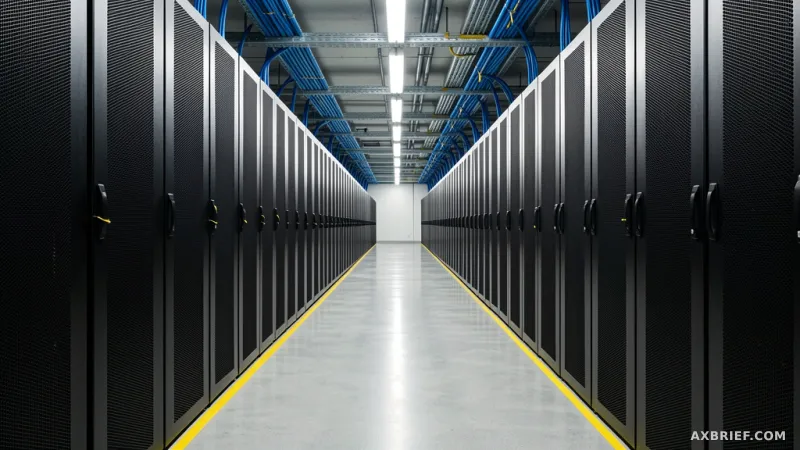
The landscape of artificial intelligence continues to evolve rapidly, marked this week by the debut of the DeepSeek V4 Flash Vision Experimental model, which brings competitive multimodal performance to users via API. As developers integrate these advanced tools, the physical footprint of the industry is encountering significant friction; public opposition to large-scale data center expansion is mounting, prompting new calls for transparency and grid-funding requirements in regions like Wisconsin. Meanwhile, the software ecosystem is seeing shifts in how models are deployed and utilized. Codex has reached a milestone of 20 million active users, highlighting the widespread adoption of its coding capabilities, while specialized routing tools from DigitalOcean are streamlining how developers select and manage models for specific tasks. Beyond infrastructure and software, AI is increasingly intersecting with financial and physical domains. Traders are leveraging platforms like Kalshi alongside research tools like Codeex to automate strategies, and the field of physical AI is being refined through new simulation and reinforcement learning workflows. From leaks surrounding Gemini 4’s text-rendering capabilities to the migration of training code into local environments via Google Anti-Gravity, the industry is balancing high-performance breakthroughs with the practical challenges of public perception and operational efficiency.
01DeepSeek V4 Flash Vision Rivals Opus 4.8
Users can now deploy AI agents that see and interact with digital environments more like humans do. DeepSeek has released the V4 Flash Vision Experimental model, which integrates advanced vision capabilities into its existing framework. This allows AI agents to process visual data, such as screenshots, to diagnose technical issues or navigate interfaces, significantly reducing the amount of manual text a user must provide to set the context for a task. The model maintains the reasoning, coding, and general knowledge strengths of the original V4 Flash and is currently accessible via an API and a web-based interface.
In performance tests measuring how well an AI uses vision to complete complex tasks, the model is now competitive with Opus 4.8. On the Deep Sway benchmark, DeepSeek V4 Flash Vision outperformed Opus 4.8 with a score of 59.3 compared to 58. It also led on the agents last exam, scoring 27.3 and surpassing Opus 4.8 by two points. While it trails slightly on other evaluations—scoring 83.9 on Terminal Bench 2.1 compared to Opus's 85, and 36.5 on Apex Bench compared to 39.4—the gap in multimodal agent performance has closed considerably.
The practical impact of these upgrades is seen in the model's ability to handle autonomous, long-term projects. In one instance, an experimental checkpoint of the model worked independently for 90 minutes to build and refine a detailed 3D helicopter simulation based on a single prompt. Remarkably, this entire process cost less than one dollar. This combination of visual intelligence and cost-efficiency enables a new workflow where agents can iterate on complex visual projects without constant human intervention. Although DeepSeek has recently increased its pricing, the model remains a powerful and accessible tool for developers seeking high-level autonomous capabilities.
02DigitalOcean Router Optimizes Model Selection
Many developers instinctively chase the top of AI leaderboards to find the best model, but this approach often leads to wasted resources. In reality, no single model is optimal for every request; the right choice depends on the specific goal, the required speed, and the budget, rather than a generic benchmark score. DigitalOcean has addressed this by developing a specialized routing model that dynamically selects the most appropriate AI for a given job, ensuring that high-end computing power is used only when necessary.
This routing system is purpose-built for the task of selection, allowing it to operate in under 200 milliseconds. Because it is specialized, it actually outperforms general-purpose frontier models, such as the GPT 5 series, at the specific task of routing. While highly critical tasks like security reviews still require the most advanced models, the router can steer simpler requests toward more efficient options, drastically reducing the time and computing power required to get a high-quality answer.
The financial impact of this approach is significant. In a software engineering workflow, routing tasks to specialized models like 'long before Maverick' or 'Cloud 5 Summit' proved to be faster and cheaper than relying solely on a premium model like Claude Opus. In one test session building an application, the software engineering router cost only 8 cents, compared to 25 cents for Claude Opus—a three-fold cost reduction. Despite the lower price, quality remained comparable; the router achieved 90% correctness compared to 95% for Claude Opus, a difference that falls within the typical margin of error for human judges.
Beyond immediate savings, this routing layer serves as a foundation for more advanced optimizations. It enables teams to implement performance evaluations to prove model effectiveness, use caching to avoid paying for the same answer twice, and introduce personalization to learn the specific preferences of a development team over time. By decoupling the request from a single fixed model, companies can balance performance and cost without sacrificing the quality of their AI outputs.
03Data Center Expansion Faces Regulatory Pushback
The rapid expansion of data centers is meeting significant public resistance as local communities grow wary of the environmental and financial costs of these massive facilities. Rather than simply attempting to block all development, voters are increasingly signaling a preference for strict regulatory frameworks that address specific local grievances. This shift suggests that public opposition is not a blanket rejection of technology, but a demand for greater accountability and tangible community benefits in exchange for the land and power these centers consume.
In Wisconsin, governor candidate David Crowley has proposed a comprehensive transparency and sustainability framework to govern how data centers are approved. A central pillar of this plan is the banning of non-disclosure agreements, which would end the secrecy often associated with developer negotiations. Crowley's proposal requires that developers commit to using 100% renewable energy and employ union labor. Most significantly, the framework would mandate that developers cover 100% of the costs for infrastructure and grid upgrades, while also contributing to a state energy fund designed to lower utility rates for residents across Wisconsin.
A similar focus on local incentives is appearing in Ohio, where governor candidate Vivek Ramaswamy has suggested that data center projects should provide direct financial relief to their neighbors. His proposal includes a pledge that if a data center is built in a community, local residents could see their home electricity costs eliminated entirely. Additionally, the plan suggests the possibility of lower property taxes for those residents, provided the data center operators strictly abide by all air and water quality standards.
These emerging policies reflect a bipartisan trend toward community agency, where politicians create specific checklists that developers must meet to gain approval. By shifting the financial burden of grid modernization and energy costs from the taxpayer to the developer, these proposals aim to transform data centers from perceived community burdens into engines of local economic stability.
04Kalshi and Codeex Automate Trading Gains
AI agents are transitioning from experimental assistants to tools capable of generating real financial returns. On the prediction market Kalshi, a basic AI trading strategy recently secured a 15.7% gain within a single 24-hour window. By executing 18 trades with 14 wins and only four losses, the bot increased its balance to 137, netting nearly $20 in profit. This demonstrates that AI can handle short-term market volatility effectively when deployed with a disciplined strategy.
However, achieving these gains requires moving beyond simple chat interfaces. Many current AI tools operate like a self-driving tractor that still requires a human to sit on the seat; they are autonomous in action but demand constant supervision. To solve this, developers are using platforms like Codeex to build more independent systems. Instead of relying on time-based schedules—known as cron jobs—which only trigger tasks at specific intervals, these new systems use event-driven architectures. This allows an agent to react "because" something happened, such as the arrival of a new email, a voice note, or a merged code update, rather than simply because a clock hit a certain time.
The reliability of these agents depends on treating prompt engineering as a rigorous software problem. Without strict versioning, a small change to a prompt can turn a high-quality market brief into useless "garbage" with no way to revert the damage. To prevent this, engineers are implementing content-addressed systems—similar to how the version-control tool git or nyx works—where every prompt and tool description is stored as a unique identifier, or hash. This creates a permanent, append-only log that allows developers to trace exactly what the model saw internally before giving an answer. By treating agents as isolated processes within a system kernel, developers can journal every action, making it possible to replay and debug complex multi-agent interactions. Ultimately, the challenge of scaling AI trading and research is not a mystery of intelligence, but a matter of standard software orchestration.
05Gemini 4 Leaks Reveal Text Rendering
Creating images with legible, correctly spelled text has long been a stumbling block for generative artificial intelligence. Most tools struggle to maintain the structure of letters when they are placed on curved or moving objects, often resulting in distorted symbols or nonsense characters. However, recent leaks regarding Google's Gemini 4 suggest that this barrier is being dismantled. The model appears to have mastered a level of precision in text rendering that allows for clear, readable prints even when integrated into highly complex visual environments.
The evidence of this breakthrough is visible in leaked generations featuring a pelican riding a bike. In this specific image, Gemini 4 successfully rendered clean and precise text across the bike's tires and the pelican's clothing. This is a significant technical achievement because rendering text on non-flat, warped, or textured surfaces—such as the curve of a tire or the folds of fabric—is a task where most other models struggle. By maintaining the integrity of the characters while adhering to the perspective and geometry of the object, the model demonstrates a sophisticated understanding of how text interacts with three-dimensional space.
For the average user and professional designer, this capability transforms AI-generated imagery from a conceptual tool into a practical one for production. When a model can reliably place specific words on clothing or equipment without visual glitches, the need for manual post-editing in graphic design software decreases. This shift allows for more immediate creation of branded content or detailed visual storytelling where text is a functional part of the scene rather than an afterthought. The precision seen in these Gemini 4 leaks indicates a move toward a future where AI imagery is no longer limited by the typical distortions found in earlier models, providing a level of control that was previously elusive in the industry.
06Frontier AI Leadership Struggles with Public Vision
The general public is growing increasingly skeptical of artificial intelligence, a sentiment driven largely by a failure of communication from the industry's most powerful figures. Instead of fostering hope or excitement about the potential of these tools, the leadership of frontier AI has struggled to articulate a positive and inspiring vision for the future. This gap in storytelling has left a vacuum that is now being filled by mistrust and anxiety, making the technology feel like an imposition rather than an advancement.
Chamath Palihapitiya argues that the collective leadership of the sector has failed at the fundamental task of painting a clear picture of what is possible. Rather than focusing on the tangible benefits that AI could bring to society, leaders have frequently leaned on arcane jargon—technical language that alienates the average person—or catastrophizing rhetoric that emphasizes worst-case scenarios. By framing the conversation around fear or incomprehensible complexity, these leaders have inadvertently bred skepticism, leaving the public to wonder who the technology actually serves.
This communication breakdown has moved beyond abstract debate and is now creating concrete obstacles for the industry's physical growth. There is a noticeable difference in how the public perceives infrastructure; while general data centers are often viewed with mild annoyance, AI data centers have become specifically politically toxic. Recent polling shows that when people are asked to differentiate between the two, the opposition to AI-specific facilities is significantly higher. This suggests that the public's apprehension, fueled by poor messaging regarding job loss and the overall purpose of the technology, is manifesting as a direct rejection of the hardware required to sustain it. When leaders fail to explain the purpose behind the technology, the physical footprint of the industry becomes an easy target for public resentment.
07Hermes Agent and Ox Alpha Spark Speculation
The AI community is currently gripped by a high-stakes mystery over the true origins of two emerging entities: the Hermes agent and Ox Alpha. On X, users are intensely debating which organization is actually powering these tools, as the lack of official transparency has created a vacuum filled by competing theories. This kind of speculation usually signals that a model is performing at a level that defies easy categorization, leading observers to search for a known powerhouse capable of such output. The obsession on social media reflects a broader industry trend where the identity of a "ghost" model can become a focal point for predicting the next major shift in AI dominance.
Much of the current frenzy stems from an almost unbelievable claim that the Hermes agent can provide a quadrillion tokens per day. In the world of large language models, a token is essentially a small chunk of text or a character used to process language. A quadrillion tokens—which equates to one thousand trillion—is a volume of data processing so massive that it borders on the absurd. This staggering figure has led many to question whether the claim is a joke or a sign of an unprecedented leap in computing infrastructure. When a service claims this level of capacity, it suggests a scale of hardware and energy that very few entities on earth can maintain.
Because the purported capabilities are so extreme, the list of suspected creators includes the most influential names in the global tech landscape. Some theorists believe the model is GLM, while others point toward Gemini 3.5. There is also significant chatter suggesting the technology could be the work of Microsoft, Nvidia, or a specialized US-based Frontier AI lab. By attempting to reverse-engineer the identity of the model through its performance and these bold claims, the community is trying to determine who currently holds the lead in high-capacity AI deployment. This guessing game highlights how critical the provider's identity is in the current AI race, as it reveals the underlying strategy and resource pool being used to push the boundaries of the field.
08Codex Hits 20 Million User Milestone
Codex has experienced a massive surge in adoption, recently crossing the threshold of 20 million active users. This growth represents a significant milestone for the tool, signaling that its capabilities are resonating with a vast audience of people looking to integrate artificial intelligence into their daily digital workflows. When a model reaches this scale, it typically indicates that the technology has moved beyond a niche experimental phase and is becoming a standard utility for a broad spectrum of users across different industries. Such a rapid expansion suggests that the tool is meeting a critical need for efficiency and automation on a global scale.
To celebrate this growth and support the expanding user base, Tibbo announced a comprehensive usage reset. For the average user, this means the system has cleared previous consumption records to provide everyone with a fresh pool of Codex usage. This move is specifically designed to restore rate limits—the restrictions on how many requests a user can send to the AI within a specific timeframe—back to 100%. By lifting these constraints, the platform ensures that users are not throttled or slowed down by previous activity, allowing them to interact with the model more fluidly and frequently than they might have been able to in the preceding weeks.
The timing of this reset is strategic, as it encourages users to push the boundaries of what the model can achieve. With a renewed capacity to burn through usage, individuals can iterate more aggressively on their prompts and projects, refining their requests until they find the most accurate or creative output. This level of accessibility is crucial for maintaining momentum in a competitive AI landscape, as it allows the community to discover new use cases and stress-test the model's capabilities in diverse real-world scenarios. By removing the friction of usage caps, the platform is effectively inviting its 20 million users to explore the full potential of the tool without the immediate worry of hitting a ceiling, thereby accelerating the overall pace of discovery.
09OpenAI Gymnasium and Stable Baselines 3 Streamline Physical AI
Building a brain for Physical AI requires more than just a single successful trial; it requires the ability to generalize across diverse conditions. If an AI agent is trained in only one specific environment, it often becomes ineffective the moment conditions shift slightly. For example, an agent that masters a "day" level in Super Mario might completely fail when placed in a "night" level. To prevent this overfitting, where the AI becomes too specialized to one scenario, developers must expose the system to a wide variety of situations and environments to ensure it can adapt its behavior in the real world.
To make this training process efficient, developers are using a specialized toolset that moves the trial-and-error phase into virtual worlds. OpenAI's Gymnasium provides these simulated environments, such as pusher-v5, where AI agents can practice tasks like moving an object to a target through constant exploration and experience gathering. Rather than writing the complex mathematical frameworks for training from scratch, developers use Stable Baselines 3. This library provides a pre-implemented version of the PPO algorithm—a specific method for reinforcement learning that allows the AI to learn from its experiences over thousands of iterations. By combining a simulator with a ready-made algorithm, the time and technical effort required to develop robot movements are significantly reduced.
The final stage of this optimized workflow involves sharing and managing the resulting intelligence. Once a model, such as a PPO Pusher, is fully trained, it can be exported as a compressed file and uploaded to Hugging Face. This community platform serves as a central repository where models are categorized by task, allowing developers to upload and update their work under the Reinforcement Learning section. This ecosystem allows for a continuous cycle of refining Physical AI models, transforming the development process from a solitary coding task into a collaborative, community-driven effort that accelerates the deployment of AI into physical hardware.
10Google Anti-Gravity Migrates AI Training Locally
Developers can now move the complex process of training artificial intelligence from remote servers directly to their own personal computers to get a clearer view of how the AI is learning. Google Anti-Gravity facilitates this shift, acting as a specialized coding tool that allows users to migrate training code into a local environment. By moving the workload away from a server, developers can transform raw training data and processes into intuitive, web-based interfaces. This transition is particularly useful for those who want to build a web service around their AI model or simply need a more visual way to track the model's progress in real-time.
The tool operates by taking existing training code and adapting it for local execution. For instance, a user can copy a specific block of training code and input it into Google Anti-Gravity with instructions to visualize the learning process. The tool then handles the environment setup on the local machine, enabling the user to see the model's evolution through a visual dashboard rather than staring at lines of text in a server console. Because these local environments can sometimes be smaller in scale, they may rely more on the computer's central processing unit (CPU) rather than a high-powered graphics processing unit (GPU), which can affect the speed of the training process but provides the benefit of immediate, local control and visualization.
This shift in workflow simplifies the bridge between raw AI development and the creation of a finished product. Instead of keeping the training process hidden in a remote data center, Google Anti-Gravity allows developers to treat the training phase as a visible, interactive experience. By turning the training process into something that looks and feels like a web service, it becomes much easier to refine the model and communicate its progress to others. This capability effectively turns a technical backend task into a front-end visual experience, making the development of AI models more transparent and accessible for those designing the final user interface.