This week's AI updates span a diverse mix of workflow automation, model optimization, and agent reliability improvements. Users can now automate repetitive digital chores as Grok Bot monitors screen activity to build contextual understanding without manual prompting. Meanwhile, developers are applying specialized refinement skills to strip away generic aesthetics from Claude Haiku's outputs, ensuring professional-grade results from complex coding and design tasks. In performance benchmarks, specialized decision models like Jev are undercutting general-purpose platforms like Gemini Flash and GPT 5.5 in both cost and latency for batch processing. Other updates highlight advances in agent reliability through self-correction frameworks like Reflexion and voice-integrated logistics tools. Teams are also exploring avatar-based voice interaction through OpenAI Dots, remote task execution via Codex Cloud, and local alternatives for voice generation and presentation automation. Together, these tools reflect a broader shift toward greater autonomy, specialized efficiency, and reduced operational overhead across personal and professional environments.
01Grok Bot Automates Task Replication via Screen Monitoring
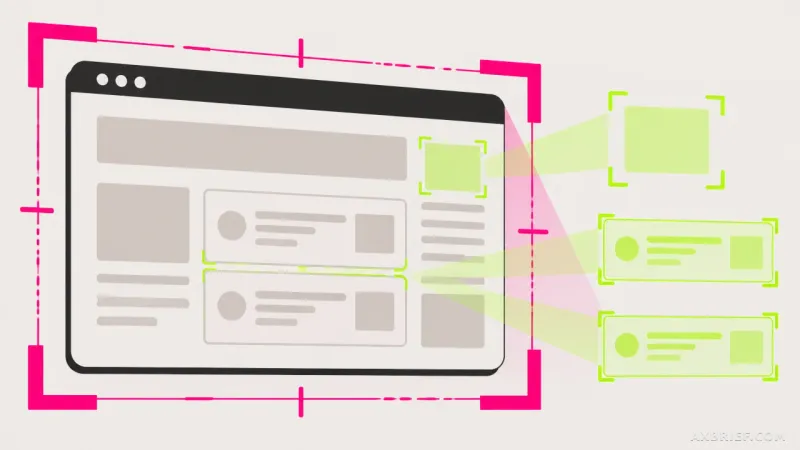
Users may soon be able to automate repetitive digital chores without writing a single line of instructions or manual guides. Grok Bot is designed to achieve this through a process of autonomous observation, where the AI monitors a user's screen activity to build a deep contextual understanding of a specific workflow. By watching how a human interacts with their software and navigates various interfaces, the tool can identify the intent behind a series of actions and the precise execution required to reach a goal.
This approach eliminates the need for manual prompting, a common friction point in current AI automation where users must provide explicit, step-by-step instructions to get a desired result. Instead, Grok Bot records the user's screen to learn the task organically. Once the AI has observed the process, it can replicate those exact tasks on its own and separately from the user. This transforms the AI from a tool that simply follows orders into an assistant that learns by example, significantly lowering the barrier to creating autonomous productivity workflows.
This capability is emerging alongside a broader evolution of the Grok model family. While the current Grok 4.7 is recognized as a highly efficient model with a low cost per unit of intelligence, it is not yet viewed as a frontier model—the most advanced class of AI. However, the upcoming release of Grok 5, expected by the end of the year, is intended to be competitive with the leading models in the industry. X is uniquely positioned to scale these capabilities because it possesses a massive global user base that already utilizes the platform for various transactions and financial activities, providing a rich environment for the deployment of such autonomous tools.
02The Refinement Tool Eliminates Generic Aesthetics from Claude Haiku's Outputs
High-end AI outputs often suffer from a recognizable, bland aesthetic where the results feel generic regardless of the prompt. This occurs because AI models frequently default to standard patterns, sometimes ignoring explicit instructions to use specialized design tools. For instance, in a project to build a unique wedding invitation service, the AI failed to implement requested design skills, producing a standard design instead of the intended unique interactions.
To combat this, developers are employing a refinement skill specifically intended to strip away generic AI-generated aesthetics. The goal is to escape the predictable feel of AI-generated websites and achieve a professional grade. This struggle is common across AI media; in motion graphics, the gap between amateur and professional work is often found in the contextual flow between scenes. Professional quality is achieved when the AI is directed to design the transitions and logic between clips rather than treating each scene as an isolated, disconnected piece.
Achieving consistent quality requires moving beyond single prompts toward a compounding feedback loop. Rather than simply fixing a mistake during review, professional workflows codify every error into a set of system rules. This ensures that a specific mistake never recurs in future iterations, turning a list of failures into a permanent quality asset that guides the AI's behavior.
Even capable models like Claude Haiku demonstrate this tension between raw power and refined taste. Claude Haiku can generate complex, playable games—such as a Mario-style platformer or a 2D shooter inspired by Metal Slug—and create 3D models with basic physics. However, while it can handle the logical execution and visual details of an aquarium scene or an orc model, the final polish depends on the user's ability to refine the output. Without a systematic approach to quality rules, even high-token outputs can remain trapped in a primitive or generic style.
03Reflexion and Voice Integration Boost AI Agent Reliability
AI agents are becoming significantly more dependable by learning to correct their own errors and interacting with the physical world through voice. A key breakthrough comes from a research paper called Reflexion, authored by Noah Shin. This methodology instructs an agent to document the specific reason it failed a task and then use that reflection to rerun the process for a better outcome. The impact is measurable; applying these concepts helped push the coding pass rate for GPT4 from 80% to 91%.
Beyond software logic, agents are now handling real-world logistics. An agent tool called Instinct, for example, integrates with a voice application programming interface to autonomously make phone calls. This allows the agent to perform complex tasks, such as calling a restaurant to book a reservation, without human intervention, moving AI from a chat interface into active service coordination.
The evolution of coding agents further demonstrates this shift toward autonomy and precision. OpenAI Codex enables users to build entire projects and fix problems using plain English prompts, removing the need for programming knowledge. Unlike basic chat bots, Codex works directly with project files and supports iterative updates through natural language. To increase efficiency, it can delegate tasks to multiple agents working in parallel. To ensure these agents do not clash, Codex uses isolated worktrees—essentially separate copies of the project—so that parallel changes do not disrupt the main codebase. Additionally, the system utilizes reusable sets of instructions that ensure the agent performs recurring tasks consistently every time. This combination of self-correction, voice integration, and sophisticated project management is transforming AI agents from simple assistants into capable autonomous operators.
04Jev Beats Gemini Flash and GPT 5.5 in Cost and Latency
Companies can drastically reduce the cost and time of AI-driven decision-making by switching from general-purpose large language models to specialized decision models. Unlike traditional models that generate text, Jev is designed solely to make decisions efficiently by processing a state and multiple-choice questions in parallel. This specialization allows it to be significantly faster and cheaper than standard large language models. In performance tests, Jev recorded a latency of just 8.5 milliseconds, compared to 500 milliseconds for Gemini Flash and 2,400 milliseconds for GPT 5.5. It also demonstrated total consistency, providing the exact same verdict across multiple runs where other models showed variance.
For large-scale batch classification, such as processing support tickets, Jev offers extreme cost advantages. In one test of 50 tickets, Jev was approximately five times cheaper than Gemini and 79 times cheaper than GPT 5.5, while actually achieving a higher accuracy rate. However, for more complex tasks, high-end models still hold a slight edge in absolute precision. In a test of 1,000 messages, GPT 5.5 achieved 84.9% accuracy compared to Jev's 80%. The trade-off is financial: GPT 5.5 was 65 times more expensive, costing $4,600 per million messages compared to Jev's $71.
To optimize both budget and accuracy, developers can implement a hybrid routing workflow. In this pattern, Jev acts as an initial filter to weed out noise or handle straightforward decisions. If Jev returns a confidence rating below a specific threshold—such as 0.7—the task is escalated to GPT 5.5. This strategy can increase overall accuracy from 80% to 83.7%, or up to 84.6% if the threshold is raised to 0.95. By only using the expensive frontier model for low-confidence cases, companies can maintain high performance while avoiding the prohibitive cost of using a high-end model for every request. This approach is particularly effective for high-volume workflows like email filtering or detecting prompt injection attacks.
05OpenAI Dots Introduces Avatar-Based Voice Interaction
OpenAI is moving toward a future where users no longer need to touch a keyboard or screen to get work done. With the introduction of OpenAI Dots, the company has launched an avatar-based agent—visualized as "cute blob" entities—that operates entirely through voice interaction. Designed primarily for enterprise and knowledge work, these agents can integrate with professional tools like Slack and other work interfaces to execute tasks autonomously, even while the user is asleep. This shift transforms the AI from a chat box into a digital employee capable of managing complex workflows through speech.
Despite the capabilities of the underlying technology, the transition has been friction-heavy. OpenAI Dots is powered by GPT 6.1 Astra, one of the most powerful models currently available, and is positioned as the most expensive subscription tier. However, the rollout has been notably slow. More than a week after its announcement, many professional account holders still lack access to the tool. This cautious deployment has hindered the company's ability to collect critical user feedback, creating a gap between the product's high-tier promise and its actual availability.
This struggle with user experience highlights a growing divide between frontier model developers and consumer-centric platforms. While OpenAI focuses on raw model intelligence, Meta is leveraging its massive ecosystem to gain an edge. Meta's Muse agent utilizes personal data from Instagram and WhatsApp to intuitively understand how individuals communicate and what they need. By prioritizing this social data over sheer model scale, Meta has created a consumer agent experience that often outperforms the offerings from frontier model companies, proving that intuitive design and personal data can be as valuable as raw processing power.
06Codex Cloud Enables Remote Task Execution
Developers no longer need to keep their computers running or their software open while waiting for complex AI tasks to finish. With Codex Cloud, the heavy lifting of software development and testing is shifted from the user's local machine to a remote environment. This shift means a developer can submit a request and walk away, reviewing the results later through a web browser rather than tethering their productivity to the processing power or uptime of their local hardware.
This capability is enabled by a streamlined hand-off workflow. A user typically works on their project locally and then pushes that code to a GitHub repository. By switching to the cloud environment and selecting that connected repository, Codex Cloud can execute tasks independently. For example, a developer might prompt the system to add a new feature, such as a customer satisfaction system for a game, and submit the request to the cloud. Once the task is running remotely, the local application does not need to remain open, allowing the user to return later to review the finished work via the web.
The system also leverages specialized instructions to automate quality assurance and software testing without requiring any modifications to the source code. A game testing workflow demonstrates this by automating a series of checks to ensure a project is functioning correctly. This includes verifying that the game launches successfully, that the controls work as intended, and that calculations are accurate. It can even detect logic errors, such as preventing a player from spending money they do not have. Because these instructions are reusable, developers can apply the same testing suite to various versions of a game to identify gameplay problems and then ask the AI coding agent to fix the issues based on the resulting report.
07AI Agents Coordinate Complex Lifestyle Logistics
AI is evolving from a professional productivity tool into a coordinator for the complex logistics of personal life. While most people use AI to draft emails or summarize documents, the technology is now being applied to the tedious administrative work of social coordination. For example, an executive has used a personal agent to manage the operational side of a book club. Instead of the user manually tracking titles and recipients, the agent takes over the logistics of ordering the books and coordinating the shipping to various different addresses for the members.
This shift is driven by a change in how the AI interacts with technology. Traditional AI models typically provide responses based on existing knowledge, but an agent like Muse is given its own virtual machine. This is essentially a virtual computer—functioning like a laptop or desktop—that is provided to the large language model. By having its own instance of a computer, the AI can perform the same types of actions a human user would, allowing it to navigate the web and execute multi-step tasks independently rather than just generating text.
To ensure security, this virtual environment is kept entirely separate from the user's own hardware. The agent does not share the user's desktop and cannot see their personal files or private data. This isolation allows the agent to operate autonomously on its own instance while protecting the user's primary device. By combining the ability to execute tasks on a virtual computer with the reasoning of a language model, AI agents are moving beyond simple information retrieval to handle the actual execution of complex lifestyle arrangements.
08Brag AI Lowers Costs for Startup Launch Videos
For early-stage startups working on a tight budget, competing with the high production values of established tech companies has historically presented a major financial hurdle. While heavily funded venture-backed startups routinely drop immense amounts of money on high-end promotional media—often spending anywhere from $100,000 to $300,000 on elaborate launch videos—smaller builders often find themselves priced out of professional video production altogether. This disparity creates a noticeable gap on social platforms where capital-rich teams showcase polished promotional clips that smaller competitors struggle to match.
To bridge this gap, AI video tools like Brag provide a low-cost alternative for generating startup launch videos. Instead of hiring external production crews or investing heavily in traditional video editing workflows, users can leverage Brag to produce interesting visual results for significantly less money. This shift allows independent developers and lean teams to put together engaging media assets to showcase their newly built projects without draining their financial resources.
For builders navigating the crowded landscape of daily software releases, keeping overhead low is essential. While users still encounter underlying model costs when utilizing these digital utilities, the core software itself remains accessible. By lowering the financial barrier required to produce polished promotional material, tools like Brag give lean teams a practical way to present their work to the public on a more level playing field.
09The AI-Generated Website Requires a Server Environment to Function
An AI-generated website or application may appear complete, but it often cannot run by simply opening a file on a computer. For many modern web projects, a server environment—a specialized software setup that mimics how a real website is hosted on the internet—is necessary for the code to execute properly. When a user tries to open a site as a static index file, which is essentially just reading a document from a hard drive, certain security restrictions or technical dependencies often prevent the site from functioning. Only by launching a local server can these barriers be removed, allowing the application to operate as intended.
This technical requirement was evident in a game developed by Claude Haiku. While the AI successfully built a functional experience with integrated systems for selecting weapons and other gear, the project remained dormant when accessed as a basic file. The user discovered that the site failed to operate through the index file alone; it only became functional after a server was launched. This illustrates a critical step in the workflow for those using AI to generate code: the output is often a set of instructions that requires a specific hosting environment to actually come to life.
The resulting game proved to be quite challenging, described as an experience that requires significant effort to navigate. Players must manage complex mechanics, such as coordinating the use of equipment to overcome obstacles. While the difficulty may be steep for a casual gamer, the underlying systems created by the AI are robust and operational. To allow others to explore these mechanics and verify the AI's work, the project files and associated tests have been made available online.
10Voice Studio Offers Local Alternative for Voice Generation
For anyone looking to generate artificial speech or clone a personal voice without relying entirely on remote web services, Voice Studio provides a practical and straightforward option. Functioning much like an open-source voice application, this local tool allows users to run speech generation tasks directly on their own hardware. It gives creators and small businesses a self-hosted way to handle audio tasks without sending recordings to external platforms.
The application is designed to be simple to install and operate locally. Beyond standard speech generation and voice cloning, the software includes video dubbing capabilities that let users translate recorded video content into other languages using local computing resources. Because the models execute on personal equipment, users maintain direct control over their audio files and processing workflows.
Running a local setup opens up new possibilities for lightweight projects and everyday business needs. It offers a flexible avenue for adding custom audio value to existing workflows, making advanced voice generation technology accessible right from a desktop machine.
11Presentation Master Automates Presentation Creation
Creating professional slide decks often involves a tedious and time-consuming process of distilling long-form notes or technical documents into a visual format. A specialized presentation automation tool streamlines this workflow by automating the conversion of raw documents and notes directly into editable presentations. This shift removes the manual labor of restructuring text for a presentation format, allowing users to move from a rough draft to a visual deck almost instantly, which significantly reduces the time spent on initial drafting.
A critical aspect of this tool is its flexibility regarding branding and final adjustments. Rather than relying on generic, pre-set layouts, users can provide their own company design templates. This ensures that the generated slides adhere to specific corporate visual standards and brand guidelines from the moment they are created. Because the resulting presentations are fully editable, users maintain complete control over the final output. This is particularly useful for making precise manual adjustments to layout elements or updating specific data points, which often require human oversight to ensure absolute accuracy before a presentation is delivered to a client.
Beyond individual productivity, this automation creates a viable pathway for new service-based business models. In many industries, product offerings and internal instructions change regularly, meaning that existing presentations can become obsolete and require updates. There is an opportunity for consultants or freelancers to manage this maintenance process for other companies, taking over the burden of keeping slide decks accurate. By leveraging the tool's ability to rapidly turn updated notes into polished, brand-compliant presentations, a service provider can charge for the value of keeping a company's instructions and product pitches current.