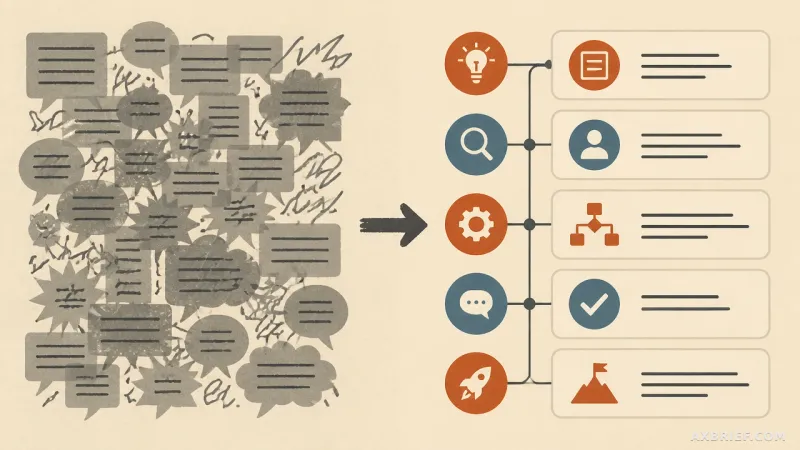
The latest landscape of artificial intelligence brings a broad mix of updates spanning design prompting strategies and product iterations. Developers are navigating new approaches to code structures and explicit element-level rules to achieve consistent outputs, while engineering teams roll out daily improvements and structured challenges. At the same time, platforms are introducing proactive task handlers, dependency graph workflows, and event-driven automation triggered by external signals rather than fixed schedules. Ecosystem expansions are further marked by global community events showcasing updated model series, alongside wider detection capabilities for AI-generated images from multiple providers. Additional updates include new security measures for resource-heavy agents, adjustable model effort levels, and third-party integration considerations that introduce fresh questions around pricing and quotas.
01Design Prompting Strategies
When working with artificial intelligence on service layouts or visual drafts, telling the system what to avoid often backfires because it leaves no clear destination. For instance, warning a model not to make a design look generic or overly characteristic of machine generation fails to provide a positive direction. Because systems like Claude, GPT, and Gemini have learned from countless software interfaces and web templates, offering a vague request inevitably produces the prevailing average, such as dark backgrounds with purple-to-blue gradients and three rounded cards placed side by side. Instead of relying on negative constraints, providing explicit element-level rules—specifying precise main colors, border roundness, font sizes, margins, and layouts—proves far more effective for steering visual outcomes.
Users can also move beyond a single trial by asking for multiple distinct mockups upfront, such as requesting roughly ten varied layout drafts. This approach yields completely different structural styles, including editorial arrangements, terminal views, newspaper formats, and comparative screens. Selecting a preferred direction from these options allows a user to trigger a comprehensive, single-prompt redesign that thoroughly restructures an entire interface.
Ultimately, understanding and supplying underlying code structures significantly reduces performance variance across different models. Relying on generic commands makes final results volatile and heavily dependent on whichever specific platform happens to process the request. By commanding the software with precise structural knowledge and exact rules rather than loose suggestions, users ensure consistent, dependable outcomes regardless of the underlying model's inherent fluctuations.
02OpenAI Product Iteration
OpenAI is accelerating its release cycle to ensure users see constant value. Tibo, the engineering lead for Codex, recently launched a 28-day challenge promising that ChatGPT will receive a clear improvement every single day. If the team fails to ship an update, all users will receive a full usage reset. This push for rapid iteration has already resulted in a 50% speed increase for GPT6 Astra and GPT 6.1 Sol, ensuring users either get a better product or more usage capacity.
Anthropic is simultaneously refining its model efficiency and ecosystem. The new Claude Haiku 5.5 is 75% cheaper than its predecessor while offering better performance. The company also shifted Claude Co-work entirely to the cloud as of October 6, removing local execution in favor of a system that automatically routes tasks between regular chat and co-work. To broaden accessibility, Claude is now available as an official add-on for Google Docs, Sheets, and Slides. Complementing this, Google Drive and Docs now natively support Markdown files—the standard text format used by most AI tools—which simplifies how AI agents manage and edit files.
Beyond individual product updates, new workflows are emerging that combine multiple AI agents to handle complex tasks. Using a tool called Herdr, developers can set up a split-panel environment where Claude Code acts as a primary agent and Codex serves as a sub-agent. For instance, when automating HWP documents, Claude Code—which is initialized using a `--permission` flag for targeted automation—handles research and problem generation but cannot insert images. It delegates image creation to Codex and then reviews the output, requesting revisions if the images are incorrect.
To prevent these complex workflows from wasting resources, successful processes are being codified into "Skills" and "Agent MD," which act as reusable manuals. Initially, an AI might spend significant time and tokens analyzing the XML structure of a file to understand how to build a document. By saving these findings into an Agent MD, the AI can bypass this discovery phase in future tasks, drastically reducing the time and token consumption required to repeat the work.
03Grok Bot Primary Bot Assistance
Users of Grok Bot no longer need to manually prompt the AI to start a task; instead, the system now looks for work it can handle on its own. This change comes with the introduction of a "primary bot" integrated into every account. Unlike traditional AI assistants that remain idle until spoken to, this proactive agent monitors the user's environment to identify needs and offer assistance before being asked. For example, the bot can scan an email inbox and alert a user to an offer that is about to expire, effectively shifting the AI from a reactive tool to a proactive coordinator that manages a user's workload.
This shift in functionality aims to remove one of the primary barriers that previously kept people from using Grok Bot. By taking the initiative to find tasks, the primary bot reduces the cognitive load on the user, who no longer has to remember to delegate specific chores to the AI. However, this autonomy introduces new questions regarding resource management and cost. There are concerns about how this proactive behavior will impact pricing and how quickly it might consume a user's Grok Bot usage limits. Because the bot is constantly monitoring for work rather than operating on a per-request basis, it could potentially burn through usage quotas much faster than a manual setup.
Because of these potential costs and the nature of proactive monitoring, the ability to opt out of the feature is a key consideration for some users. Not everyone may want an AI constantly scanning their data or spending credits automatically. Despite these concerns, the addition of the primary bot is viewed as a significant improvement, potentially positioning Grok Bot as the best AI agent in the world. The effectiveness of this system is further bolstered by its integration with the most powerful models available, which allow the agent to handle a variety of tasks more efficiently and reliably than previous iterations.
04Paperclip Dependency Graph Workflows
Imagine a digital environment where a company does not just use a single AI assistant, but instead deploys an entire virtual organization of agents to handle a project. Paperclip makes this possible by managing complex agent workflows through a structured system that mimics a corporate organization chart. This approach allows multiple AI agents to collaborate toward a single, overarching goal over a long period, shifting the AI experience from simple task execution to long-term project management.
The engine driving this coordination is the dependency graph. When Paperclip receives a primary goal, it decomposes that objective into a series of smaller, manageable subtasks. These subtasks are then distributed among different agents within the system. Rather than working in isolation, the agents are linked through a map of dependencies. The system tracks precisely which tasks are "parents," which are "blocking" other progress, which are strictly required for completion, and which agents must serve as reviewers. This ensures that the workflow remains logical and that no agent begins a task until the necessary prerequisites are finished.
To maintain momentum without constant manual oversight, Paperclip employs a "heartbeat" mechanism. Agents operate on a recurring schedule—checking in every 30 minutes or every hour, for instance—to see if the dependency graph allows them to start their next assignment. A practical application of this is seen when the agents autonomously determine that a landing page for Agent Builder School is required and coordinate the necessary steps to create it. While this level of organizational complexity allows for the execution of highly sophisticated goals, it is resource-intensive, consuming a large number of tokens—the basic units of text processed by AI—to sustain the continuous tracking and communication required for a full team of agents.
05Manus Event-Driven Task Automation
Manus is shifting how AI agents handle work by moving from rigid calendars to reactive triggers. Previously, the system relied on scheduled tasks—for example, executing a specific routine every Monday morning. Now, the system can launch a workflow the moment a specific external event occurs. This means the AI no longer simply waits for a clock to hit a certain time; it waits for a signal from the real world, such as the arrival of a new advertising inquiry or a specific newsletter, to initiate its process.
To support this event-driven approach, Manus provides agents with their own dedicated operational environments. These agents can be equipped with their own email accounts and computers, and depending on regional availability and terms of use, they can even utilize phone numbers or digital wallets. This infrastructure allows an agent to function more like a human employee who has their own desk and tools. An agent can monitor an inbox, read incoming messages, conduct necessary research, and then present those findings on a web page or generate a formal document within its own workspace.
A practical application of this is the automated management of business collaborations. For instance, an agent can be configured to specifically watch for advertising requests. Once such an email arrives, the agent automatically reads the content, organizes the details, and handles the reply. This removes the manual burden of sorting through inquiries to find actionable leads. Furthermore, these agents can work in coordinated teams. When one agent completes its portion of a task, it can notify other agents in a group chat, triggering the next agent in the digital chain to begin the subsequent step of the workflow. This transforms AI from a tool that follows a static schedule into a reactive, coordinated workforce that responds to business needs in real time.
06OpenAI Global Build Week Events
OpenAI is transforming how developers interact with new technology by moving the launch process from digital announcements to physical, community-led gatherings. Through an initiative called Build Week, the company activated its global network of representatives to host more than 60 events across the world in a single week. This approach shifts the focus from a top-down corporate release to a grassroots movement, allowing users to experiment with new tools in a collaborative environment where they can learn from one another in real time.
The primary objective of these events was to introduce the GPT-5.6 series of models. By bringing people together, OpenAI aimed to demonstrate the combined capabilities of these new models and Codex, a specialized system designed to help users write computer code. Rather than simply reading documentation, participants could see these tools in action and explore how the integration of GPT-5.6 and Codex could streamline the process of turning a conceptual idea into a functioning software project.
This massive coordination was made possible by the Codex Ambassador Program. What began as a modest effort involving only 15 to 20 ambassadors spread across the globe has evolved into a powerful engine for community engagement. The program is built on the belief that something unique happens when curious people gather in person. These interactions often lead to the formation of unexpected friendships and the birth of new projects that might never have started in isolation.
By leveraging this ambassador network, OpenAI is attempting to foster a true community around its ecosystem. The goal is to ensure that the transition to more advanced models like the GPT-5.6 series is supported by a human network of peers who can share knowledge and solve problems together. This strategy turns a technical product launch into a social event, emphasizing the human element of innovation over the software itself.
07Robust Testing Mechanisms for Agents
The reliability of an AI agent is not a static achievement but a moving target. Because user habits evolve and the underlying models powering these tools are constantly being updated, a system that performs perfectly today may struggle tomorrow. For the people building these tools, the primary risk is that an agent might stop working as intended when faced with new or unexpected ways that people interact with the software. This volatility means that initial success is not a guarantee of long-term stability.
To manage this instability, developers require a strong framework for testing and rolling out their agents. Such a system allows builders to verify whether an agent's performance remains stable when subjected to specific interaction patterns. Rather than relying on guesswork, this approach uses robust environments and a diverse set of tasks to stress-test different behaviors. By simulating various scenarios and testing these behaviors through rigorous environments, builders can determine exactly where an agent holds up and where it fails before a change is fully deployed to users.
Ultimately, the ability to maintain this level of control is what allows a company or developer to truly own the intelligence of their product. In a fast-moving technological landscape, the goal is not just to build a functional agent once, but to possess the mechanisms necessary to adapt as models improve and user needs shift. This capacity for adaptation is critical because the environment in which these agents operate is in a state of constant flux. By establishing these rigorous testing and rollout mechanisms, builders can ensure their agents remain effective and reliable, providing the necessary infrastructure to stay on top of a world that moves at an incredible pace.
08Google SynthID Detection Expansion
Identifying whether a digital image is a real photograph or a synthetic creation is becoming significantly simpler as industry giants begin to coordinate their detection standards. For the average user, this means a more reliable way to verify the authenticity of visual content across different platforms, reducing the risk of being misled by AI-generated imagery. This shift moves the responsibility of identification away from a user's own intuition and toward a standardized technical check, making it easier to distinguish between human-captured reality and machine-generated art.
At the center of this effort is SynthID, a tool developed by Google. Originally, SynthID functioned as a specialized system designed specifically to detect images produced by Google's own internal image generation tools. However, the scope of this technology is now broadening significantly. Google is expanding its partnerships to allow the tool to identify AI-generated content from third-party providers, moving beyond its own ecosystem to create a more universal detection capability.
This expansion means that SynthID can now work with images created by OpenAI, and the capability is expected to extend to images from Apple in the near future. By opening up its detection capabilities to other providers, Google is helping to establish a cross-platform framework for AI transparency. Rather than each company maintaining an isolated method for flagging synthetic media, the ability to detect images from multiple sources provides a more comprehensive safety net for the general public.
This collaborative approach to identification is particularly important as AI-generated images become increasingly indistinguishable from actual photographs. When a single tool can identify content from several different providers, it ensures that the origin of a file remains transparent regardless of which specific model was used to create it. This reduces the fragmentation of AI safety tools and provides a more consistent experience for users trying to navigate a landscape filled with synthetic media.
09Codex Ambassador Program Global Growth
OpenAI has significantly expanded its community outreach through the Codex Ambassador Program, transforming a small pilot into a global network. What began as a modest initiative with only 15 to 20 members has grown into a massive community of over 150 ambassadors spanning more than 80 countries. This rapid expansion reflects a strategic effort to move advanced AI technology out of the lab and into the hands of a diverse, international group of enthusiasts who can apply these tools in varied contexts.
The program serves as a vital bridge between OpenAI's technical developments and the end users who implement them. To date, the network has facilitated more than 300 events, conducted both online and in-person, specifically designed to bring Codex and GPT-5 series models closer to the general community. These gatherings are intended to be more than just instructional sessions; they are spaces where curious people come together to transform abstract ideas into concrete projects. By facilitating these introductions, the program helps turn professional collaborations into genuine friendships, creating a supportive ecosystem for AI adoption.
The primary objective of the Codex Ambassador Program is to provide a dedicated environment where users can tinker and optimize for creativity. By focusing on the "art of possibility," the program encourages participants to experiment with Codex and GPT-5 series models to see exactly how their creative visions can come to life through trial and error. This emphasis on experimentation allows the community to explore the limits of the models in a low-pressure setting, ensuring that the technology is used not just for standard tasks, but as a tool for genuine innovation and artistic exploration.
10Grok Bot Third-Party Model Integration
Users of Grok Bot may soon encounter unpredictable costs and a faster depletion of their account limits as the platform begins incorporating external AI models. This integration is viewed as a bold and unconventional move, one that potentially positions Grok Bot significantly ahead of its industry competitors by expanding its functional capabilities through the use of third-party technology. The scale of this shift is considered significant enough to be described as insane, reflecting the high stakes associated with such a pivot. However, this strategic leap forward introduces a lack of clarity regarding how the transition will practically affect the people using the tool on a daily basis.
The primary uncertainty centers on the operational costs and the consumption of account resources. It is currently unclear how the inclusion of these external models will influence the overall pricing structure of Grok Bot. Because different AI models often have varying resource requirements, there are concerns that these third-party integrations will burn through user usage quotas—the set limit on how much a user can interact with the AI—much faster than the platform's native systems. This means that a user's available balance of interactions could be exhausted more quickly than they are accustomed to.
For the general reader, the stakes involve a potential shift in the overall value of their subscription. If the integration of external models accelerates the rate at which usage limits are hit, users might find themselves reaching their caps sooner or facing unexpected changes in what they pay for the service. While the move is intended to enhance the product's power and provide a competitive edge, the immediate consequence is a period of instability regarding the financial cost and the longevity of user access.
11Gemini Model Effort Level Controls
Users of Gemini will soon have more direct control over how much processing power and depth the AI applies to its responses. Rather than relying on a static output style, a new update allows users to manually adjust the intensity of the model's work based on the specific needs of their task. This change shifts the decision-making process from the AI's internal defaults to the user's preference, allowing for a more tailored interaction.
The feature is being introduced through a straightforward dropdown menu. This interface gives users the ability to choose between three specific effort levels: low, medium, and high. By selecting a level, the user can signal whether a task requires a quick, lightweight response or a more comprehensive and intensive effort from the AI. This mechanism provides a way to manage the balance between speed and depth, ensuring that the model does not over-process a simple request or under-deliver on a complex one.
This rollout is part of a broader effort to refine how Gemini integrates into user workflows. By providing these options, Google is giving its users a tool to optimize their productivity, allowing them to match the AI's effort to the importance or complexity of the prompt. This flexibility is particularly useful for those who move between rapid-fire brainstorming and deep-dive analysis, as it eliminates the need to manually prompt the AI to be more detailed or concise through text instructions. Instead, the effort level can be set as a structural preference for the output.
12AI Agent Security and System Resources
When modern software systems are granted permission to interact directly with digital infrastructure, the stakes for safety rise considerably. Because autonomous programs are increasingly given the ability to execute tasks and navigate the open internet, safeguarding these setups has become a critical priority for anyone handling sensitive information. Whether deployed to local machines or cloud environments, these automated helpers require proper lockdown procedures to ensure they do not introduce vulnerabilities or compromise private data.
The necessity for rigorous protection stems directly from the extensive capabilities these tools possess. When operating, these systems frequently require credentials such as API keys alongside unrestricted connectivity to browse the web, run code, read files, and send messages. Because they hold the keys to such powerful system resources, running them without adequate safeguards creates significant risk. A poorly secured setup can easily mishandle sensitive records or disrupt system operations when given broad operational freedoms.
To address these risks, users running multiple autonomous workflows are advised to implement dedicated security practices. Establishing robust defenses ensures that handling confidential details or connecting to external networks remains controlled and protected against potential mishaps.