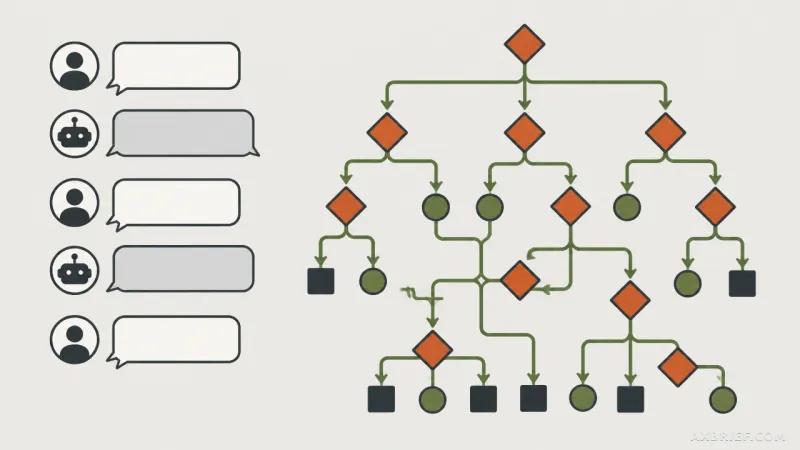
Artificial intelligence is rapidly moving beyond simple question-and-answer interactions into systems capable of deep reasoning and autonomous execution. Frontier models like o1 utilize internal verification processes to dramatically improve accuracy in complex tasks, serving as the engine for AI agents that plan and execute multi-step goals across digital platforms. This shift is reshaping knowledge work, as humans transition from manual execution to higher-level supervision while agents manage operations, self-onboard into workspaces, and scale their independent task durations. At the same time, hardware and software capabilities are expanding through physical robotics integrations, tiered developer subscriptions that unlock massive output capacities, and strategic cost-routing tools that delegate tasks based on complexity. Enterprises are also addressing governance through sovereign model control, tracking efficiency gains with automated usage reports, and utilizing no-code visual canvases to build automated workflows. As advanced models handle heavier technical burdens, the primary constraint in digital content creation and development has increasingly shifted from software limitations to human imagination.
01Reasoning Models and AI Agents Drive Complex Problem Solving
AI is evolving from a simple question-and-answer tool into a system capable of solving highly complex problems. This shift is driven by reasoning models like o1, which utilize an internal review process to check their own work before providing a final answer. The impact is stark: in competitive mathematics, accuracy rates surged from 13% with GPT-4 to 83% with o1. This ability to internally verify logic allows AI to handle intricate tasks that previously required deep human reasoning.
This reasoning capability serves as the engine for AI agents—systems that do not just chat, but autonomously plan and execute multi-step goals, such as booking a flight. Unlike traditional chatbots, these agents can use tools like web browsers, email, and files, iterating on their progress until a specific task is complete. They can be equipped with specialized professional abilities, known as skills, and connect to external software through standardized interfaces like MCP, CLI, or APIs.
Consequently, knowledge work is being restructured. Instead of manually clicking through software or inputting data, humans are moving toward a role of instruction and review, defining the objectives and criteria while the agent handles the operational execution. For example, agents can now manage entire social media accounts, creating images and videos for virtual influencers without manual intervention. Some AI employees, such as Viktor, can even self-onboard by reading through workspace histories in Slack, Asana, and Google Drive to understand team roles and business context without being asked. This capacity for autonomous work is scaling rapidly; data from METR indicates that the length of tasks AI agents can complete independently doubles every seven months, growing from a few minutes during the GPT-4 era to over 16 hours.
02Gemini 4 Argon Expands Capabilities in Code Generation, Robotics, and Pricing
AI is moving beyond digital screens to solve complex physical problems in the real world. Gemini 4 Argon enables humanoid robots, such as the Apptronik Apollo 2, to learn physical skills through a loop of watching, simulating, failing, and fixing. In one instance, the model taught the robot to play cornhole using a single video; while the first attempt missed by 86 cm, the robot was reliably hitting a 15 cm wide hole by its 18th throw. This was achieved by the model identifying an optimal release speed of approximately 4.5 m/s, widening the robot's stance to prevent tipping during fast movements, and executing 3D collision checks to shift the shoulder for better clearance.
These capabilities extend to VI manufacturing, where the model assists in designing personalized physical products. It can manage CAD files and the process of sending STL files to Bamboo for on-demand 3D printing. For entrepreneurs, the model is also being used for vibe marketing to acquire startup customers.
From a technical and financial standpoint, Gemini 4 Argon is designed for high-volume, multimodal tasks. Released on October 13th, the model features a 1 million token context window and accepts inputs including text, images, files, audio, and video. It currently operates at a 50% discount, with pricing set at 2 dollars per 1 million input tokens and 10 dollars per 1 million output tokens. While benchmarks show it outperforms nearly every current model, it still trails slightly behind Astra and Claude Opus in certain specific positions.
03Google AI Subscription Tiers Scale Developer Tools and Output Capacity
The choice between Google's AI subscription levels determines whether a user is merely interacting with an AI assistant or utilizing it as a professional development environment. While lower-cost tiers are sufficient for basic tasks, the premium offering unlocks the specific tools and output capacities needed for complex problem-solving. This creates a clear divide in utility, where the ability to build and scale software is tied directly to the subscription tier.
For $100 per month, Google AI Ultra provides a comprehensive suite of developer tools designed for high-intensity work. This membership grants full access to the Antigravity app and the CLI, which is a command-line interface that allows developers to control software through text commands rather than a visual menu. Most significantly, this tier supports up to 1 million output tokens. This massive capacity allows the model to generate extensive blocks of code or detailed documentation in a single response, providing the headroom necessary for managing intricate technical projects that would overwhelm a standard AI.
In contrast, the $19.99 Google AI Pro membership is restricted to more basic functions. Users at this level are excluded from the specialized ecosystem available to Ultra members, lacking access to the Antigravity app, the CLI, and Google AI Studio. Furthermore, Pro users do not have access to the 1 million output token limit. This means that while the Pro tier is useful for general text generation and web search tasks, it lacks the infrastructure required for professional-grade development or the generation of massive datasets.
This tiered structure effectively separates casual AI usage from frontier-level engineering. By gating the most powerful tools and the highest output limits behind a significantly higher monthly fee, the system distinguishes between those who need a helpful chatbot and those who require a robust engine for software creation. For developers, the jump to the Ultra tier is not just a price increase, but a transition from a restricted tool to a full-scale production environment.
04Strategic Routing Optimizes Costs Between Simple Lookups and High-Stakes Calculations
Running a high-end AI model for every single customer query is an expensive waste of resources. Many tasks, such as checking a shipping status, are simple lookups that do not require the reasoning power of a top-tier model. By implementing strategic routing—a system that directs queries to different models based on the complexity of the task—companies can drastically reduce operational costs without sacrificing the quality of the response.
This approach is exemplified by RouteLLM from AbacusAI, which allows users to access multiple AI models from different providers through a single interface. Using the RouteLLM API, a service can automatically delegate tasks to the most appropriate model. For instance, in a keyboard market consultation service, a lightweight model like GPT-5.6 Luna can handle basic shipping inquiries, while more advanced models like GPT-5.6 Sol are reserved for high-stakes tasks, such as determining if a return is permitted or calculating a precise refund amount.
The benefit of this strategy extends beyond mere cost savings; it can actually improve reliability. In a test involving 12 different customer service scenarios, both the automatic routing mode of RouteLLM and custom routing rules achieved 100% accuracy. In contrast, a system locked into a single model, GPT-5.6 Terra, failed one of the cases. This demonstrates that utilizing a diverse set of models tailored to specific tasks is more effective than relying on one fixed model for everything. For businesses looking to scale, this efficiency is accessible via basic plans starting at $10 per user per month, making sophisticated model management a viable option for smaller operations.
05Sovereign AI Emphasizes Model Control Over Mere Ownership
For organizations and nations pursuing AI independence, owning the software is not the same as having power over it. The real value of Sovereign AI lies in the ability to govern and control a model's behavior rather than simply holding the title of ownership. If an entity cannot dictate how an AI acts or responds, the fact that the model was developed domestically becomes a secondary detail. The ultimate goal is not the possession of the technology, but the authority to steer its outcomes.
This distinction means that Sovereign AI is not completed simply by developing a domestic model. Instead, the critical component is whether an organization can exercise full control over the model's behavior, regardless of the model's origin. Whether a model is built from scratch or imported, sovereignty is defined by the capacity to manage its logic and responses. This shift in focus moves the conversation from the legalities of ownership to the practicalities of governance, ensuring that the AI remains a tool that serves specific strategic interests.
Such control is increasingly vital as AI governance intersects with legal compliance. In the APAC region, Korea and Singapore are currently leading the way in establishing AI regulations and basic laws, including announcements from financial security sectors. Because governance often evolves into a matter of strict regulatory compliance, the ability to control a model's behavior becomes a prerequisite for operating within these legal frameworks. For these nations, sovereignty is less about the origin of the AI and more about the ability to ensure the technology adheres to the specific laws and security standards of the region.
06Viktor Provides a Usage Report Tracking Estimated Time Saved
AI tools often promise efficiency, but quantifying those gains is usually left to the user to calculate manually. Viktor addresses this by automatically generating usage reports that translate automated tasks into tangible business metrics. By providing a clear breakdown of efficiency gains, the tool allows users to see exactly how much manual labor has been eliminated from their daily operations, turning abstract productivity into concrete data.
These reports focus on several key performance indicators to justify the tool's operational cost. First, the system tracks the estimated amount of time the AI employee has saved the user, which is then converted into a specific monetary value based on that time. To provide a broader perspective, the report calculates the annual pace of these savings, allowing a business to project its yearly efficiency gains. Most importantly, it provides a return on investment analysis, specifically measuring the financial value generated against the credits spent to power the AI's functions.
This transparency is particularly useful when the AI handles complex, time-consuming tasks. For instance, when Viktor performs a full course audit to find missing links, broken commands, or coverage gaps in documentation, the resulting time savings are captured and quantified in the report. By linking these specific actions to a financial return, the tool demonstrates its value as an integrated part of the business workspace. This ensures that the expenditure of credits is not viewed merely as a cost, but as a strategic investment with a visible and trackable return.
07Argon's Plan Mode Allows Users to Agree on a Build Strategy
Many users find that the first attempt an AI makes at a complex task is often poor, requiring significant iterative prompting to reach a usable state. This gap, or delta, between the initial output and the final product can be stark. For instance, an initial prompt to Argon might produce a result described as brutal, comparable to the awkward, low-fidelity 3D avatars seen in the early days of the metaverse. While the final polished version may eventually be high-quality, the journey from a rough first draft to a finished product is often inefficient if the AI begins modifying files without a clear, shared understanding of the objective.
To bridge this gap and reduce wasted effort, Argon includes a specific feature called plan mode. This tool functions as a strategic alignment phase, allowing the user and the AI to agree on a build strategy and the overall architecture—the underlying structure of the code—before any actual file changes occur. By establishing this agreement upfront, users can ensure the AI is fully aligned with the project's goals. This prevents the AI from generating suboptimal first versions that the user would otherwise spend hours correcting through repetitive prompting.
The practical value of this approach is evident when considering the workflow for a project like late checkout.studio. In such cases, utilizing plan mode would have significantly improved the quality of the initial output. Instead of starting with a flawed version and iterating toward success, the user could have locked in the strategy first, ensuring the first version was far more accurate and aligned with the intended goals from the start. This shift in workflow changes the developer's role from a corrector of AI mistakes to a strategist who approves a blueprint before execution, ultimately speeding up the path to a polished final product.
08UiPath Maestro Flow Is a No-Code Canvas Tool Used to Build AI-Driven Orchestrations
Imagine the tedious process of opening a document, such as an invoice, and manually retyping the vendor name, the date, and the total into another system. This kind of repetitive busy work often consumes valuable time that could be spent on more strategic tasks. UiPath Maestro Flow addresses this friction by allowing users to build AI-driven orchestrations—automated sequences of tasks—that handle the reading and typing for them. Because it is a no-code tool, users can automate these complex workflows without needing to write a single line of code.
The system functions as a visual canvas where orchestrations are constructed by connecting a series of steps called nodes. These nodes serve as the functional units of the workflow, each responsible for a specific action. A typical orchestration might begin with a node that brings information into the system, followed by a node that processes that data. To ensure accuracy, the flow can include a node that routes the information to a person for a manual review before a final node saves the resulting output. This structure allows users to map out an entire business process visually, from the initial trigger to the final save.
Managing the data that flows between these nodes is handled through an intuitive variable system. When configuring a task, such as an analysis task attachment, users do not have to manually parse variables or type in complex references. Instead, they can click a dedicated icon to open a searchable dropdown menu listing all available flow variables. For example, a user can expand a manual trigger node to select the specific document being brought into the flow. This selection automatically populates the field with a reference like $vars.manualTrigger1.output.document, providing immediate confirmation that the orchestration is pointed at the correct file. By removing the need for manual coding, the tool lowers the barrier to creating sophisticated, AI-powered automations.
09Viktor Can Collaborate with Multiple Human Teammates Within Communication Platforms
Many AI tools inadvertently create a productivity bottleneck because they are designed for a single operator. In these traditional setups, nothing gets done unless the primary user sits down to start the process, meaning the AI is only as effective as the time the creator can spend prompting it. Viktor addresses this limitation by functioning as a legitimate AI employee rather than a random tool that requires constant manual configuration and daily management. By shifting the AI's role from a personal assistant to a team resource, the burden of oversight is distributed across the organization.
This collaborative environment is enabled through communication platforms like Slack, where Viktor can interact with multiple human teammates simultaneously. Instead of being restricted to one-on-one interactions with the person who deployed him, Viktor can engage with various staff members through direct messages and threads. This allows the AI to integrate into the existing social and professional fabric of a team, where it can receive instructions and handle requests from different sources based on established permissions.
The practical impact of this is a more fluid delegation of work. For instance, an assistant named Zell has used direct messages to communicate with Viktor and complete various tasks independently of the primary user. A specific example of this collaboration includes Zell requesting that Viktor set up a weekly digest. Because Viktor can be messaged by different teammates, he can handle these types of collaborative requests autonomously. This transforms the AI from a tool that must be managed by a single person into a functional team member that can be relied upon by the entire staff to maintain momentum on projects.
10Users Can Define Custom Output Variables for Agents in UiPath Maestro Flow
When using AI agents to handle business documents, receiving a generic block of text is often insufficient for professional workflows. To make this data usable for other software or databases, users need the AI to return specific pieces of information—such as a date or a dollar amount—in a structured format. In UiPath Maestro Flow, this is achieved by allowing users to define custom output variables for autonomous agents. Instead of relying on a one-size-fits-all response, a user can dictate exactly which data points the agent should extract and how that data should be categorized.
The process involves refining the agent's output settings to match the specific requirements of a task, such as processing an invoice. By default, the system provides a general field called content, but users can remove this using a trash icon to make room for more targeted variables. For example, a user can add several new output variables to capture specific details: a vendor field and a date field can both be set to a string data type, which is a standard format for text. To ensure financial data is handled with precision, a total field can be assigned a number data type. This ensures the agent does not simply find the information, but places it into a categorized slot that other automated systems can easily process.
This structured approach bridges the gap between the agent's analysis and the broader automation workflow. While a system prompt instructs the agent on what to look for, these output variables provide the necessary destination for those findings. This setup can be integrated with other components, such as a manual trigger node that starts the process. When a user specifies an attachment for the agent to analyze, they can use a searchable dropdown to point the agent toward a specific document variable. By mapping the output of a trigger to the agent's analysis task, the workflow becomes a precise pipeline where a raw file enters and structured, typed data exits.
11The Primary Constraint in AI Content Creation Has Shifted to Human Imagination
The bottleneck for digital creativity has moved from the software to the user. For years, the primary hurdle in AI content creation was the technical limitation of the models themselves—the inability to follow complex instructions or produce high-fidelity results. Today, that constraint has shifted. The limiting factor is no longer the technical ability of the model, but the human capacity to imagine and prompt a specific, high-quality vision.
This shift is driven by the arrival of frontier-level engines like Argon. Because Google possesses such vast amounts of data, its progress in model development has reached a point where the engine can execute nearly any visual or structural request. When the underlying technology is this capable, the quality of the output is determined entirely by the user's input. The challenge is no longer about fighting the tool to get a usable result, but about having the creative foresight to describe exactly what is needed.
The scale of this change becomes clear when comparing current capabilities to traditional workflows. In 2021, for example, building a comprehensive website for a holding company—which housed entities like the design agency LCA and the agent-focused firm Boring Marketing—required an investment of 40,000 hours of manual labor. Such a project demanded an immense amount of human coordination and technical execution simply to bring a vision to life.
Now, the ability to generate complex assets is decoupled from that level of manual effort. As models like Argon remove the technical friction, the value shifts toward the architect of the prompt. The competitive advantage in marketing and design is no longer about who has the most man-hours or the most technical skill in a specific software, but who can most vividly imagine the end product and communicate that vision to the machine.