For the past few years, the experience of using artificial intelligence has been defined by a rental agreement. Users pay a monthly subscription fee to access a proprietary interface, sending prompts across the internet to a distant server and waiting for a response to travel back. This relationship is fundamentally transactional and precarious. Every interaction involves a trade-off where the user exchanges sensitive data and recurring payments for a slice of intelligence they do not own and cannot control. The anxiety is palpable in the developer community, where the fear of data leakage and the unpredictability of API pricing have created a ceiling for how deeply AI can be integrated into private workflows.
The Mechanics of Local Intelligence
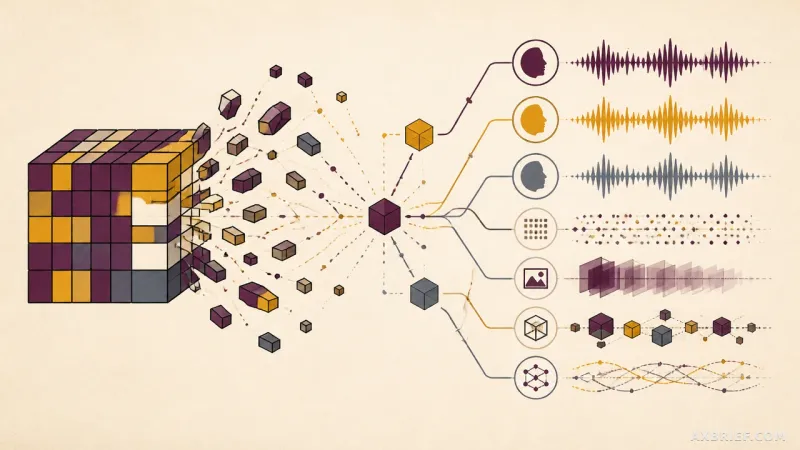
To understand the shift toward local AI, one must first demystify what an AI model actually is. At its core, the intelligence we perceive is not a living entity or a magical cloud service, but a massive collection of mathematical values known as weights. These weights are stored in a file that represents the learned patterns of the model. When a model runs locally, the computer is simply loading this weight file into its own memory and using its own processor to perform the necessary calculations.
As Tech With Tim defines it, local AI is simply a model file that's sitting on your computer and a program that runs it. This removes the need for an intermediary. David Ondrej echoes this sentiment, noting that you have the weights for yourself and then you set it up on your machines. By shifting the weights from a corporate data center to a local hard drive, the user transforms the AI from a remote service into a local utility. The hardware—whether it is a high-end GPU or a modern CPU—becomes the engine, and the weight file becomes the fuel.
However, the primary barrier to this transition has always been the sheer size of these files. Large Language Models often contain hundreds of billions of parameters, requiring enterprise-grade VRAM that is far beyond the reach of the average consumer. This is where the emergence of efficient models like Qwen and the application of quantization change the equation. Quantization is a process that reduces the precision of the model's weights, effectively compressing the file size without destroying the model's reasoning capabilities. By converting high-precision floating-point numbers into lower-precision integers, the memory footprint of the model drops precipitously.
For a model with 4 billion parameters, such as the Qwen 4B variants, quantization makes the difference between requiring a server rack and running comfortably on a standard laptop. This technical breakthrough lowers the hardware threshold, allowing the 4B parameter scale to act as a sweet spot where performance meets accessibility. The result is a system where a user can execute a sophisticated LLM in real-time on their own desk, entirely independent of any external API.
From API Caller to Model Owner
The transition to local execution is not merely a technical convenience or a way to save on monthly fees; it is a fundamental shift in the power dynamic between the user and the technology. When using a cloud-based AI, the user is an API caller. They are subject to the terms of service, the rate limits, and the privacy policies of a third-party provider. Every prompt sent is a data point harvested, and every update to the model can unexpectedly change the behavior of the applications built upon it.
Local AI reverses this causality. By running Qwen or DeepSeek locally, the user becomes a model owner. The most immediate benefit is absolute privacy. In a local environment, data never leaves the machine. There is no transit across the internet, no logging on a remote server, and no possibility of the input being used to train a future version of a corporate model. This creates a truly air-gapped intelligence, allowing professionals to process highly sensitive corporate secrets or personal medical data with a guarantee of confidentiality that no cloud provider can physically match.
This shift is being accelerated by the rise of high-performance open models. DeepSeek and Qwen have demonstrated that models do not need to be gargantuan to be useful. By optimizing for efficiency and releasing weights to the public, these projects have dismantled the monopoly that a few tech giants held over state-of-the-art intelligence. The ecosystem is now moving toward a future where users can download a model, optimize it for their specific hardware, and fine-tune it for their unique needs without asking for permission.
This evolution changes the definition of AI performance. In the cloud era, performance was determined by the tier of your subscription. In the local era, performance is determined by the quality of your hardware and the efficiency of your quantization. A user with a powerful GPU and a well-optimized 4B model can achieve a level of responsiveness and control that exceeds the experience of a throttled API. The AI is no longer a service you subscribe to, but a digital asset you possess.
As the boundary between consumer hardware and professional AI capabilities continues to blur, the reliance on centralized intelligence will likely fade. The ability to own the weights, control the execution, and guarantee the privacy of the data transforms the AI from a borrowed tool into a permanent extension of the user's own computing environment.